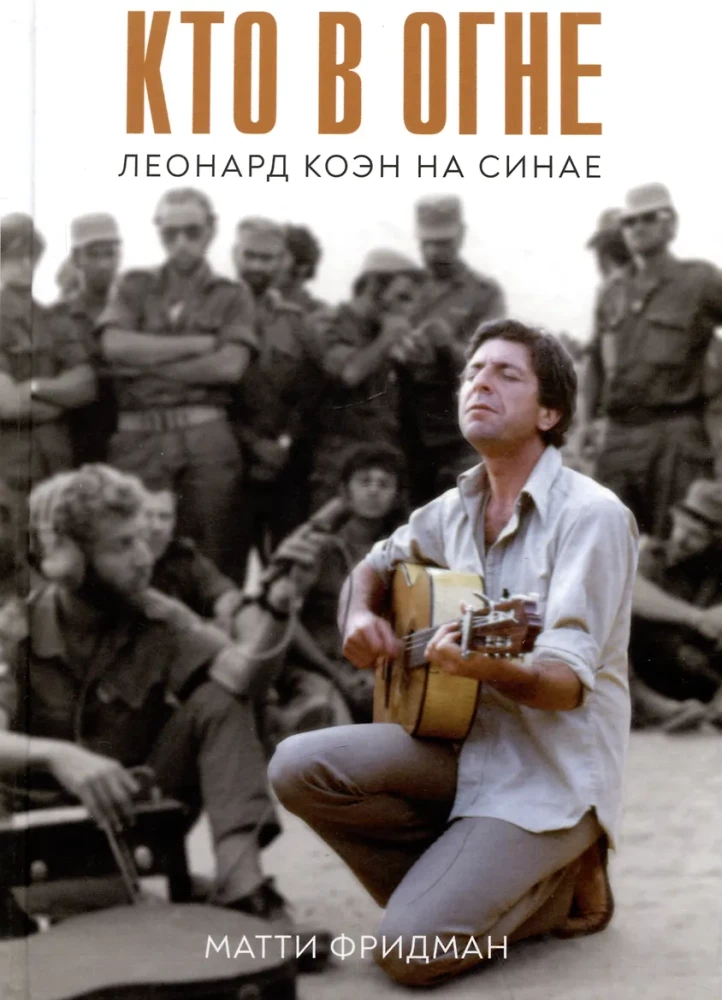
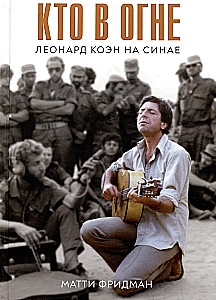
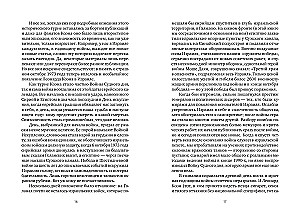
Who is in the Fire. Leonard Cohen on Sinai
Sinai, where fierce battles took place between Israel and Egypt. These 18 days will go down in history as the Yom Kippur War: it began on the sacred day of the Jewish calendar, Yom Kippur, the day when each person's...
fate is decided for the new year: who will depart into oblivion, who will be born, who will perish by water, and who by fire, as sung in one of the prayers of this day. Cohen went to the front with his weapon – a guitar. Together with Israeli artists, they traveled around Sinai, performing for soldiers at the front and in the rear, in the back of a truck and on board a ship – at night, in between battles, wherever they could. But during his lifetime, Cohen said almost nothing about this.
Journalist and writer Matti Friedman ("The Aleppo Codex", "Flight of the Barbarians") decided to reconstruct the events of half a century ago. He sought out witnesses of those concerts, studied Cohen's archives, his notebooks and manuscripts, reread and listened to all of the singer's interviews, piece by piece tracing his journey and trying to understand what that war meant in the life of the pacifist poet.
Journalist and writer Matti Friedman ("The Aleppo Codex", "Flight of the Barbarians") decided to reconstruct the events of half a century ago. He sought out witnesses of those concerts, studied Cohen's archives, his notebooks and manuscripts, reread and listened to all of the singer's interviews, piece by piece tracing his journey and trying to understand what that war meant in the life of the pacifist poet.
Author: Матти Фридман
Printhouse: Knizhniki
Age restrictions: 16+
Year of publication: 2023
ISBN: 9785906999955
Number of pages: 240
Size: 205х143х20 mm
Cover type: hard
Weight: 300 g
ID: 1742990
Sold out
€ 14.29
Sold out
€ 14.29
Bestsellers


€ 13.29
In stock
12 Weeks in a Year. How to Achieve More in 12 Weeks Than Others Do in 12 Months
Майкл Леннингтон, Брайан Моран

€ 7.89
In stock
Choice. On the Freedom and Inner Strength of a Person
Эдит Ева Эгер, Эсме Швалль-Вейганд


€ 6.99
In stock