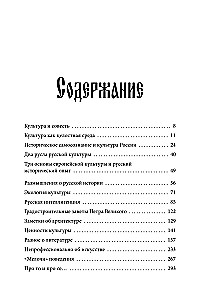
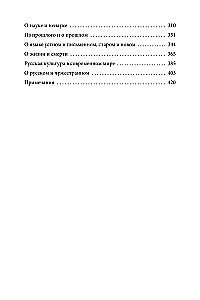
Russian Culture
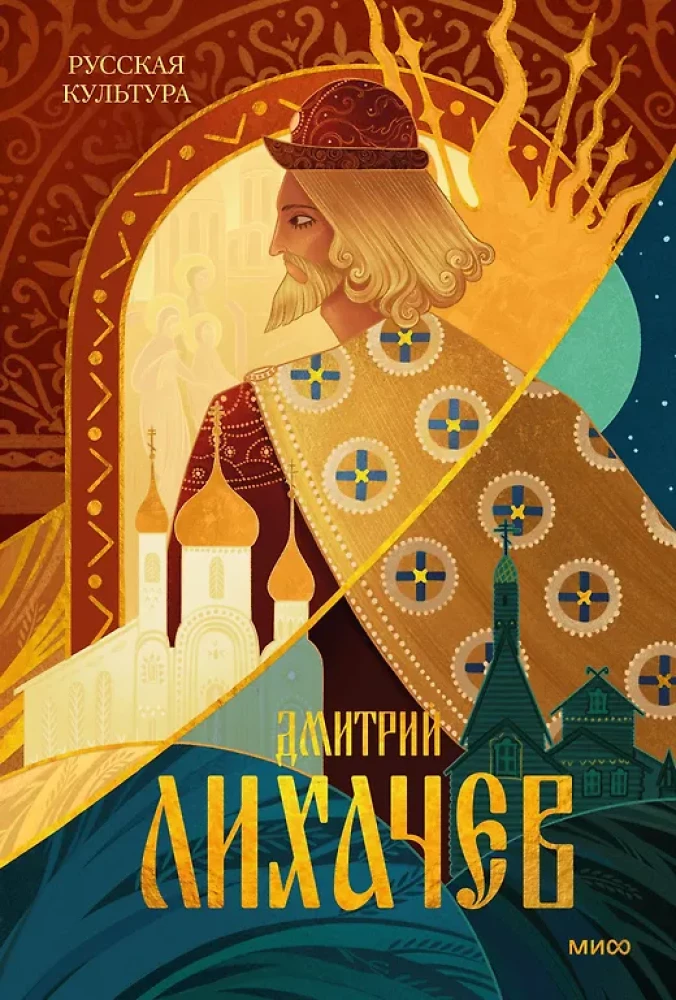
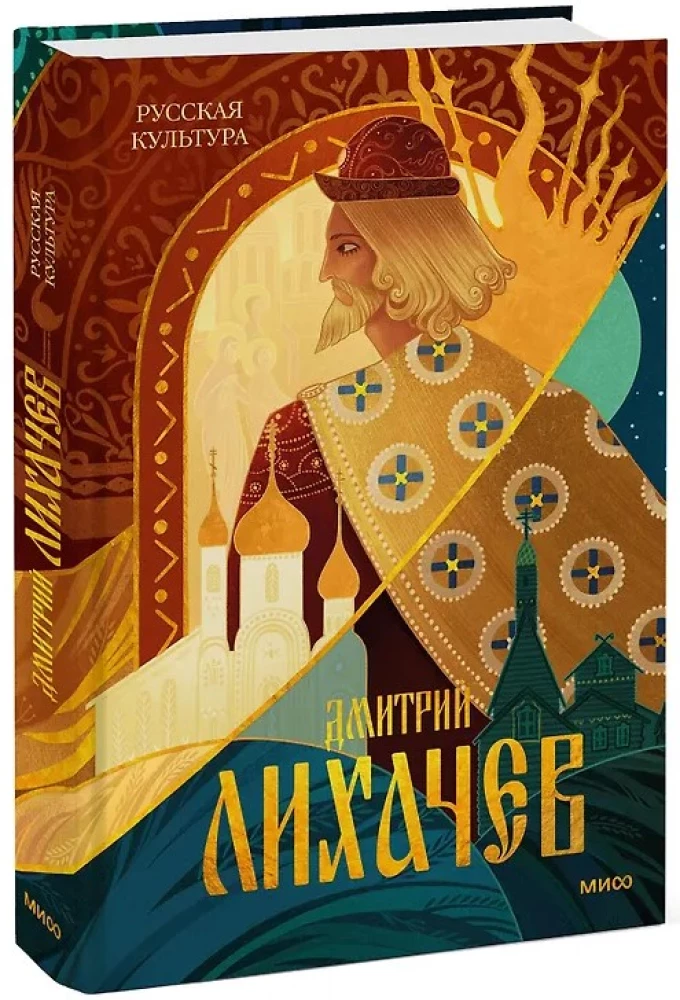
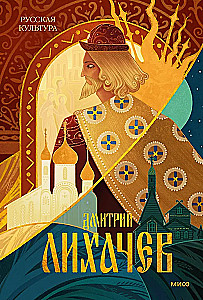
"Russian Culture" — the last book published posthumously by the outstanding Russian scientist-philologist, academician Dmitry Likhachev. This is his "legacy", the result of many years of reflection on Russian and world culture — and on Russia itself: astonishing, dual, and...
always seeking extremes…
The future academician was born before the revolution, in 1906. He retained memories of all of 20th century Russia — from the "artisans and ballerinas" of the tsarist era to Stalinism, the siege of Leningrad, and the "thaw". He knew Russia over the course of a century — but writes as if he lived for a thousand years and condensed its history into a single point: in his book, Yaroslav the Wise and Pushkin, Dostoevsky and Sergius of Radonezh, the icon painter Dionysius and Ivan the Terrible "cohabitate". However, when addressing the past, Likhachev invariably seeks answers for the present — and calls for responsibility for it.
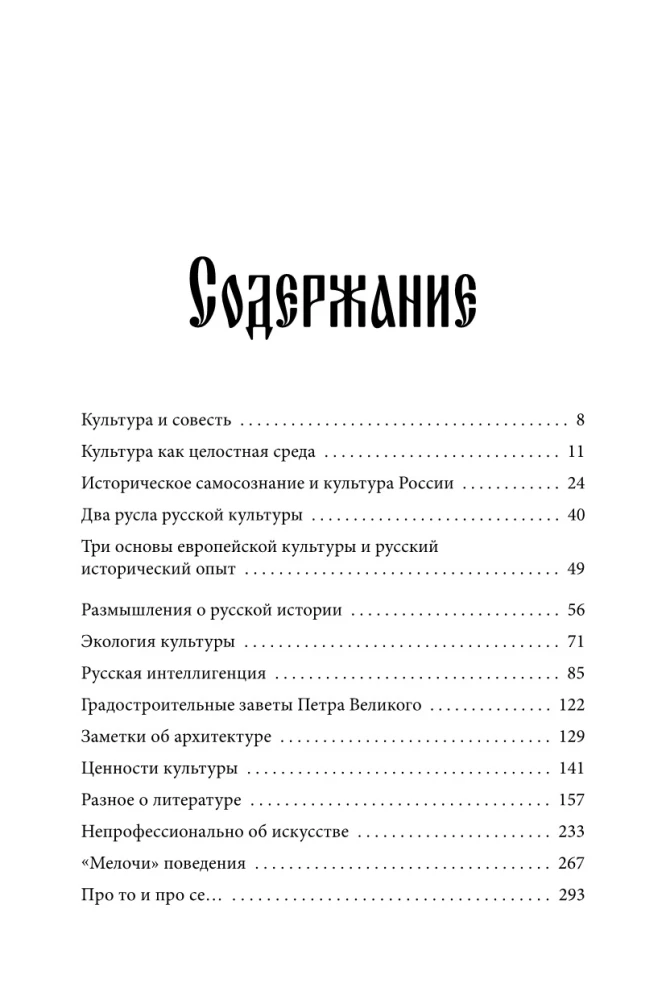
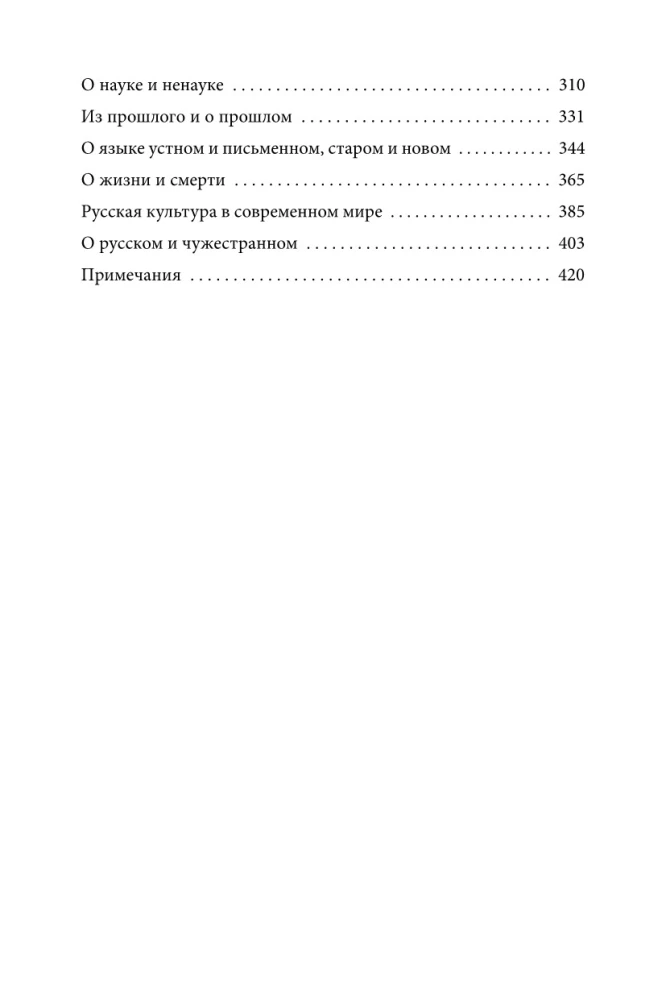
The author writes about literature and language, painting and architecture, the national character of Russians — and about culture as a "holistic environment", from which one cannot extract one part without destroying the whole. But this is not a cold game of erudition, but a reflection on good and evil, the individual and the crowd, freedom in an era of cruelty and the selflessness of conscience — a thought guided by deep moral feeling.
The book is meant to help each reader attain an awareness of their connection to the great Russian culture — but not only that. It is a true manifesto of humanism — and an assertion that culture, according to the author, is stronger and more necessary than an "armada of tanks".
The future academician was born before the revolution, in 1906. He retained memories of all of 20th century Russia — from the "artisans and ballerinas" of the tsarist era to Stalinism, the siege of Leningrad, and the "thaw". He knew Russia over the course of a century — but writes as if he lived for a thousand years and condensed its history into a single point: in his book, Yaroslav the Wise and Pushkin, Dostoevsky and Sergius of Radonezh, the icon painter Dionysius and Ivan the Terrible "cohabitate". However, when addressing the past, Likhachev invariably seeks answers for the present — and calls for responsibility for it.
The author writes about literature and language, painting and architecture, the national character of Russians — and about culture as a "holistic environment", from which one cannot extract one part without destroying the whole. But this is not a cold game of erudition, but a reflection on good and evil, the individual and the crowd, freedom in an era of cruelty and the selflessness of conscience — a thought guided by deep moral feeling.
The book is meant to help each reader attain an awareness of their connection to the great Russian culture — but not only that. It is a true manifesto of humanism — and an assertion that culture, according to the author, is stronger and more necessary than an "armada of tanks".
Author: Дмитрий Лихачев
Printhouse: Mann, Ivanov i Ferber
Series: Archetype: Russian Culture
Age restrictions: 16+
Year of publication: 2025
ISBN: 9785002501076
Number of pages: 432
Size: 220х145х25 mm
Cover type: hard
Weight: 510 g
ID: 1714069
Sold out
€ 11.99
Sold out
€ 11.99
Bestsellers
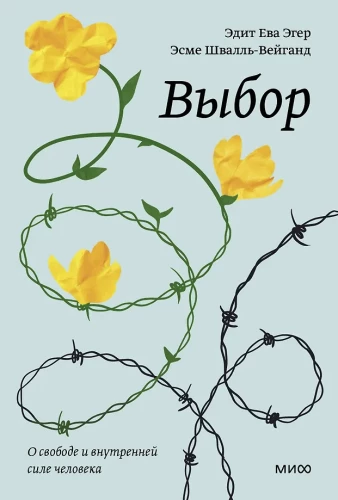
€ 7.89
In stock
Choice. On the Freedom and Inner Strength of a Person
Эдит Ева Эгер, Эсме Швалль-Вейганд
€ 14.99
In stock
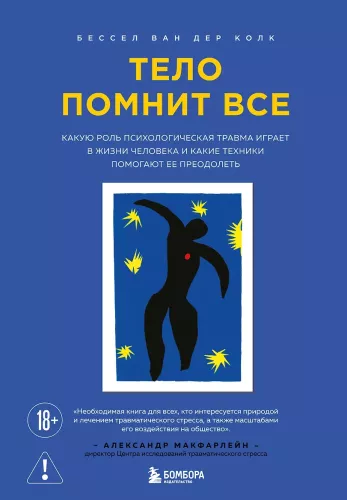
The Body Remembers Everything: The Role of Psychological Trauma in a Person's Life and Techniques to Overcome It
Бессел ван дер Колк
Publishers "Mann, Ivanov i Ferber" recommends

Bestseller
€ 22.19
In stock
Urban Jungle. Как создать уютный интерьер с помощью растений
ЙОСИФОВИЧ И., ДЕ ГРАФ Д.
Bestseller
€ 18.69
In stock
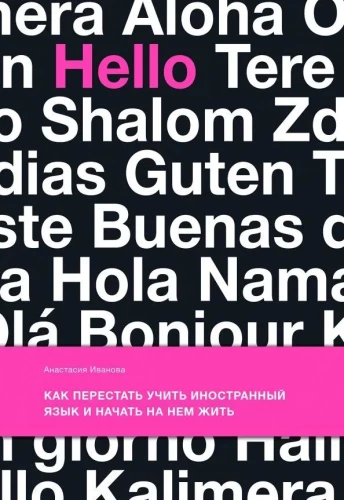
How to Stop Learning a Foreign Language and Start Living in It
Анастасия Иванова