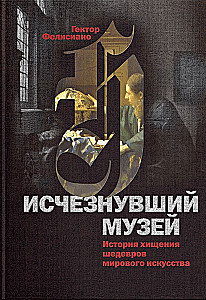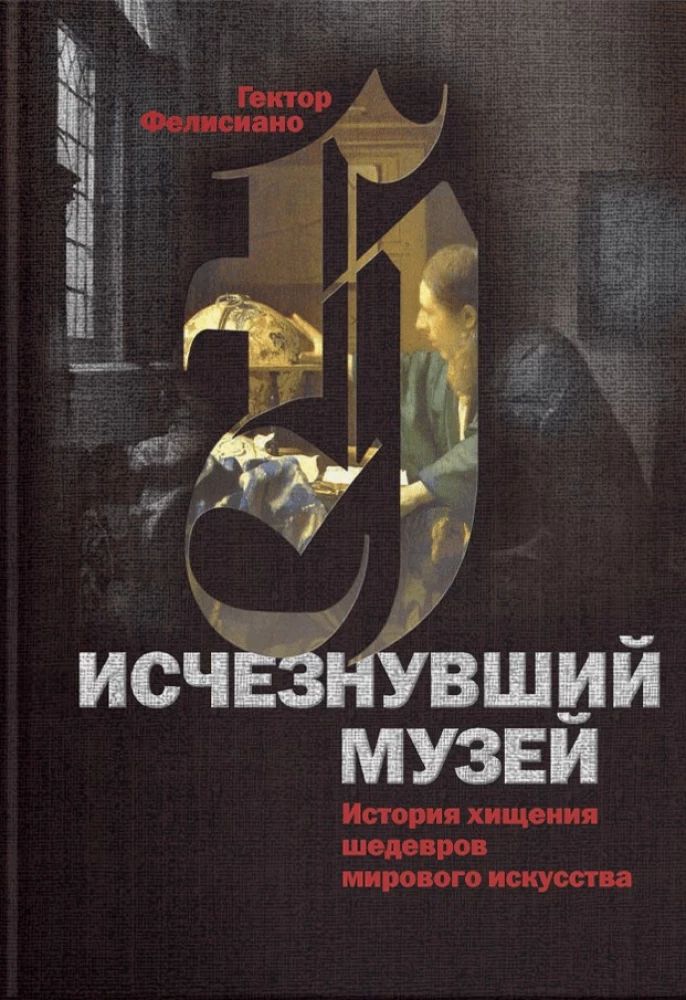
The Missing Museum. The Story of the Theft of Masterpieces of World Art
What is the fate of many thousands of works of world art stolen by the Nazis during World War II? In France alone, more than 100,000 paintings, half a million pieces of furniture, and over a million books were seized!...
Most of them belonged to Jews—families and individual collectors. The author of the book cites figures of 20-40 thousand—an impressive number of items that seem to have vanished into thin air.
Carefully examining all the facts and tracing lost trails, Feliciano step by step investigates the stories of the missing paintings from the collection of Parisian dealer Paul Rosenberg, the Rothschild bankers and David-Weil, the Bernheim-Jeune brothers, collector Alphonse Kahn, and others. Thanks to his efforts, some heirs have managed to recover family relics, while others, on the contrary, accused him of slander for revealing facts of collaboration by certain gallery owners and filed lawsuits, but without success.
Feliciano raises the still pressing issue of restitution, pondering how after the war many works could have gotten lost in the global art market sometimes by chance, and sometimes due to the conscious negligence of art market players. The author pays special attention to the role of Switzerland in the looting of France, as many stolen works of art were discovered there after the war.
What is the fate of many thousands of works of world art stolen by the Nazis during World War II? In France alone, more than 100,000 paintings, half a million pieces of furniture, and over a million books were seized! Most of them belonged to Jews—families and individual collectors. The author of the book cites figures of 20-40 thousand—an impressive number of items that seem to have vanished into thin air.
Carefully examining all the facts and tracing lost trails, Feliciano step by step investigates the stories of the missing paintings from the collection of Parisian dealer Paul Rosenberg, the Rothschild bankers and David-Weil, the Bernheim-Jeune brothers, collector Alphonse Kahn, and others. Thanks to his efforts, some heirs have managed to recover family relics, while others, on the contrary, accused him of slander for revealing facts of collaboration by certain gallery owners and filed lawsuits, but without success.
Feliciano raises the still pressing issue of restitution, pondering how after the war many works could have gotten lost in the global art market sometimes by chance, and sometimes due to the conscious negligence of art market players. The author pays special attention to the role of Switzerland in the looting of France, as many stolen works of art were discovered there after the war.
Be the first to know about our current discounts, offers and new products!
Check icon
You have added to your basket
Check icon
You have added to favourites
Sold out
The item is currently out of stock.
In stock
Available in warehouse. You will receive the exact delivery date from the operator after the order confirmation.
To order
The product is delivered directly from the publisher. The order processing time is up to 14 days, you will receive the exact delivery date from the operator after the order confirmation.