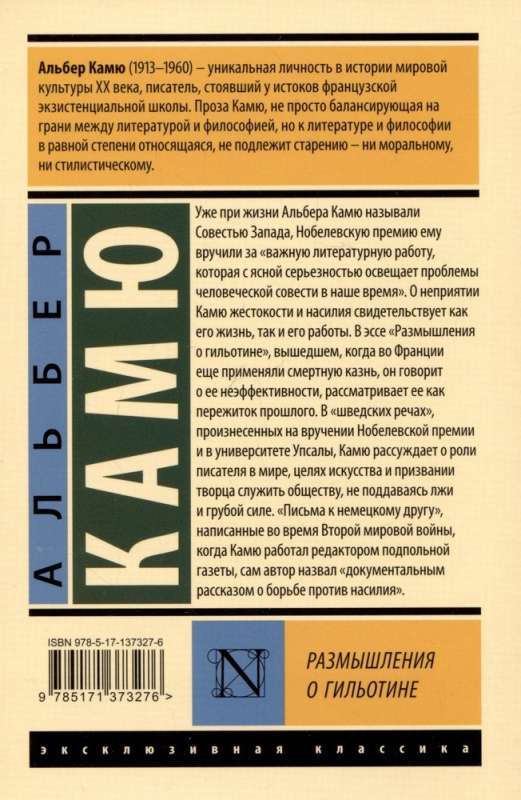
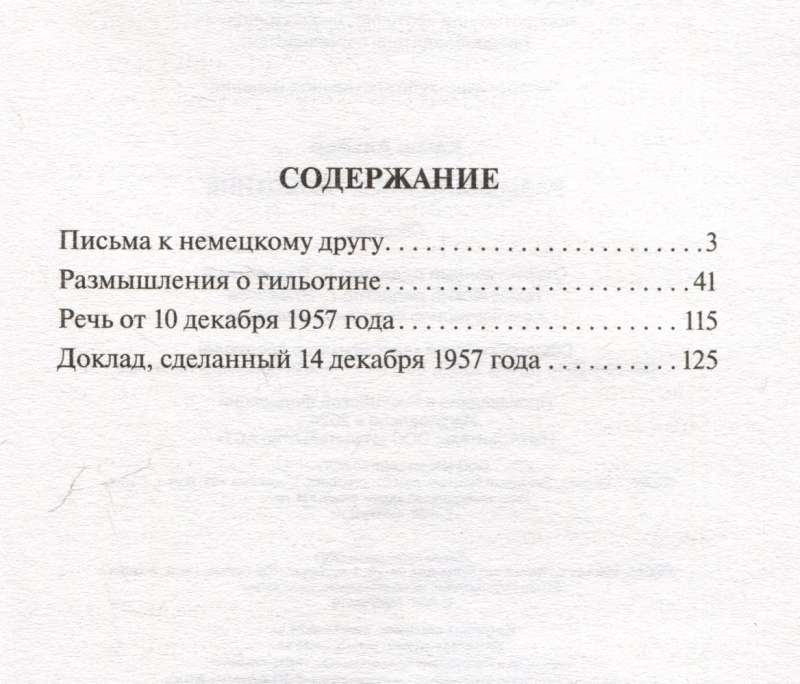


During his lifetime, Albert Camus was called the "Conscience of the West," and he was awarded the Nobel Prize for "important literary work that clearly and seriously illuminates the problems of human conscience in our time." His rejection of cruelty and violence is evidenced by both his life and his works. In the essay "Reflections on the Guillotine," published when the death penalty was still in use in France, he discusses its ineffectiveness and considers it a relic of the past. In the "Swedish speeches" delivered during the Nobel Prize ceremony and at Uppsala University, Camus reflects on the role of a writer in the world, the goals of art, and the calling of the creator to serve society, resisting lies and brute force. "Letters to a German Friend," written during World War II when Camus was the editor of an underground newspaper, the author himself referred to as "a documentary tale of the struggle against violence."
Bestsellers
















Publishers "AST" recommends