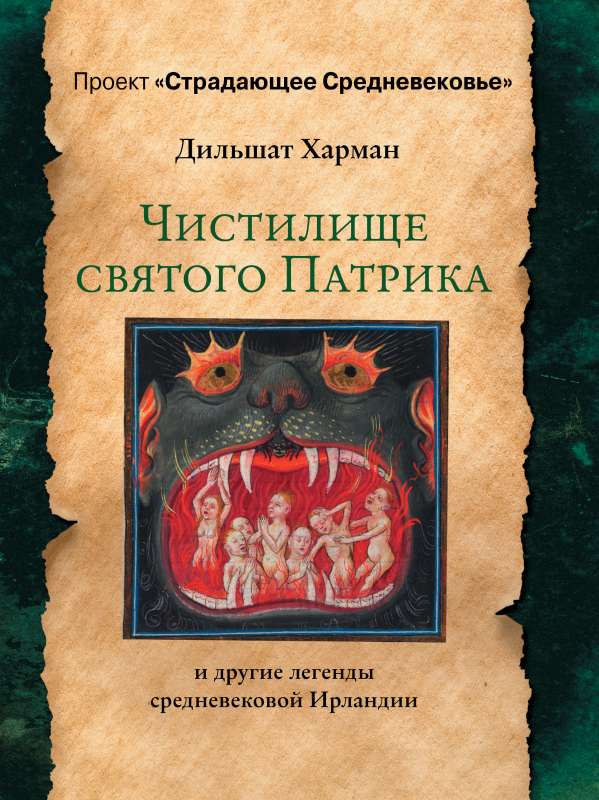
The Purgatory of St. Patrick - and Other Legends of Medieval Ireland
Author: ХАРМАН Д.Д.
Printhouse: AST
Series: Project "Suffering Middle Ages"
Age restrictions: 16+
Year of publication: 2020
ISBN: 9785171167233
Number of pages: 320
Size: 70x90/16 mm
Cover type: Твердая бумажная
Weight: 535 g
ID: 1241024
In the Middle Ages, it was believed that at Lough Derg, located in northern Ireland, in County Donegal, there was an entrance to purgatory — a place where souls too sinful for heaven but too righteous for hell reside. According to legend, the passage was opened by the first and great saint of Ireland, Patrick, specifically to persuade the faint-hearted that they could enter purgatory and emerge alive from it. Now, the entrance is no longer there, yet each year Lough Derg is visited by 8,000 to 10,000 pilgrims — and this is considering that the stay involves a mandatory three-day fast and 24 hours of wakefulness. Who and why undertook long and dangerous pilgrimages and dared to descend into the afterlife? What do pilgrims seek on the island today? How did medieval Europeans envision the structure of hell, purgatory, and heaven? Do people believe in purgatory today? Finally, how do the legends of the Purgatory of St. Patrick intertwine Irish myths with the Christian faith? These questions are answered by Dilshat Kharman — a candidate of arts, senior research fellow at the Center for Visual Studies of the Middle Ages and Modern Times of RGGU, co-author of the bestseller Suffering Middle Ages. Paradoxes of Christian Iconography.
Bestsellers












Publishers "AST" recommends