Настольная игра - Эксперимент. Домашние лисы
In 1958, Soviet scientists Dmitry Belyaev and Lyudmila Trut began a unique experiment on domestication of silver-black foxes. By selecting the friendliest individuals in each generation and breeding them, they hoped to recreate the process that led to the emergence...
of domestic animals thousands of years ago. The results of the experiment were quite interesting. Although foxes were selected solely based on their friendly reaction to humans, new generations exhibited physical traits characteristic of domesticated animals of other species, such as: spotted coloration, communication with humans through sounds, floppy ears, and curled tails.
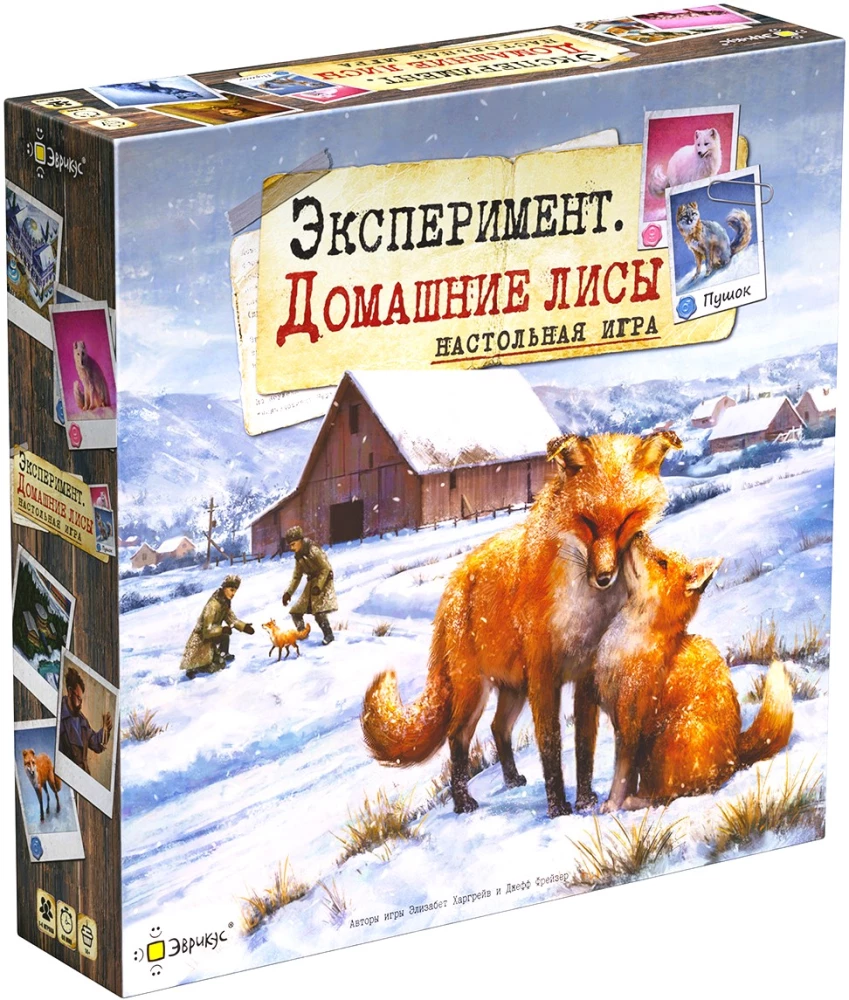
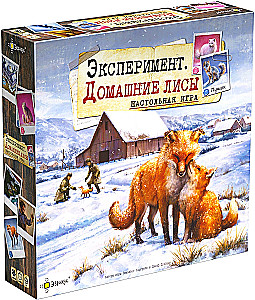
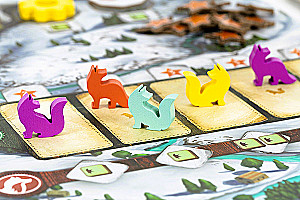
"Experiment. Domestic Foxes" — is a family strategic game where you will breed your own domestic foxes, repeating the Siberian experiment.
Your objective is to breed the friendliest fox cub. To achieve this, each round you will need to select a suitable pair of parents and, depending on their traits, gain trait cubes. Then, by rolling the cubes, you will mix the genes and produce a new generation of fox cubs, enhancing certain signs of domestication.
You will also conduct research and attract the attention of the scientific community. All of this will earn you points that will help you win the game.
"Experiment. Domestic Foxes" — is a very atmospheric game. Author Elizabeth Hargrave skillfully combines history with game mechanics. The fact that during the game, your first fox cubs continue to produce offspring, and you can trace genetic lines, improve your kennel and gain new opportunities — all of this creates a sense of real scientific work.
Game process:
The goal of the game is to earn the most victory points by the end of the 5th round (generation). To do this, players must breed the friendliest foxes, complete as many research tasks as possible, and attract suitable assistants from the scientific community.
The game lasts 5 rounds. Each round consists of 4 sequential phases.
1st phase. Selection. Players take turns choosing parent foxes from the kennel, as well as distributing resources. The traits of the selected parents will determine which fox cubs are born in this generation.
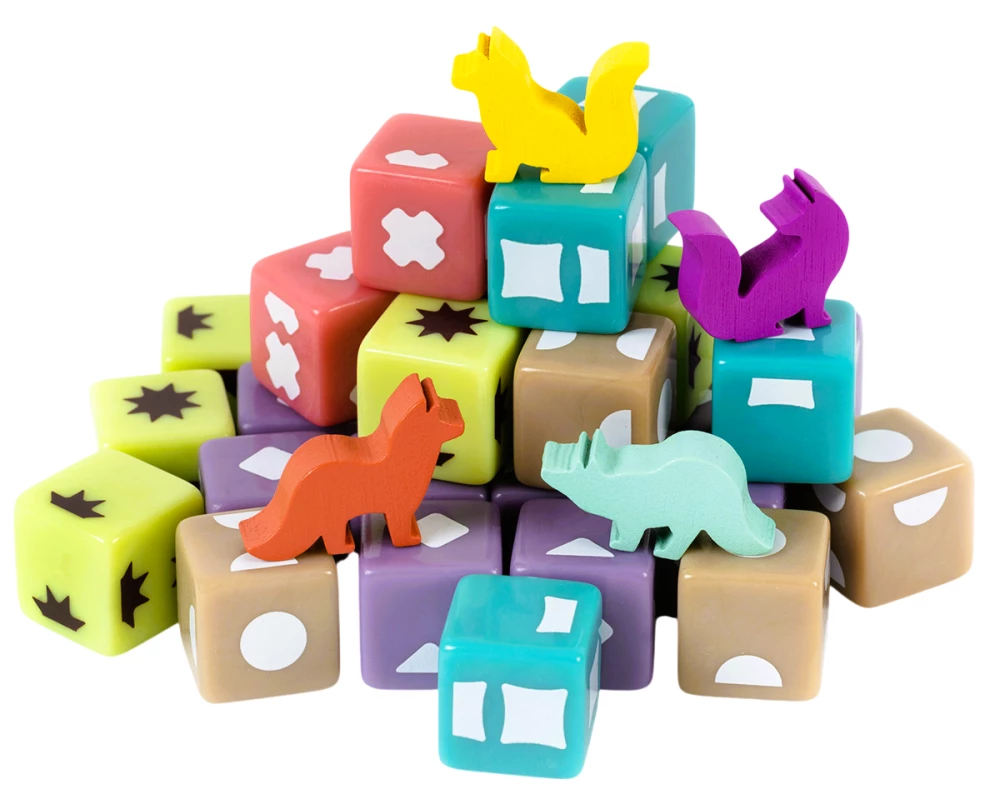
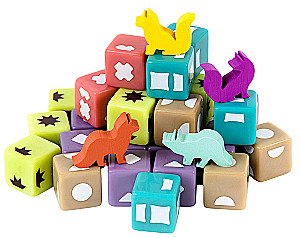
2nd phase. Breeding. Players simultaneously breed fox cubs. For this, they take trait cubes possessed by the chosen parents and roll them, trying to get as many full symbols on the cubes as possible. Each such symbol corresponds to a trait acquired by the foxes during the Siberian Experiment.
— Tails. Some foxes developed tails that curled like those of dogs, while others began to wag their tails when they saw a human.
— Ears. As they grew, foxes remained floppy-eared longer (this trait is also characteristic of dogs).
— Barking. Foxes learned to bark and whimper, attracting human attention.
— Spots. The coloration of some foxes became spotted, and a white mark ("star") often appeared on their forehead.
3rd phase. Research. Players mark collected complete trait symbols on their fox cub cards to:
— complete researches and earn victory points,
— obtain trait tokens that can be used to unlock upgrades on their player board.
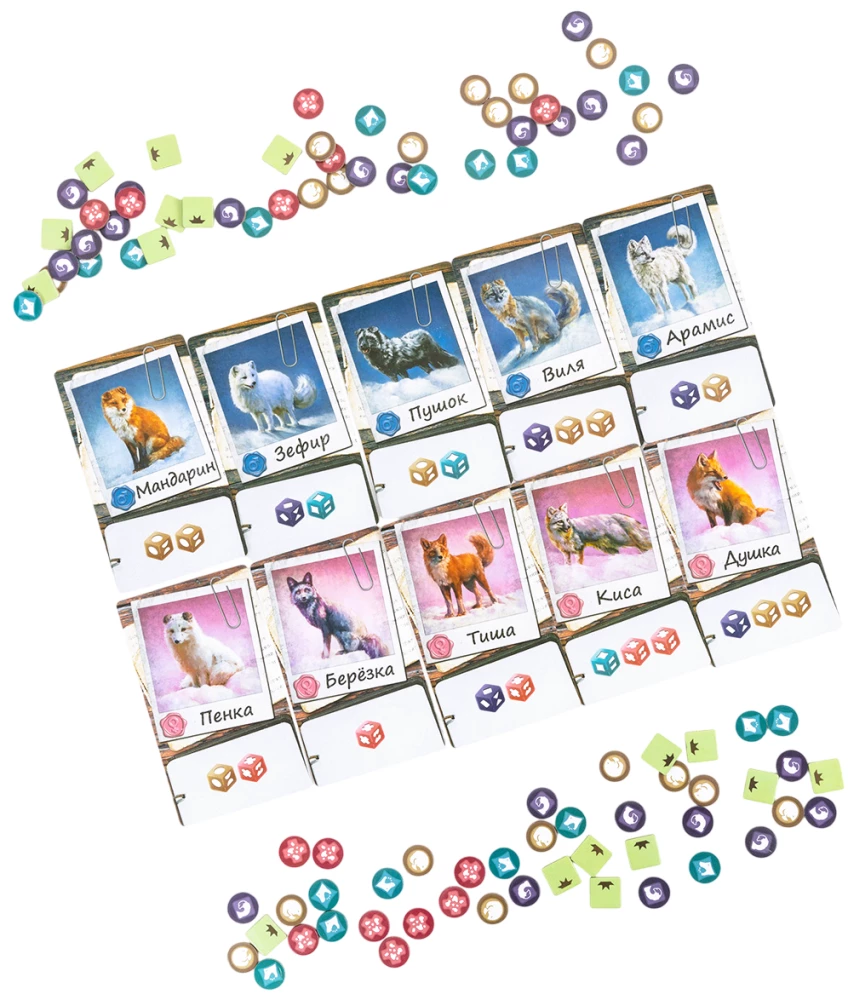
4th phase. Management. Each born fox cub is evaluated based on its total friendliness (the total number of marked traits on the cub's card), after which they are sent to the kennel and become available as parents for the next generation.
The game ends after 5 rounds. Players receive victory points based on several criteria:
— for completed research (personal objectives of the player);
— for assistants that were successfully attracted
— for the friendliest fox cubs you bred in different generations
— for upgrades on your personal game board;
— for additional tokens that you have left.
The player with the most victory points wins!
Contents:
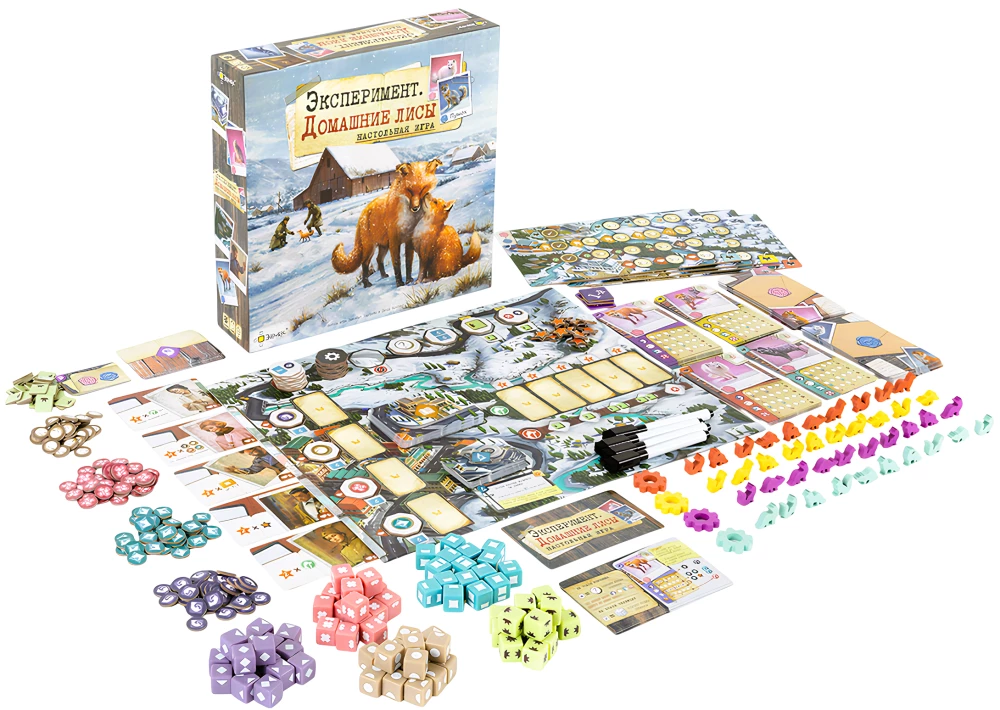
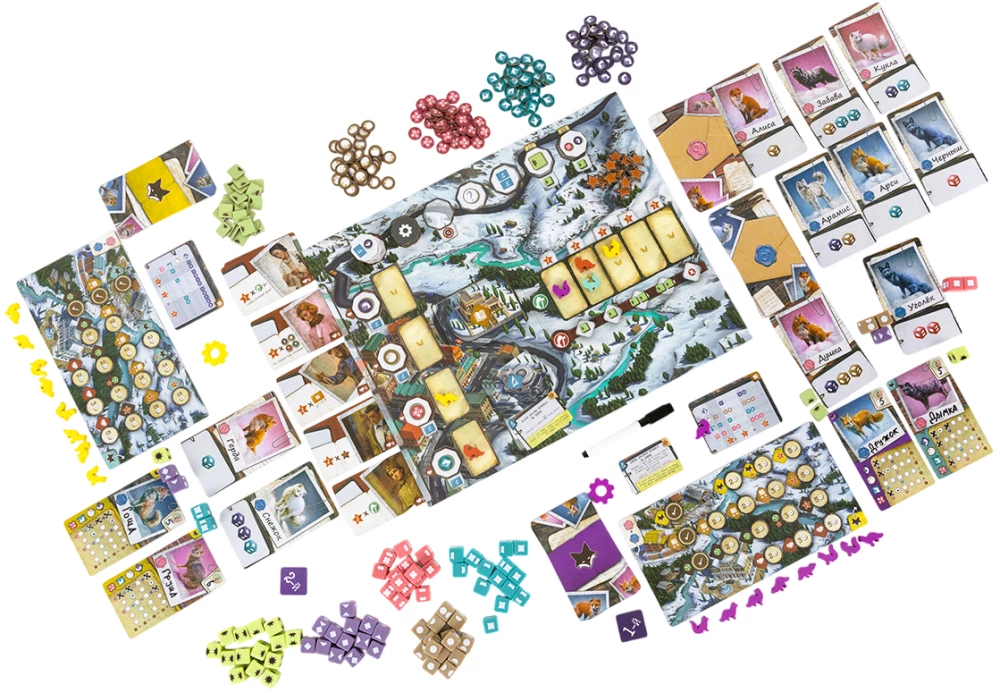
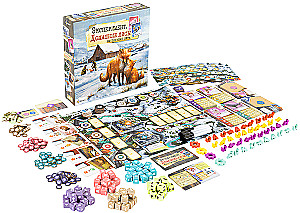
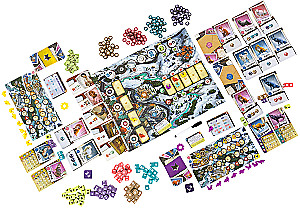
— Double-sided game board;
— 4 player boards;
— 4 water-based markers;
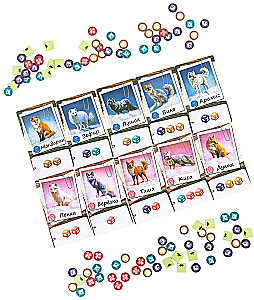
— 48 cub cards;
— 36 parent fox cards;
— 24 research cards;
— 7 assistant cards;
— 32 science cards;
— 4 reference sheets;
— 12 virtual opponent research cards;
— 6 virtual opponent selection cards;
— 80 trait and friendliness cubes;
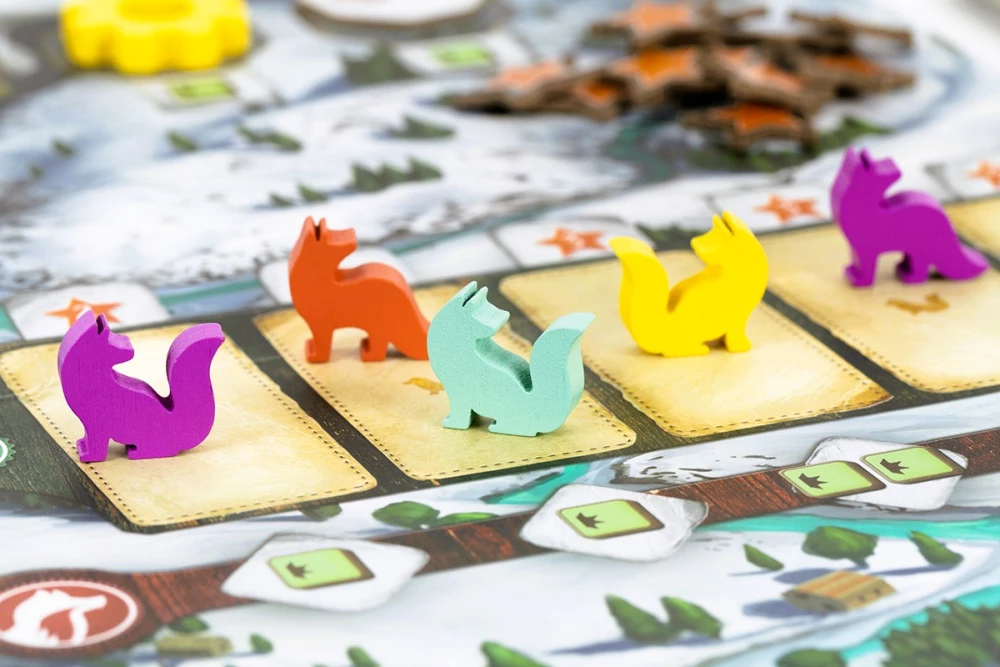
— 40 fox figurines and 4 gear tokens;
— 200 tokens (resources, traits, victory points, and friendliness);
— 4 turn order tokens;
— Game rules.
Number of players: 1-4
Game time: 60 minutes or more
"Experiment. Domestic Foxes" — is a family strategic game where you will breed your own domestic foxes, repeating the Siberian experiment.
Your objective is to breed the friendliest fox cub. To achieve this, each round you will need to select a suitable pair of parents and, depending on their traits, gain trait cubes. Then, by rolling the cubes, you will mix the genes and produce a new generation of fox cubs, enhancing certain signs of domestication.
You will also conduct research and attract the attention of the scientific community. All of this will earn you points that will help you win the game.
"Experiment. Domestic Foxes" — is a very atmospheric game. Author Elizabeth Hargrave skillfully combines history with game mechanics. The fact that during the game, your first fox cubs continue to produce offspring, and you can trace genetic lines, improve your kennel and gain new opportunities — all of this creates a sense of real scientific work.
Game process:
The goal of the game is to earn the most victory points by the end of the 5th round (generation). To do this, players must breed the friendliest foxes, complete as many research tasks as possible, and attract suitable assistants from the scientific community.
The game lasts 5 rounds. Each round consists of 4 sequential phases.
1st phase. Selection. Players take turns choosing parent foxes from the kennel, as well as distributing resources. The traits of the selected parents will determine which fox cubs are born in this generation.
2nd phase. Breeding. Players simultaneously breed fox cubs. For this, they take trait cubes possessed by the chosen parents and roll them, trying to get as many full symbols on the cubes as possible. Each such symbol corresponds to a trait acquired by the foxes during the Siberian Experiment.
— Tails. Some foxes developed tails that curled like those of dogs, while others began to wag their tails when they saw a human.
— Ears. As they grew, foxes remained floppy-eared longer (this trait is also characteristic of dogs).
— Barking. Foxes learned to bark and whimper, attracting human attention.
— Spots. The coloration of some foxes became spotted, and a white mark ("star") often appeared on their forehead.
3rd phase. Research. Players mark collected complete trait symbols on their fox cub cards to:
— complete researches and earn victory points,
— obtain trait tokens that can be used to unlock upgrades on their player board.
4th phase. Management. Each born fox cub is evaluated based on its total friendliness (the total number of marked traits on the cub's card), after which they are sent to the kennel and become available as parents for the next generation.
The game ends after 5 rounds. Players receive victory points based on several criteria:
— for completed research (personal objectives of the player);
— for assistants that were successfully attracted
— for the friendliest fox cubs you bred in different generations
— for upgrades on your personal game board;
— for additional tokens that you have left.
The player with the most victory points wins!
Contents:
— Double-sided game board;
— 4 player boards;
— 4 water-based markers;
— 48 cub cards;
— 36 parent fox cards;
— 24 research cards;
— 7 assistant cards;
— 32 science cards;
— 4 reference sheets;
— 12 virtual opponent research cards;
— 6 virtual opponent selection cards;
— 80 trait and friendliness cubes;
— 40 fox figurines and 4 gear tokens;
— 200 tokens (resources, traits, victory points, and friendliness);
— 4 turn order tokens;
— Game rules.
Number of players: 1-4
Game time: 60 minutes or more
Autors: Elizabet Hargrejv, Džeff Frejzer
Zīmols: Evrikus
Vecuma ierobežojumi: 14+
Izdošanas gads: 2025
EAN: 4630082560176
Izmērs: 295h295h73 mm
Svars: 1400 g
ID: 1729832
Ir uz vietas
€ 89.99
Piegādāsim uz Amerikas Savienotās Valstis :
Diemžēl šobrīd nevaram piegādāt pasūtījumu jūsu reģionā.
Ir uz vietas
€ 89.99
Piegādāsim uz Amerikas Savienotās Valstis :
Diemžēl šobrīd nevaram piegādāt pasūtījumu jūsu reģionā.