New










Faces of the Empire
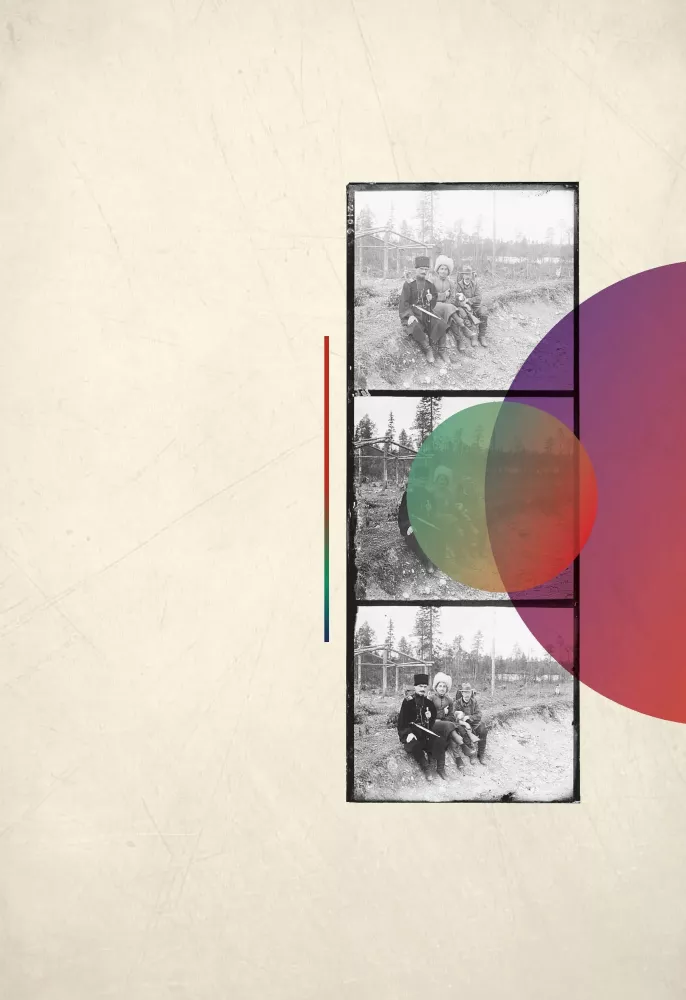
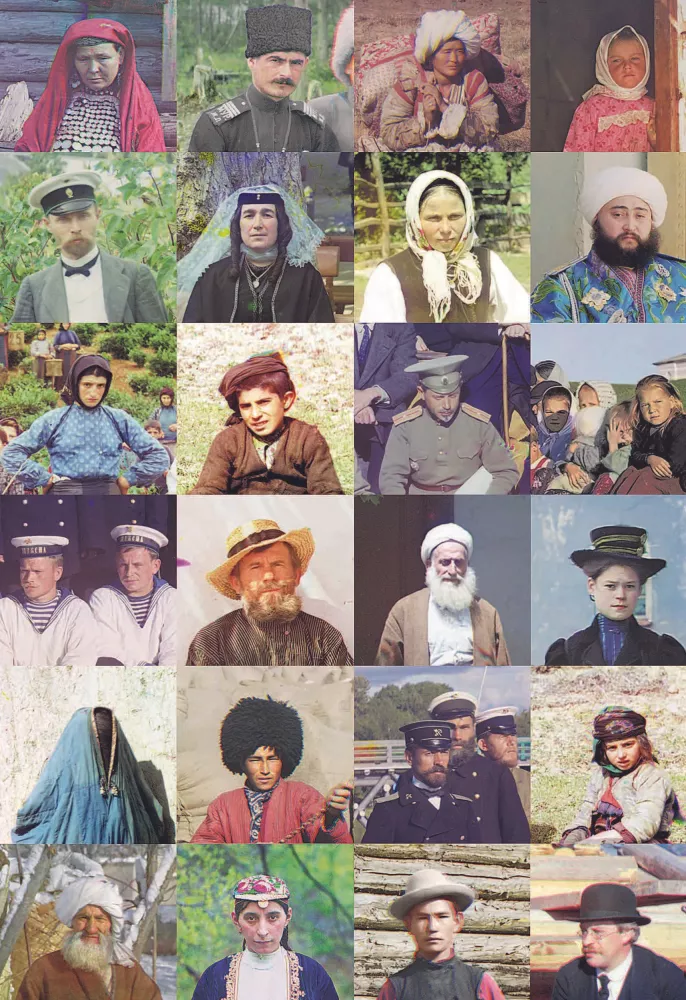
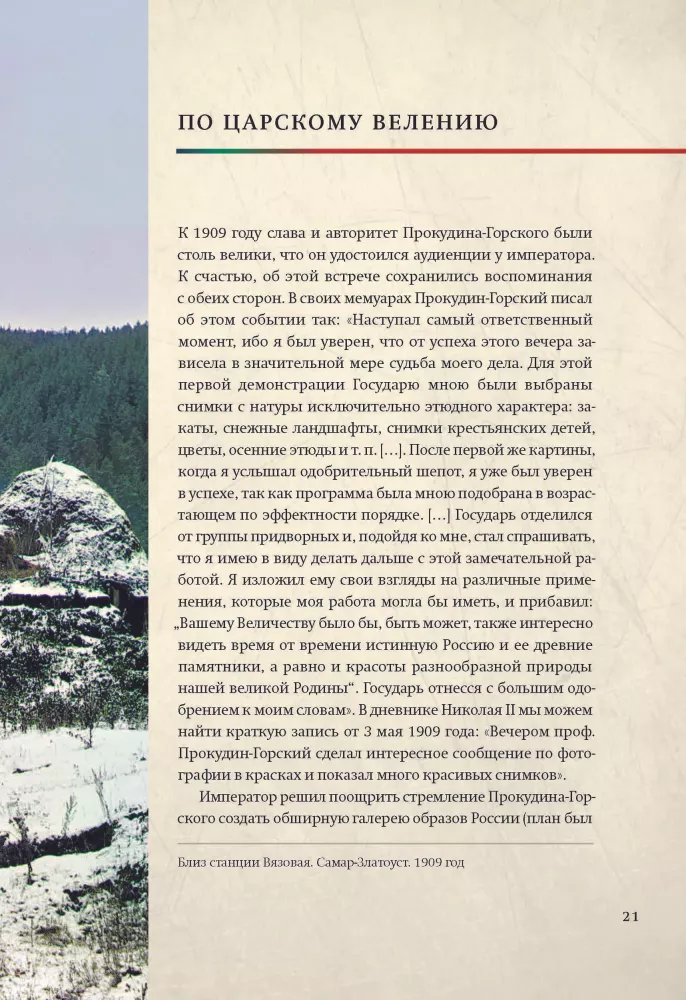
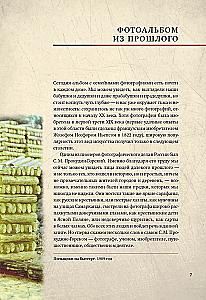
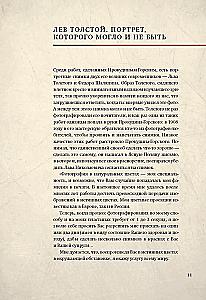
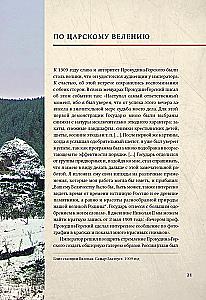
S. M. Prokudin-Gorsky — one of the pioneers of color photography, created a unique collection of photographs between 1909 and 1916 on the order of Nicholas II, which can be called a visual encyclopedia of the Russian Empire. The photographer...
managed to capture the world on the eve of its collapse; people who did not know that their lives would soon change — forever and irreparably, looked into the camera lens.
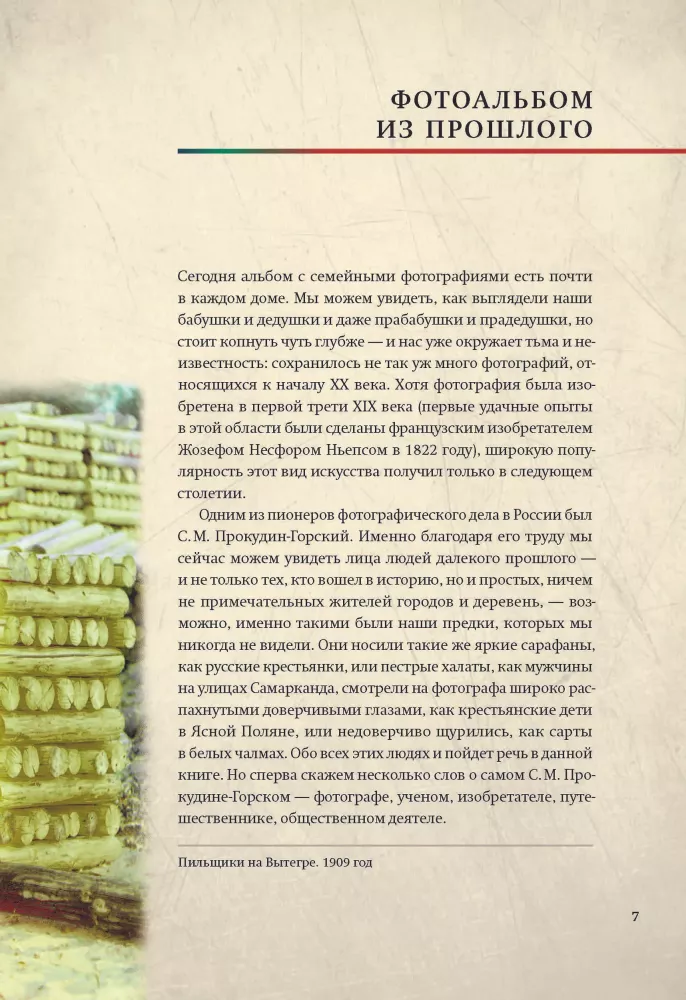
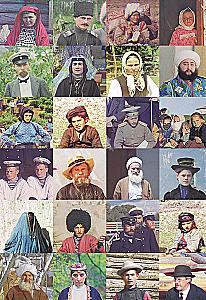
In the album, we can see the faces of these people — not only those who entered history but also ordinary, unremarkable residents of cities and villages. Perhaps this is what our ancestors were like: wearing bright sarafans, like Russian peasant women, or colorful robes, like men on the streets of Samarkand, looking at the photographer with wide-open eyes, like peasant children in Yasnaya Polyana, or squinting skeptically, like Sartes in white turbans. This book will talk about all these people. The fates of the unfortunate Bukhara emir, the great Russian writer, a monk from a remote hermitage, and workers from a weapons factory were connected by a single person with a camera — S. M. Prokudin-Gorsky.
In the album, we can see the faces of these people — not only those who entered history but also ordinary, unremarkable residents of cities and villages. Perhaps this is what our ancestors were like: wearing bright sarafans, like Russian peasant women, or colorful robes, like men on the streets of Samarkand, looking at the photographer with wide-open eyes, like peasant children in Yasnaya Polyana, or squinting skeptically, like Sartes in white turbans. This book will talk about all these people. The fates of the unfortunate Bukhara emir, the great Russian writer, a monk from a remote hermitage, and workers from a weapons factory were connected by a single person with a camera — S. M. Prokudin-Gorsky.
Author: Сергей Прокудин-Горский, Людмила Галаганова
Printhouse: Ripol-klassik
Age restrictions: 12+
Year of publication: 2024
ISBN: 9785386151348
Number of pages: 192
Size: 250х170х20 mm
Cover type: hard
Weight: 522 g
ID: 1749420
Available from suppliers
Estimated delivery time – up to 3 weeks
€ 30.39
Available from suppliers
Estimated delivery time – up to 3 weeks
€ 30.39
Bestsellers







€ 13.29
In stock
12 Weeks in a Year. How to Achieve More in 12 Weeks Than Others Do in 12 Months
Майкл Леннингтон, Брайан Моран

€ 7.89
In stock
Choice. On the Freedom and Inner Strength of a Person
Эдит Ева Эгер, Эсме Швалль-Вейганд




€ 6.99
In stock