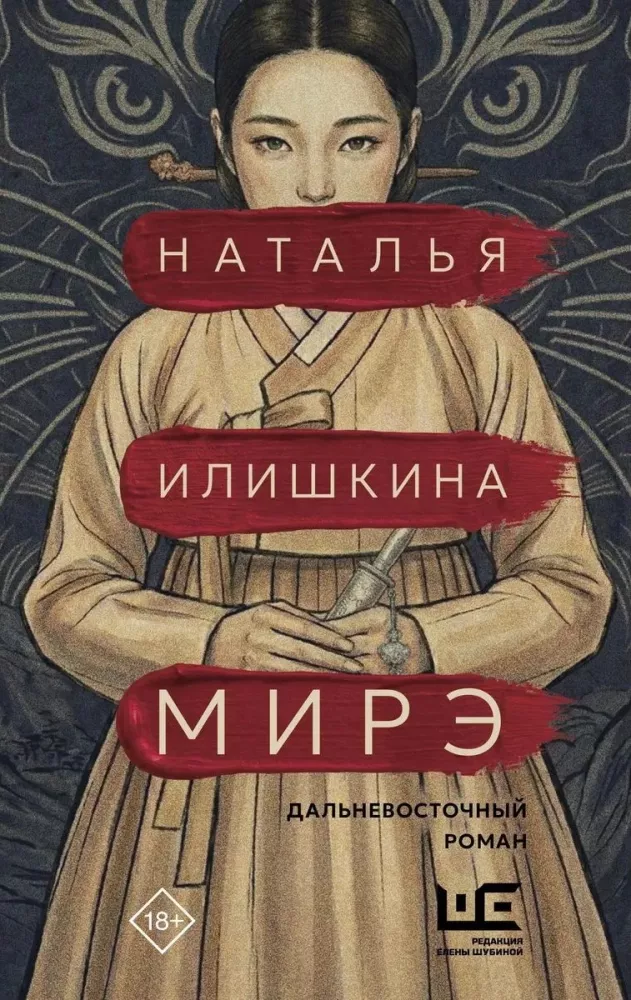
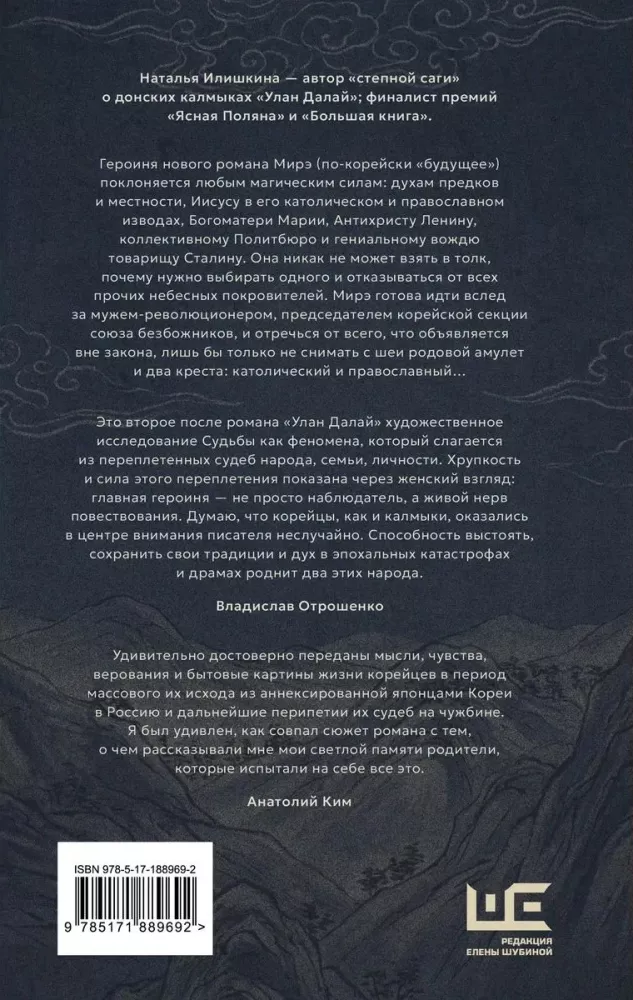
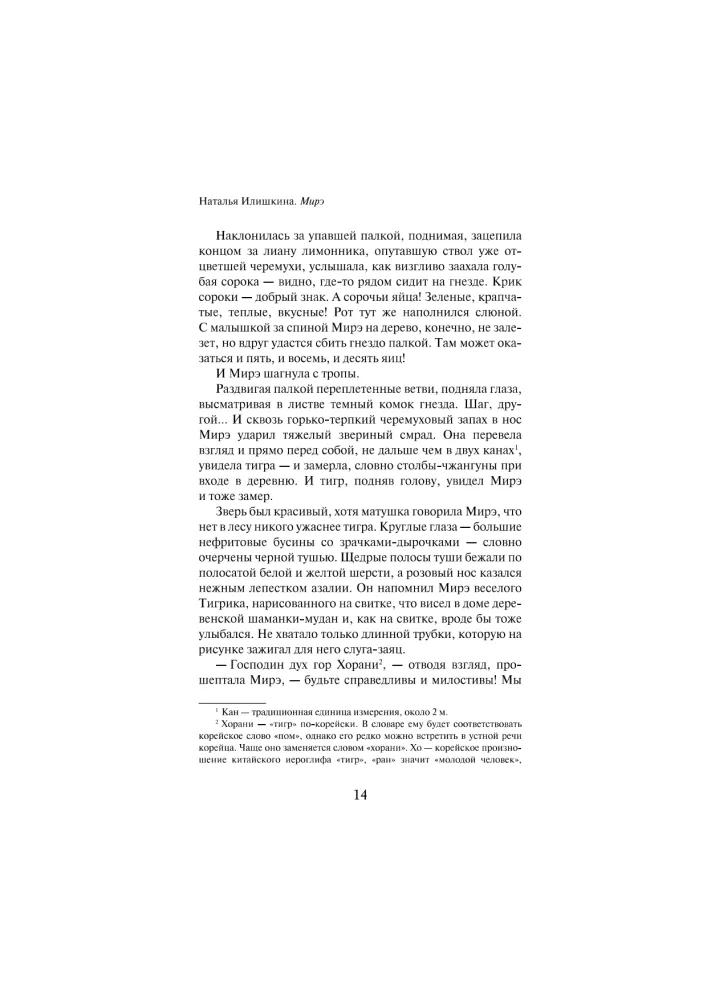
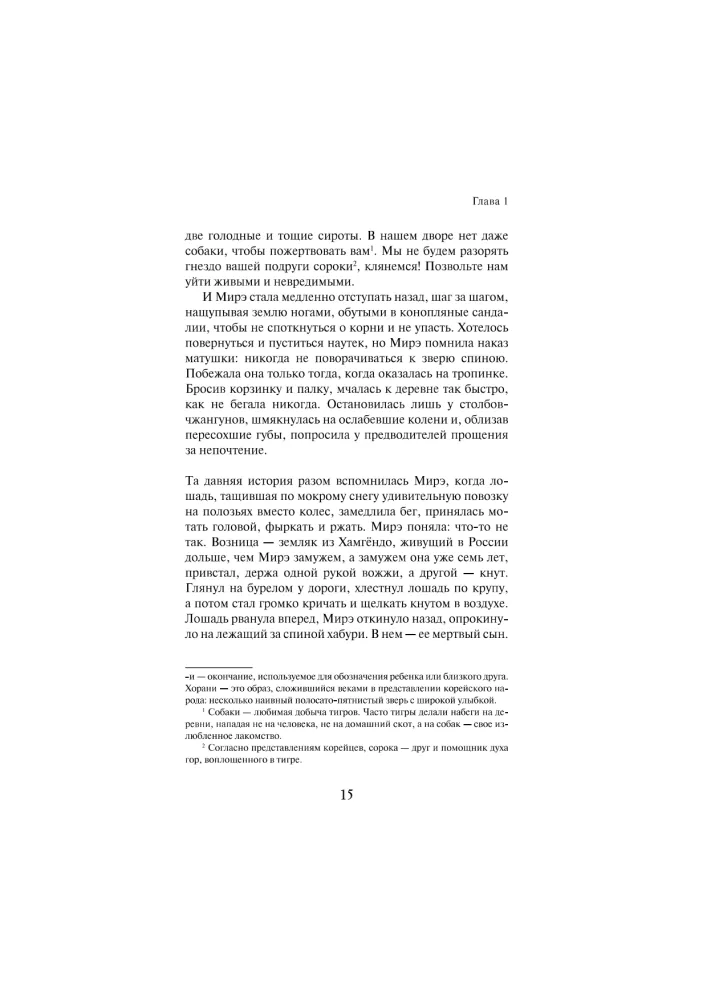
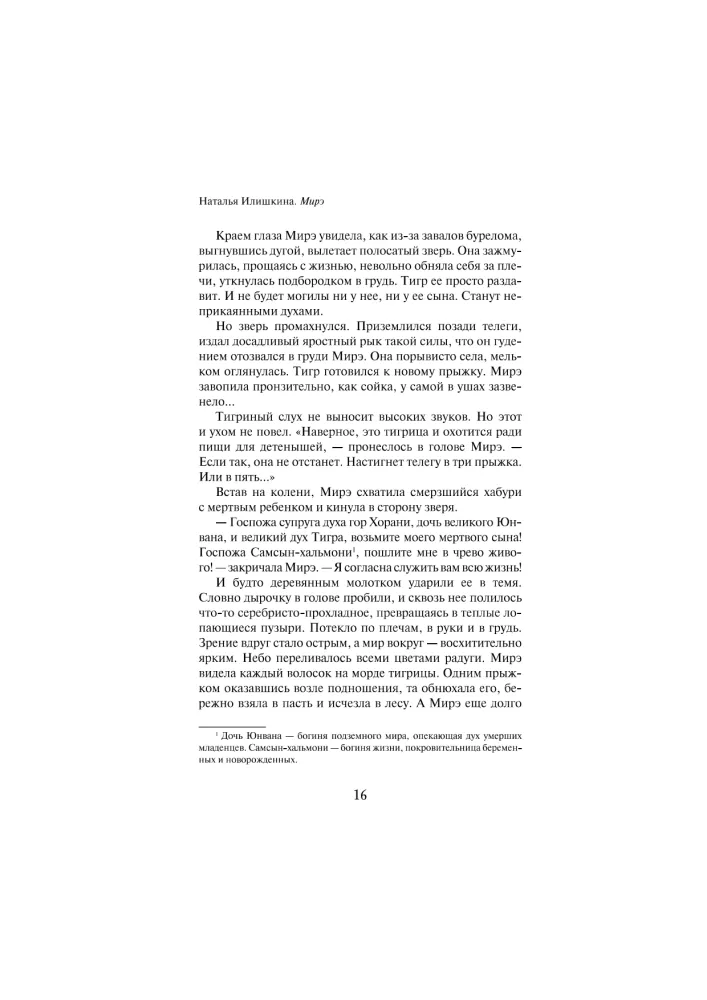
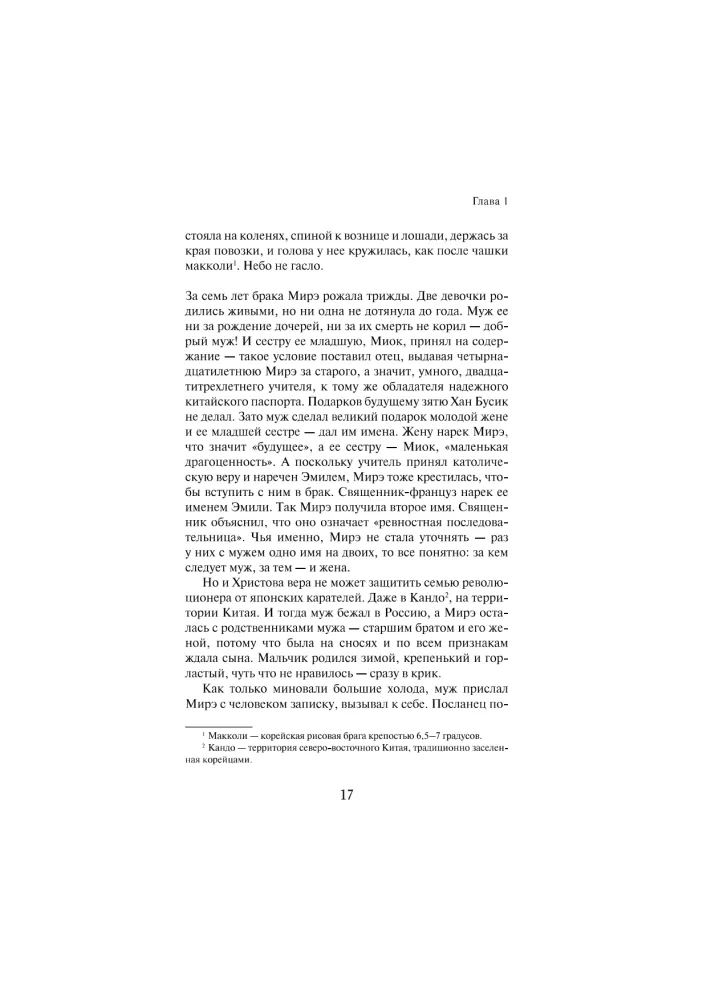
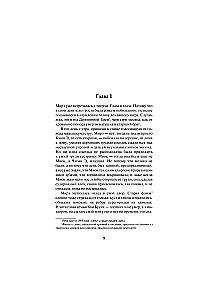
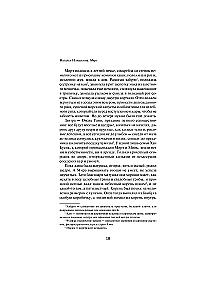
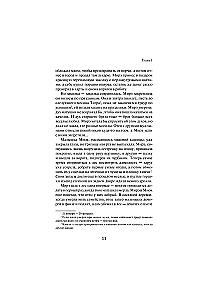
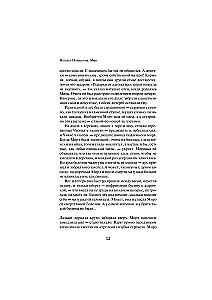
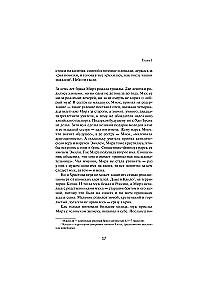
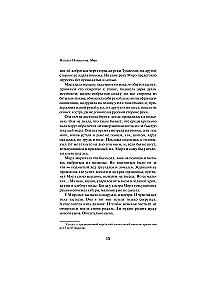
The heroine of the new novel Mire (in Korean "future") worships any magical forces: the spirits of ancestors and the land, Jesus in his Catholic and Orthodox forms, the Virgin Mary, the Antichrist Lenin, the collective Politburo, and the genius...
leader Comrade Stalin. She cannot understand why one must choose one and renounce all other heavenly patrons. Mire is ready to follow her revolutionary husband, the chairman of the Korean section of the Union of the Godless, and renounce everything that is declared illegal, as long as she does not take off the family amulet and two crosses: Catholic and Orthodox…
This is the second artistic exploration of Fate as a phenomenon, which is composed of intertwined destinies of the people, family, and individual, after the novel "Ulan Dalai." The fragility and strength of this intertwining is shown through a female perspective: the main heroine is not just an observer, but a living nerve of the narrative. I believe that Koreans, like Kalmyks, found themselves in the writer's focus not by chance. The ability to endure, preserve their traditions and spirit in epochal catastrophes and dramas unites these two peoples.
Natalia Ilishkina is the author of the "steppe saga" about the Don Kalmyks "Ulan Dalai." Finalist of the "Yasnaya Polyana" and "Big Book" awards.
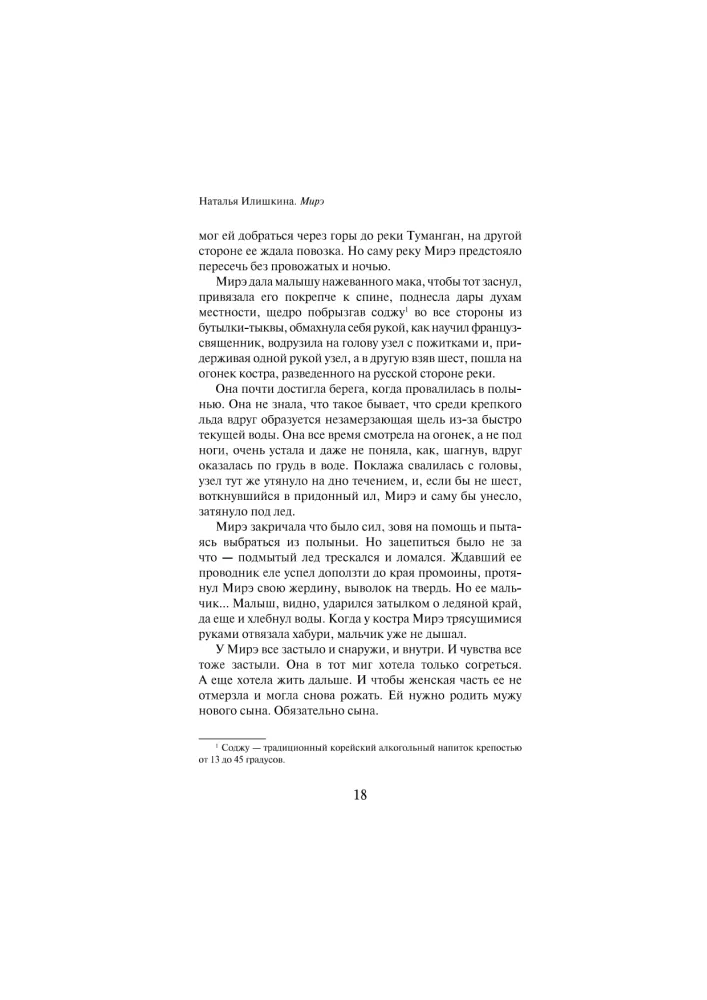
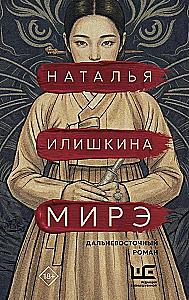
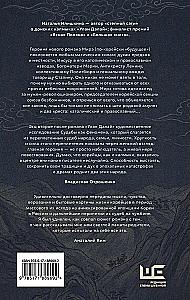
The heroine of the new novel Mire (in Korean "future") worships any magical forces: the spirits of ancestors and the land, Jesus in his Catholic and Orthodox forms, the Virgin Mary, the Antichrist Lenin, the collective Politburo, and the genius leader Comrade Stalin. She cannot understand why one must choose one and renounce all other heavenly patrons. Mire is ready to follow her revolutionary husband, the chairman of the Korean section of the Union of the Godless, and renounce everything that is declared illegal, as long as she does not take off the family amulet and two crosses: Catholic and Orthodox…
This is the second artistic exploration of Fate as a phenomenon, which is composed of intertwined destinies of the people, family, and individual, after the novel "Ulan Dalai." The fragility and strength of this intertwining is shown through a female perspective: the main heroine is not just an observer, but a living nerve of the narrative. I believe that Koreans, like Kalmyks, found themselves in the writer's focus not by chance. The ability to endure, preserve their traditions and spirit in epochal catastrophes and dramas unites these two peoples.
Natalia Ilishkina is the author of the "steppe saga" about the Don Kalmyks "Ulan Dalai." Finalist of the "Yasnaya Polyana" and "Big Book" awards.
In stock
€ 20.69
Will be delivered to United States on 22 September (Tu):
By courier
from
€ 38.94
In stock
€ 20.69
Will be delivered to United States on 22 September (Tu):
Be the first to know about our current discounts, offers and new products!
Check icon
You have added to your basket
Check icon
You have added to favourites
Sold out
The item is currently out of stock.
In stock
Available in warehouse. You will receive the exact delivery date from the operator after the order confirmation.
To order
The product is delivered directly from the publisher. The order processing time is up to 14 days, you will receive the exact delivery date from the operator after the order confirmation.
No circulation
Unfortunately, the print run of the book has ended, it is currently unavailable for order.