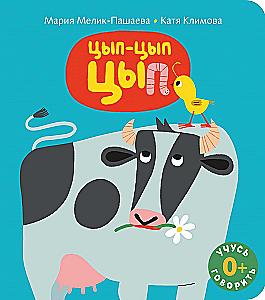
Peep-peep-peep
Author: Мария Мелик-Пашаева, Катя Климова
Printhouse: Melik-Pashaev
Series: I am Learning to Speak
Age restrictions: 0+
Year of publication: 2026
ISBN: 9785000417089
Number of pages: 72
Size: 180х160х10 mm
Cover type: soft
Weight: 190 g
ID: 1746310
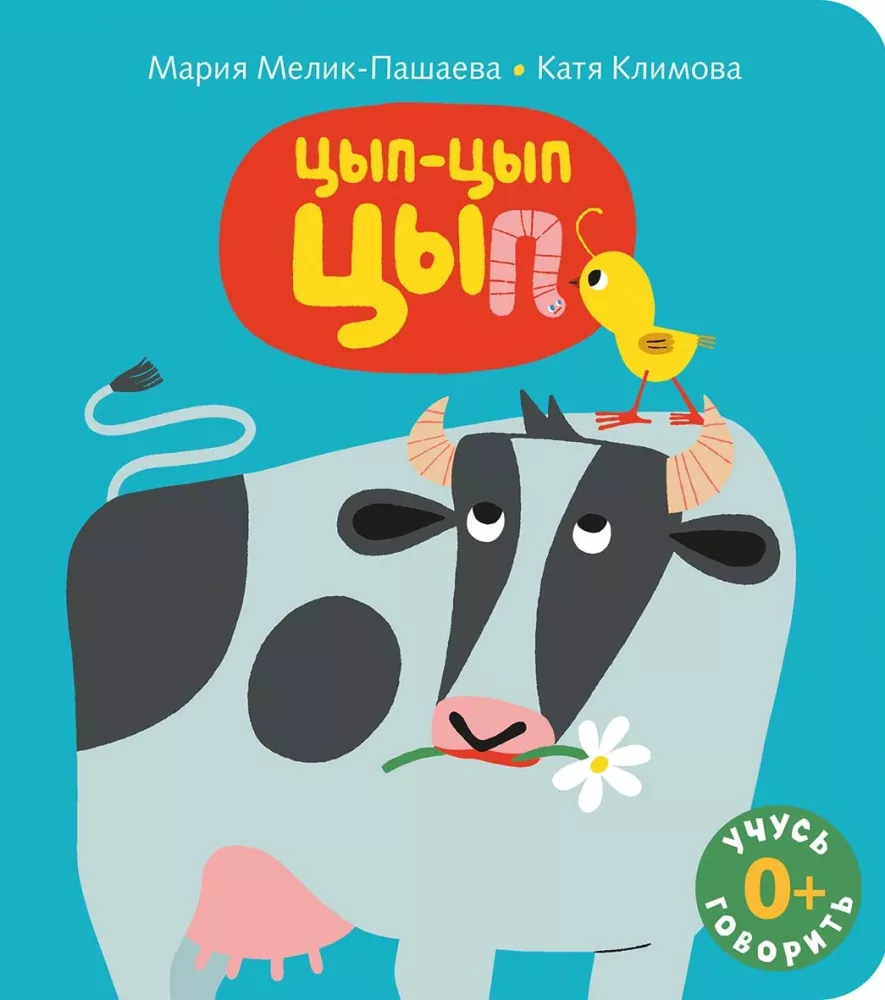
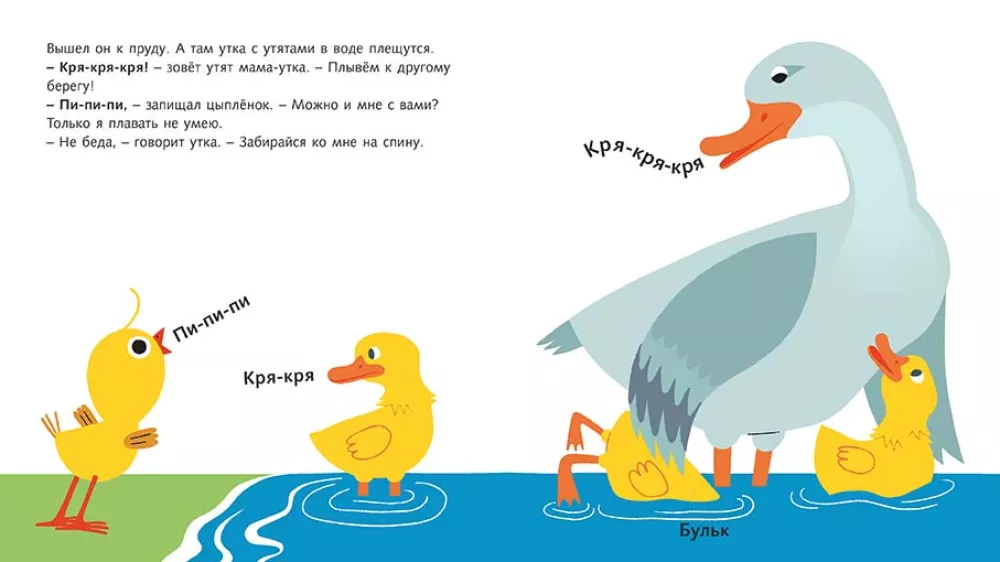
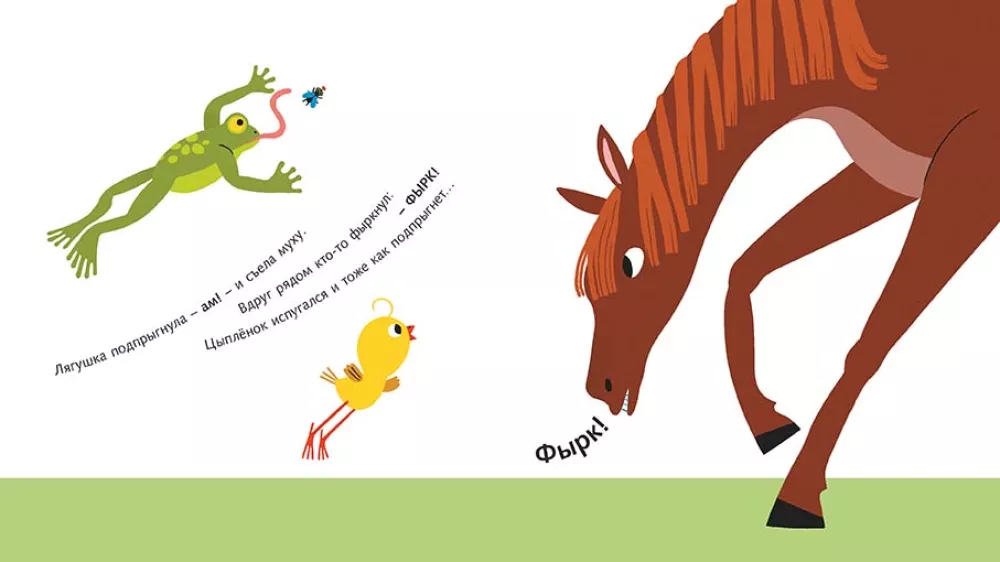
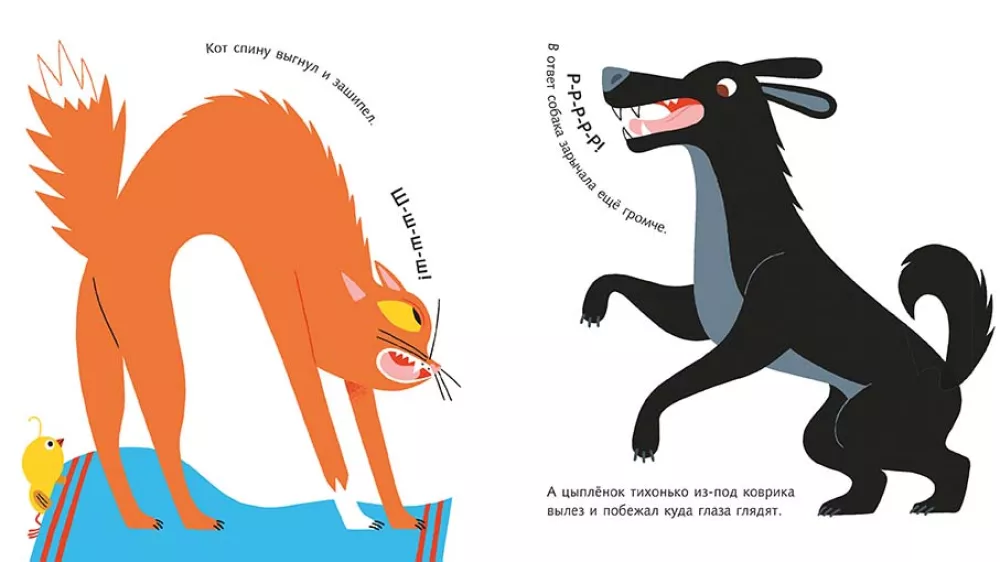
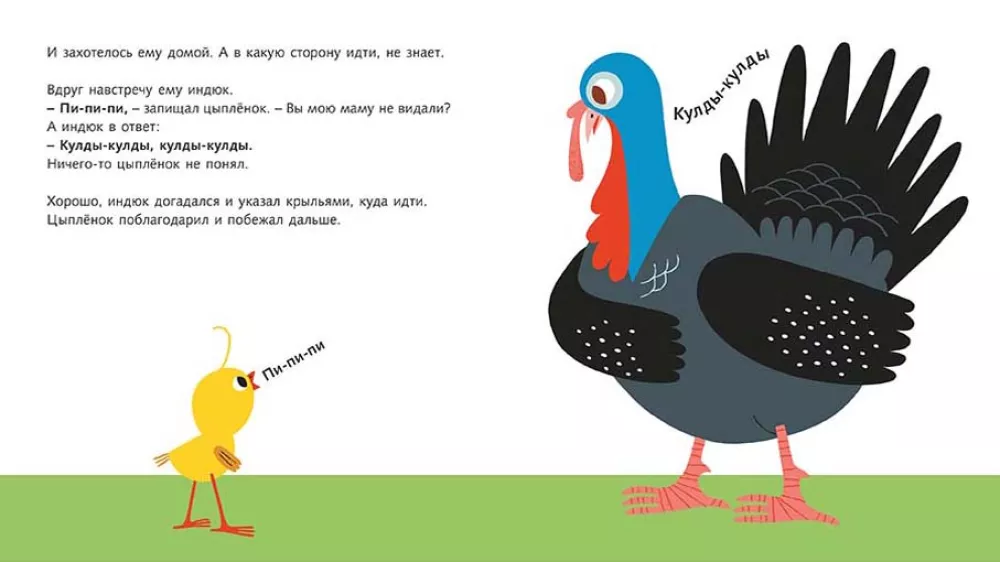
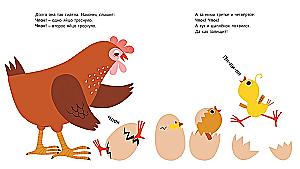
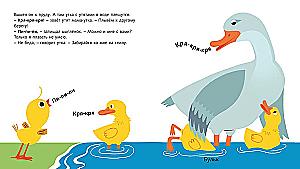
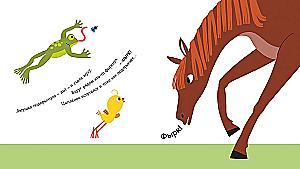
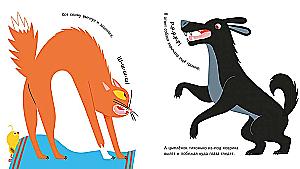
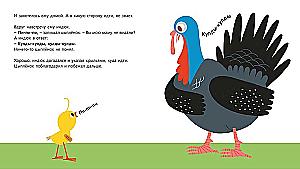
The picture book «Peep-peep-peep» will help a child to start speaking faster through sound imitation and play. The story is about a curious chick who leaves its mother hen to explore the world up close, entirely built on sound imitation. Following the chick, the child meets a duck, a frog, a horse, a cow, a pig, a raven, a dog, a cat, a goat, a ram, a turkey, and a goose. Along the way, they learn how each one communicates, and without realizing it, they start to repeat simple syllables and sounds, imitating the characters. Thus, the child gets involved in the game and becomes a participant in the action, not just a passive observer, but an actor in all roles. Despite the story being quite long (the book has 72 pages), it can be read from any point, taking just as much time as needed to hold the child's attention without tiring them too much.
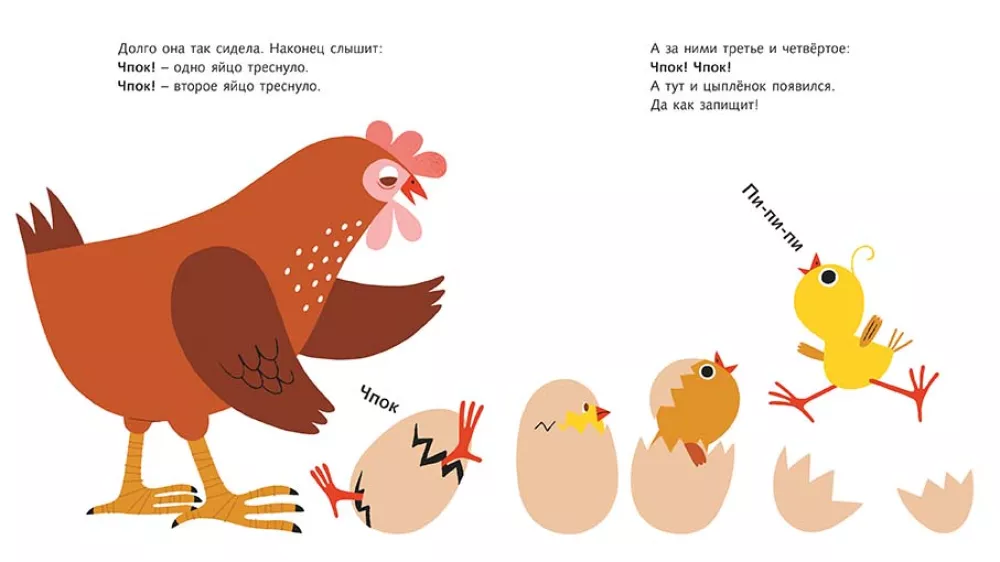
The text consists of short sentences and is rich in sound imitations — from simple monosyllabic «peep», «bark», «moo» to composite sounds like «cluck-cluck-cluck» and «cock-a-doodle-doo». After each sound, pronounced with exaggerated articulation, the adult reading aloud pauses, giving the child a chance to repeat. Many sounds echo throughout the book, and if the child is praised for any attempt (even just for moving their lips), they will increasingly improve with each try. Eventually, they will finish the adult's sentences and prompt the characters with their «lines».
Expressive illustrations by artist Katya Klimova, where all animals are recognizable and their emotions are easily read, will capture the attention of even the smallest children and help turn reading into an enjoyable and useful speech therapy activity. The bright color palette with a predominance of basic colors considers the peculiarities of color perception in children from 6 months old.
The book is of a convenient format with rounded corners, printed on thick paper, so it can be safely handed to small hands without fear of injury or creased pages.
The books in the «I am Learning to Speak» series are recommended by speech therapists for the early initiation of active speech, development of phonemic hearing, and articulation apparatus in children from one to three years old.
Bestsellers