


Emotion Diary
«Emotion Diary» — is a diary about understanding one's own feelings, reducing anxiety, and developing the skill of regular self-observation. It is suitable for those who find it important to better notice their state, connect emotions with thoughts and bodily...
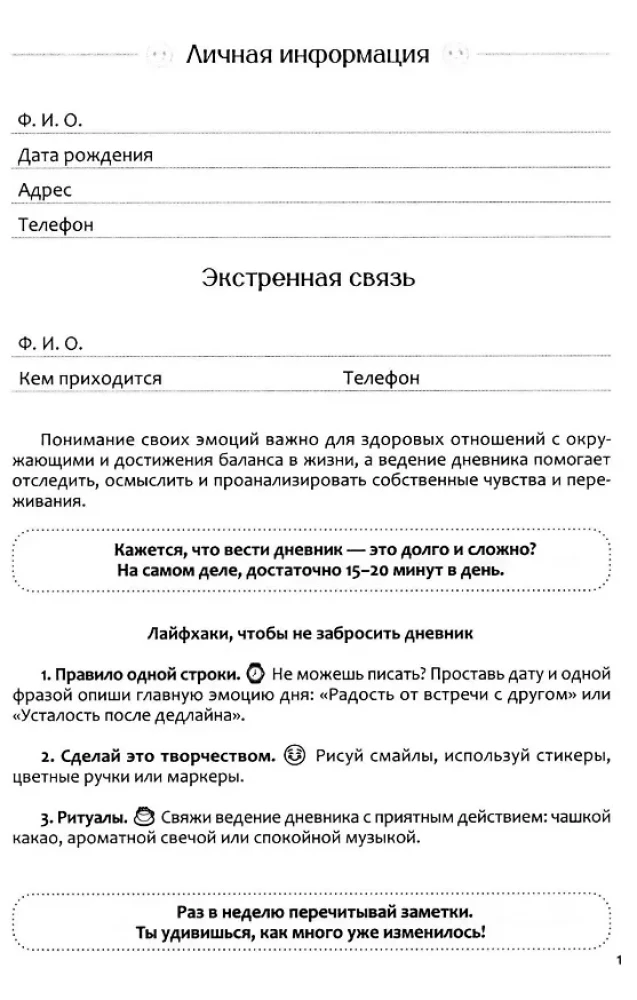
reactions, and seek gentler ways of self-support. The format will be convenient for those who are just starting to keep records: there are explanations inside on how to organize such a practice and make it part of everyday life. Long separate rituals are not needed for filling it out: short notes can easily be incorporated into the day without overload.
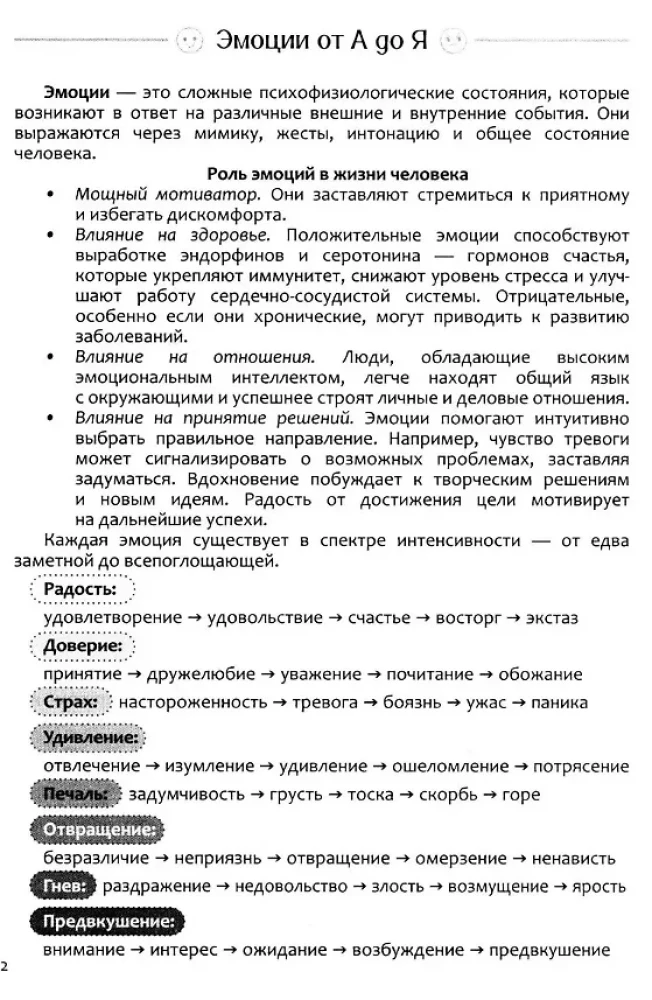
At its core — the theme of anxiety, emotional self-regulation, and mindful attitude towards one's experiences. The publication combines brief explanations of how emotions and anxiety are connected with the practice of daily observations. It offers a clear way to track feelings, thoughts, bodily sensations, and reactions in specific situations. This approach makes the topic of emotional intelligence not abstract but related to everyday experience.
The author relies on attentive attention to the internal causes of experiences, including hidden feelings and non-obvious motives. At the same time, the presentation remains accessible and structured. The publication does not reduce emotions to simple labels but suggests looking at them as signals that can be noticed, described, and understood. A separate place is given to the idea of a gentle pace: there is no pressure or demand to quickly understand oneself, but rather space for gradual reflection and observation of changes.
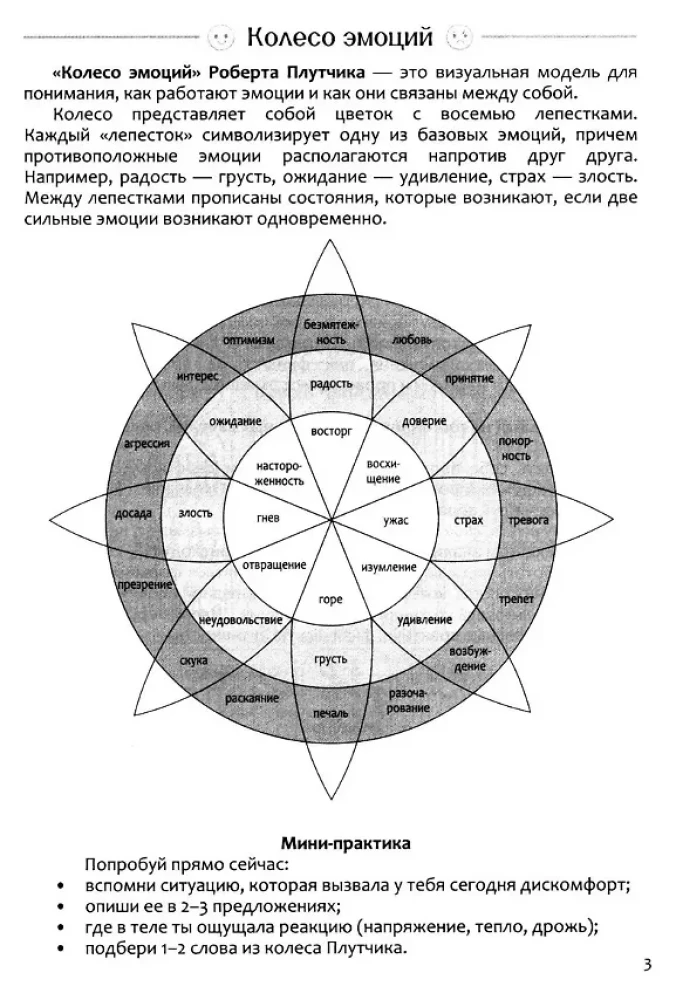
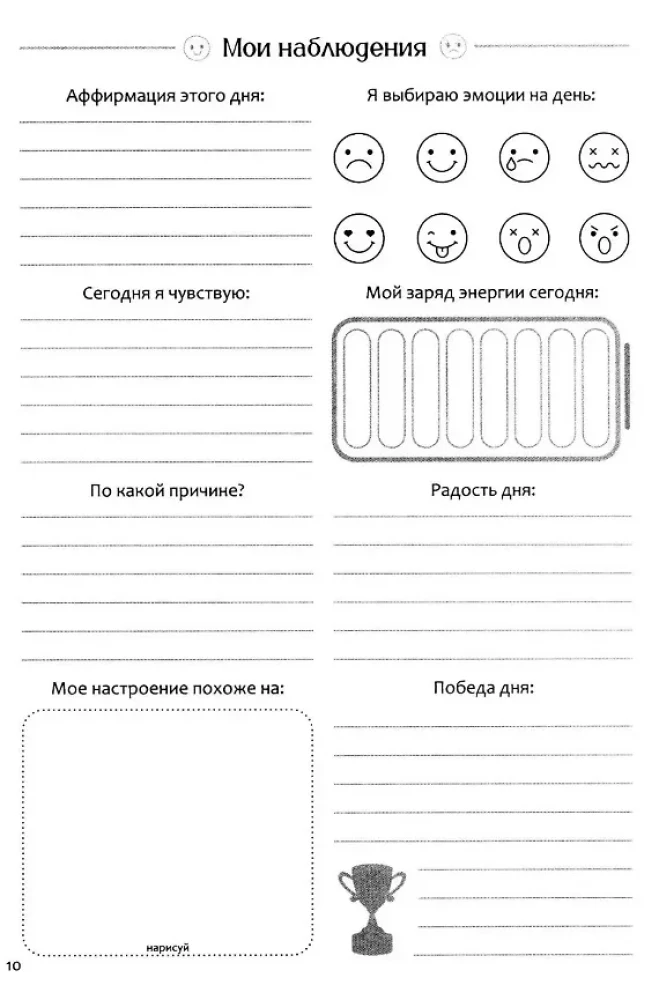
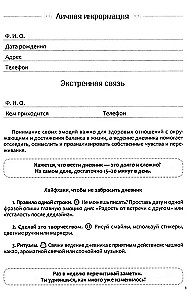
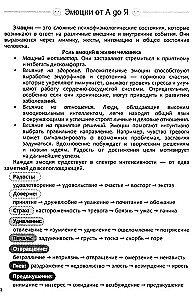
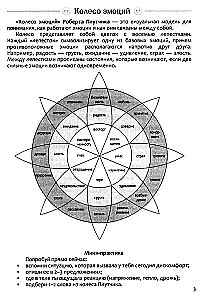
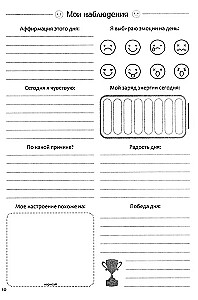
Inside, there are not only fields for daily entries but also step-by-step instructions for keeping a diary, a tool for quickly assessing one's state, as well as exercises for reducing anxiety. These include breathing techniques, body practices, meditations, and drawing exercises. The daily block is complemented by weekly and monthly reflection questions: they help to see repeating reactions, changes in well-being, and individual ways of self-support. This format is convenient for independent work and more thoughtful conversations about one's state.
This diary is suitable for adults interested in the psychology of emotions, self-help, and working with anxiety in everyday life. It is particularly relevant for the first experience of keeping psychological records: the structure is already thought out, and the tasks do not require special preparation. The publication can be used as a personal tool for self-observation and as a supplement to work with a specialist. Its value — lies in a clear system, a combination of brief theory with exercises, and attention to how emotions manifest in real life.
At its core — the theme of anxiety, emotional self-regulation, and mindful attitude towards one's experiences. The publication combines brief explanations of how emotions and anxiety are connected with the practice of daily observations. It offers a clear way to track feelings, thoughts, bodily sensations, and reactions in specific situations. This approach makes the topic of emotional intelligence not abstract but related to everyday experience.
The author relies on attentive attention to the internal causes of experiences, including hidden feelings and non-obvious motives. At the same time, the presentation remains accessible and structured. The publication does not reduce emotions to simple labels but suggests looking at them as signals that can be noticed, described, and understood. A separate place is given to the idea of a gentle pace: there is no pressure or demand to quickly understand oneself, but rather space for gradual reflection and observation of changes.
Inside, there are not only fields for daily entries but also step-by-step instructions for keeping a diary, a tool for quickly assessing one's state, as well as exercises for reducing anxiety. These include breathing techniques, body practices, meditations, and drawing exercises. The daily block is complemented by weekly and monthly reflection questions: they help to see repeating reactions, changes in well-being, and individual ways of self-support. This format is convenient for independent work and more thoughtful conversations about one's state.
This diary is suitable for adults interested in the psychology of emotions, self-help, and working with anxiety in everyday life. It is particularly relevant for the first experience of keeping psychological records: the structure is already thought out, and the tasks do not require special preparation. The publication can be used as a personal tool for self-observation and as a supplement to work with a specialist. Its value — lies in a clear system, a combination of brief theory with exercises, and attention to how emotions manifest in real life.
Printhouse: Prospekt
Age restrictions: 16+
Year of publication: 2025
ISBN: 9785392453351
Number of pages: 80
Size: 210х145х4 mm
Cover type: soft
Weight: 90 g
ID: 1744836
Sold out
€ 3.49
Sold out
€ 3.49
Bestsellers




€ 13.29
In stock
12 Weeks in a Year. How to Achieve More in 12 Weeks Than Others Do in 12 Months
Майкл Леннингтон, Брайан Моран

€ 7.89
In stock
Choice. On the Freedom and Inner Strength of a Person
Эдит Ева Эгер, Эсме Швалль-Вейганд



€ 6.99
In stock




€ 6.99
In stock