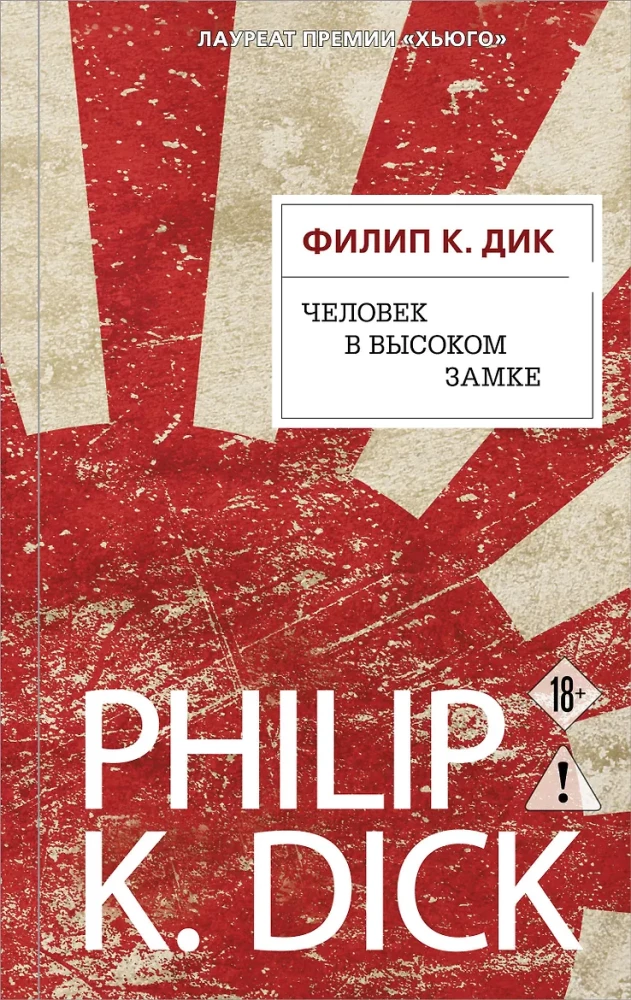
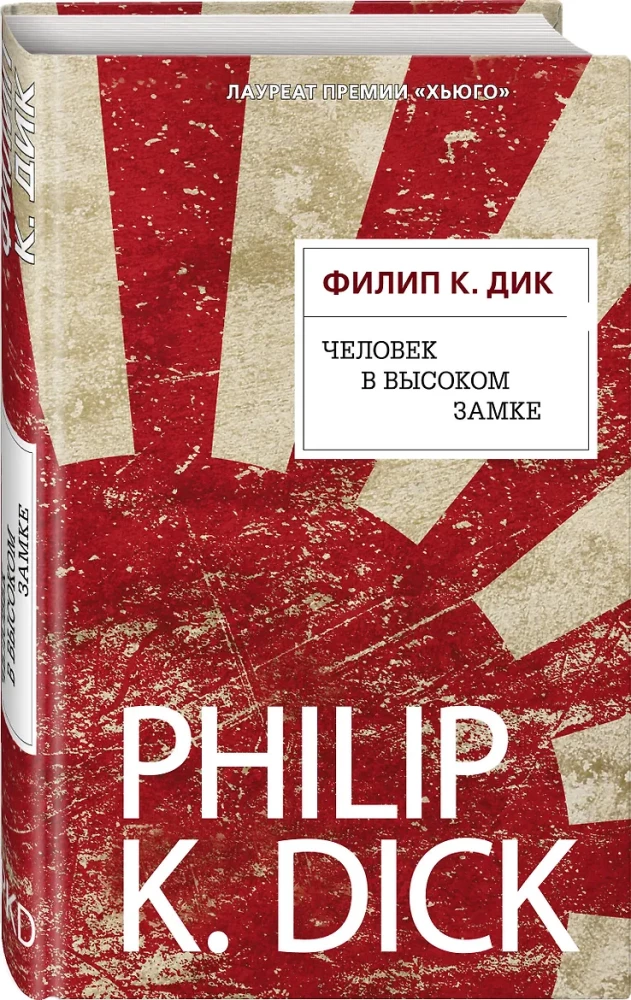
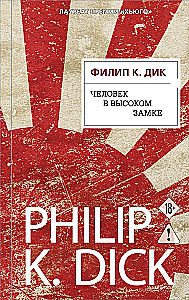
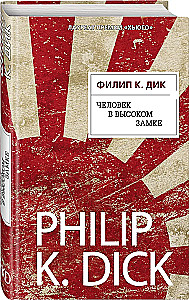
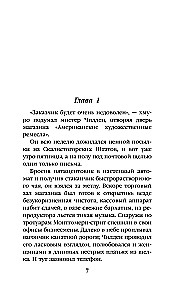
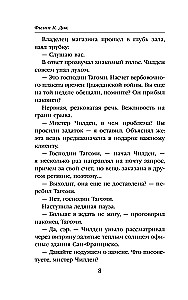
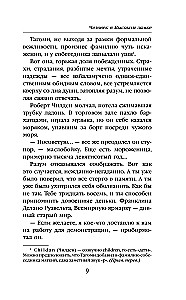
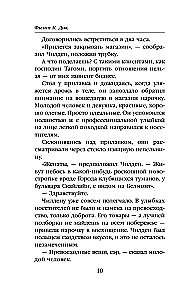
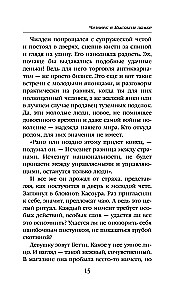
The Man in the High Castle
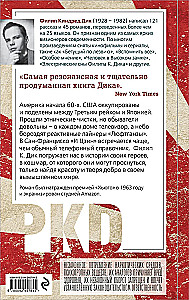
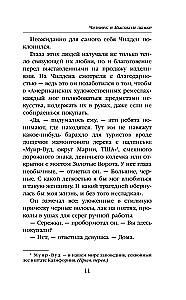
«The Man in the High Castle» — a science fiction novel in the genre of alternative history about a world where the USA after World War II is divided between the Third Reich and Japan, and a person's life depends...
not only on power but also on what they are willing to believe. Philip K. Dick portrays an occupied America of the early 1960s without the usual heroic shine: with antique shops, political vigilance, everyday adaptability, and fear that has become part of daily life. In this world, propaganda, commerce, spiritual practices, and quiet internal resistance coexist. Reality here seems unstable, and familiar landmarks are constantly shifting. This is a standalone novel that reads as a cohesive story and simultaneously as one of the key books in the dystopian genre.
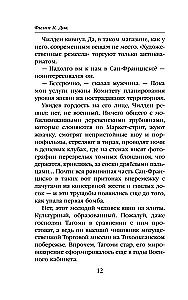
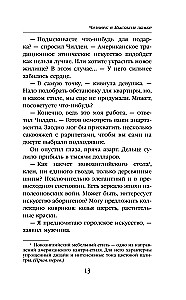
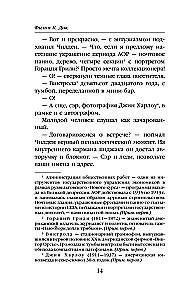
At the center of the narrative are several characters whose paths intersect in San Francisco and other parts of the occupied country. An antique dealer struggles to stay afloat in a system where even the past has become a commodity. A craftsman seeks a way to live by his labor and not dissolve in someone else's order. A young woman faces people and ideas that change her perspective on what is happening. A Japanese official finds himself between diplomacy, personal conscience, and the growing tension between the powers. A separate role is played by a banned book that describes a completely different course of history. It forces the characters to question the structure of their own world and to look more closely at what they have come to consider normal.
Frank Frink — a craftsman for whom work and independence become a way to maintain control under the occupying authorities.
Juliana Frink — a young woman through whom the search for truth, fear, and personal choice in a world of violence is revealed.
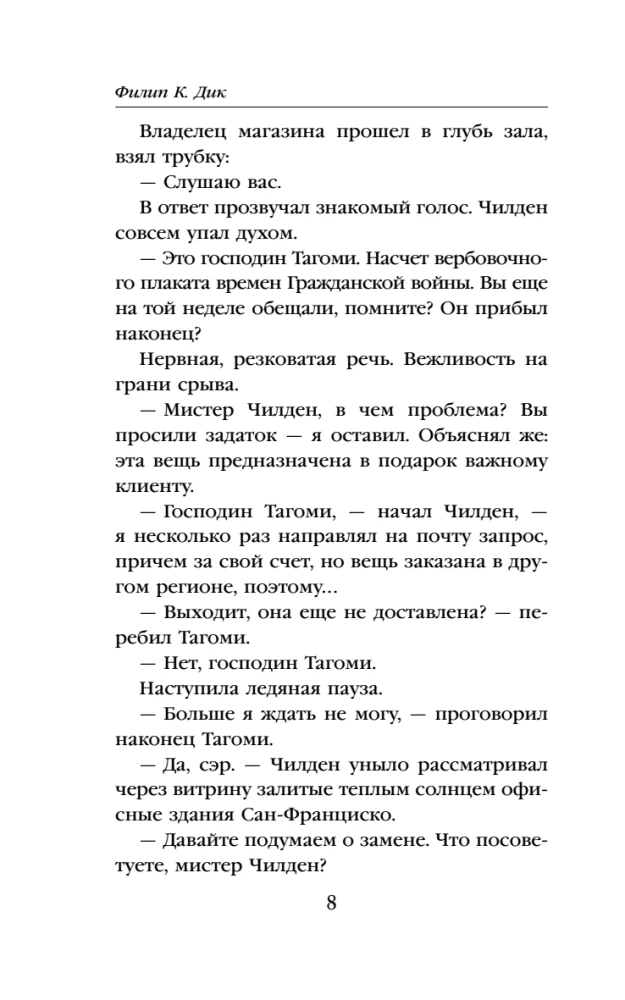
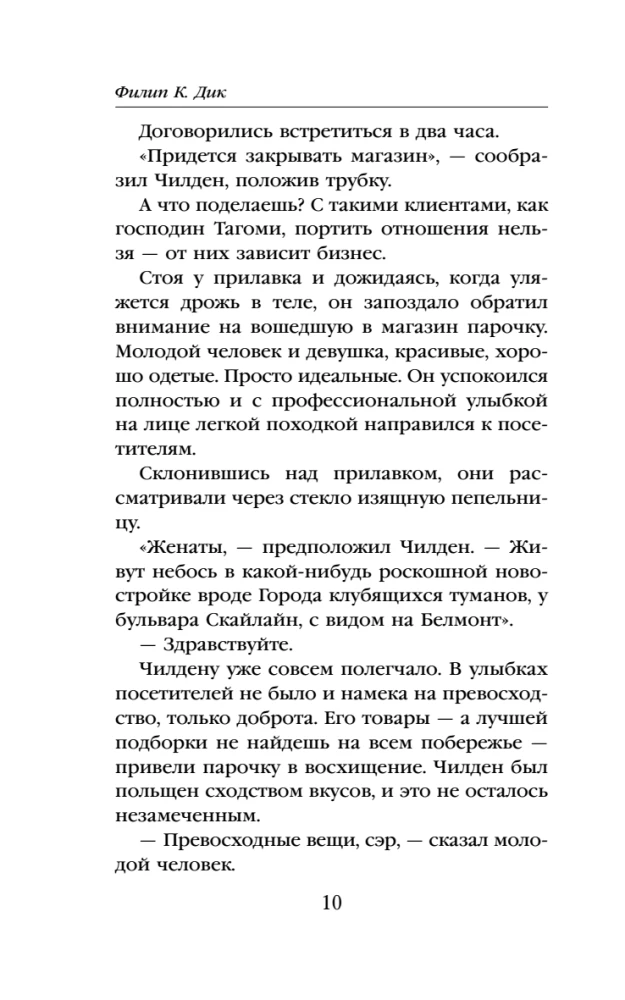
Nobusuke Tagomi — a Japanese official in San Francisco involved in important political decisions and internal moral questions.
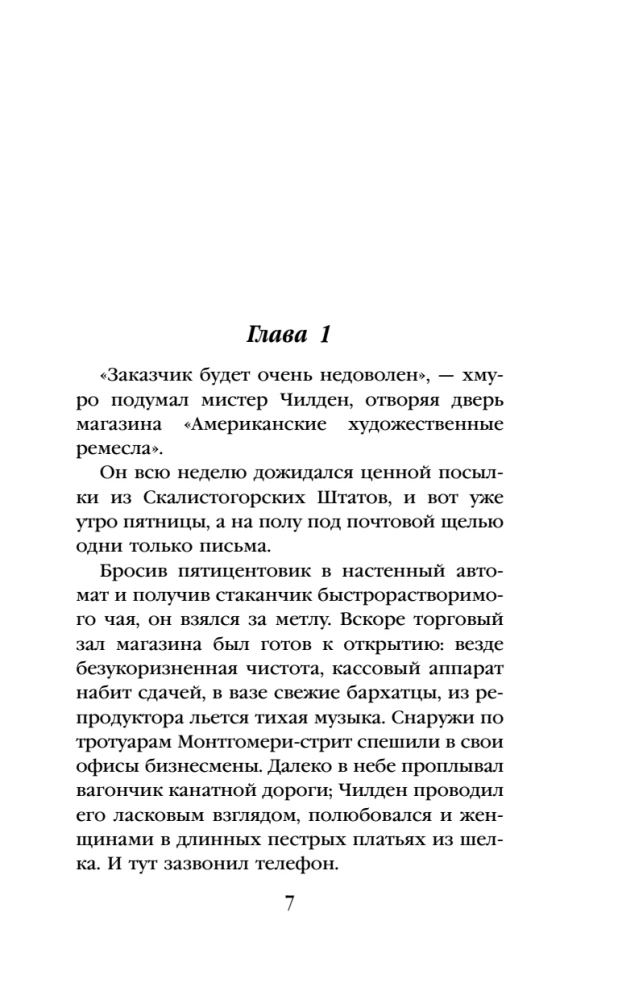
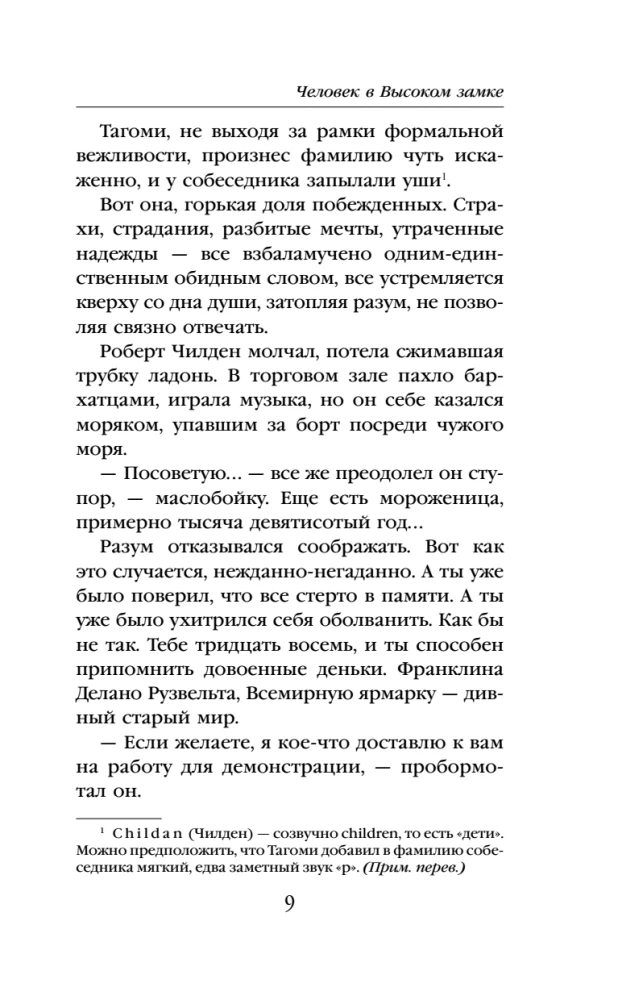
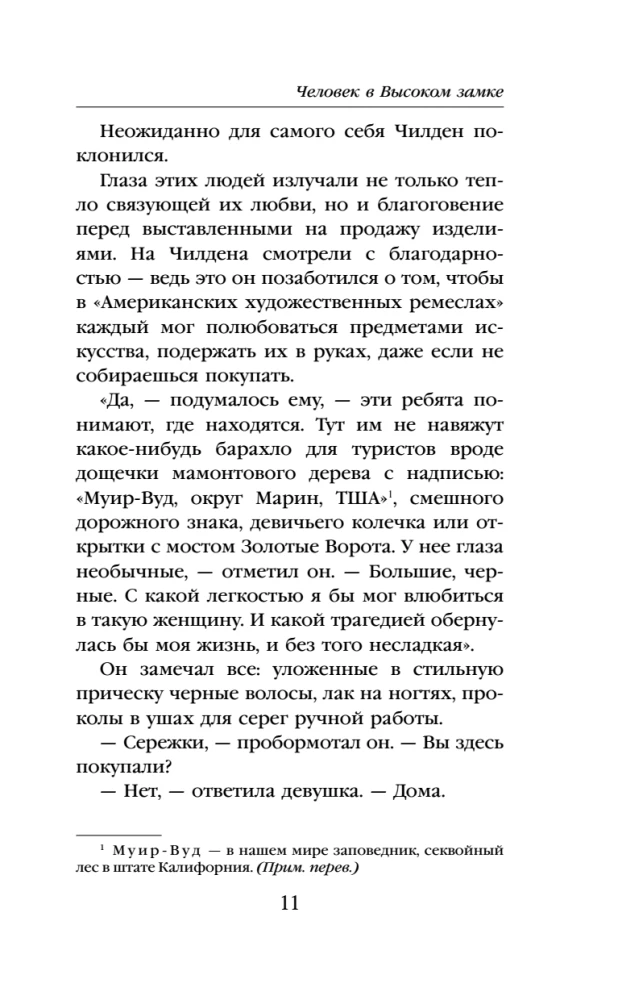
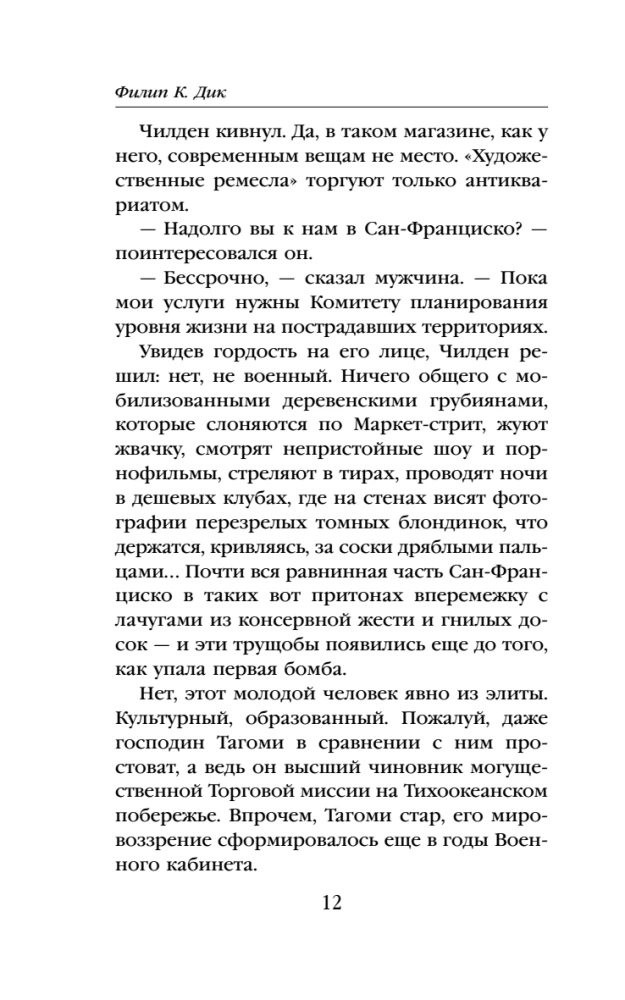
Robert Childan — the owner of an antique shop whose line illustrates Americans' dependence on the new power and complicated relationships with the culture of the victors.
Hawthorne Abendsen — a writer who created the banned book that influences the perception of reality among other characters.
Occupied America in Philip K. Dick's narrative is structured not only through politics but also through everyday life. Things, symbols, and cultural gestures here mean just as much as official orders. On the west coast, Japanese influence is noticeable, on the east, the power of the Nazi regime looms, and between them, anxiety about a new round of great politics grows. An important detail of the novel is the coexistence of technological progress, spiritual practices, and fake relics. Because of this, the world of the book appears both familiar and disturbingly alien.
At the center of the narrative are several characters whose paths intersect in San Francisco and other parts of the occupied country. An antique dealer struggles to stay afloat in a system where even the past has become a commodity. A craftsman seeks a way to live by his labor and not dissolve in someone else's order. A young woman faces people and ideas that change her perspective on what is happening. A Japanese official finds himself between diplomacy, personal conscience, and the growing tension between the powers. A separate role is played by a banned book that describes a completely different course of history. It forces the characters to question the structure of their own world and to look more closely at what they have come to consider normal.
Frank Frink — a craftsman for whom work and independence become a way to maintain control under the occupying authorities.
Juliana Frink — a young woman through whom the search for truth, fear, and personal choice in a world of violence is revealed.
Nobusuke Tagomi — a Japanese official in San Francisco involved in important political decisions and internal moral questions.
Robert Childan — the owner of an antique shop whose line illustrates Americans' dependence on the new power and complicated relationships with the culture of the victors.
Hawthorne Abendsen — a writer who created the banned book that influences the perception of reality among other characters.
Occupied America in Philip K. Dick's narrative is structured not only through politics but also through everyday life. Things, symbols, and cultural gestures here mean just as much as official orders. On the west coast, Japanese influence is noticeable, on the east, the power of the Nazi regime looms, and between them, anxiety about a new round of great politics grows. An important detail of the novel is the coexistence of technological progress, spiritual practices, and fake relics. Because of this, the world of the book appears both familiar and disturbingly alien.
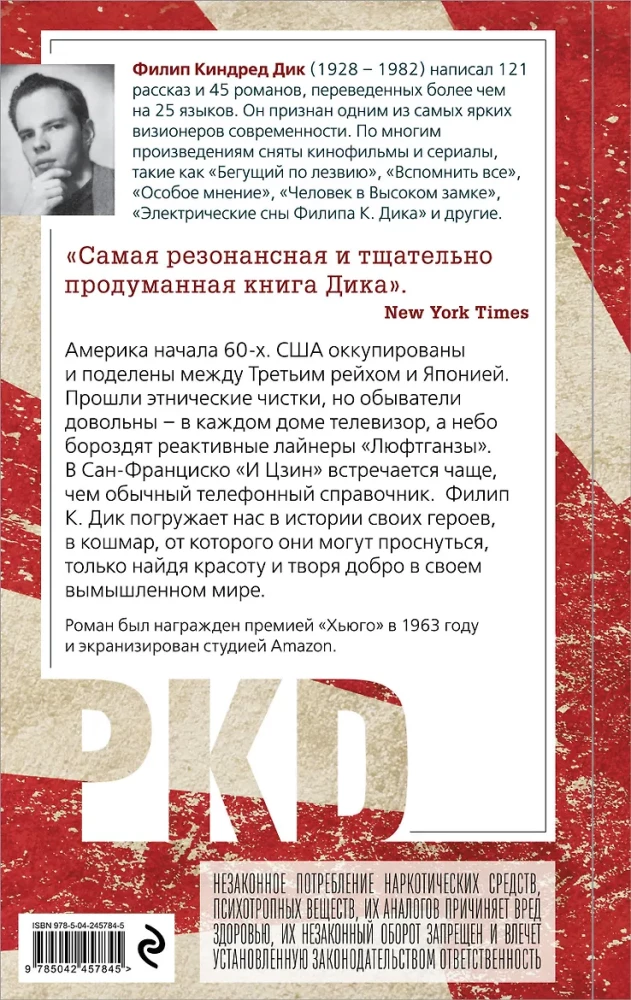
Author: Филип Киндред Дик
Printhouse: Eksmo
Series: Philip K. Dick. Electric Dreams
Age restrictions: 18+
Year of publication: 2026
ISBN: 9785042457845
Number of pages: 416
Size: 207х132х26 mm
Cover type: hard
Weight: 404 g
ID: 1744544
In stock
€ 11.29
Will be delivered to United States on 29 September (Tu):
By courier
from € 38.94
Bestsellers



Bestseller
€ 12.19
In stock
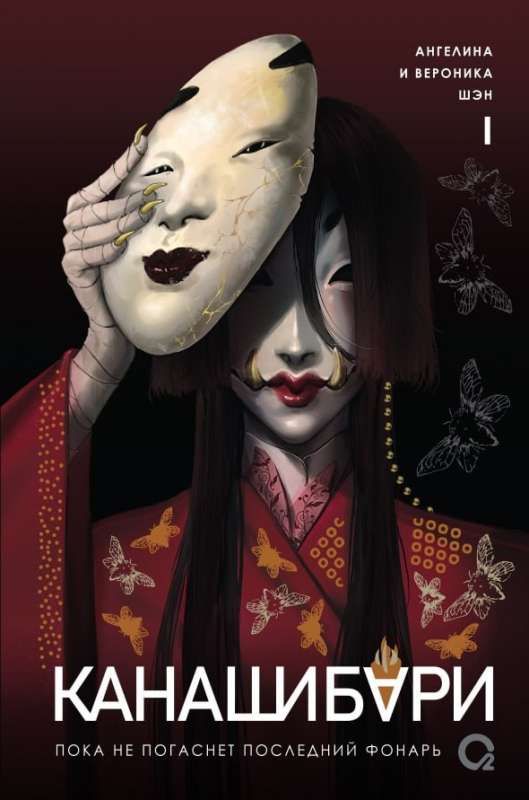
Kanashibari. Until the Last Lantern Goes Out. Volume 1
Ангелина Шэн, Вероника Шэн