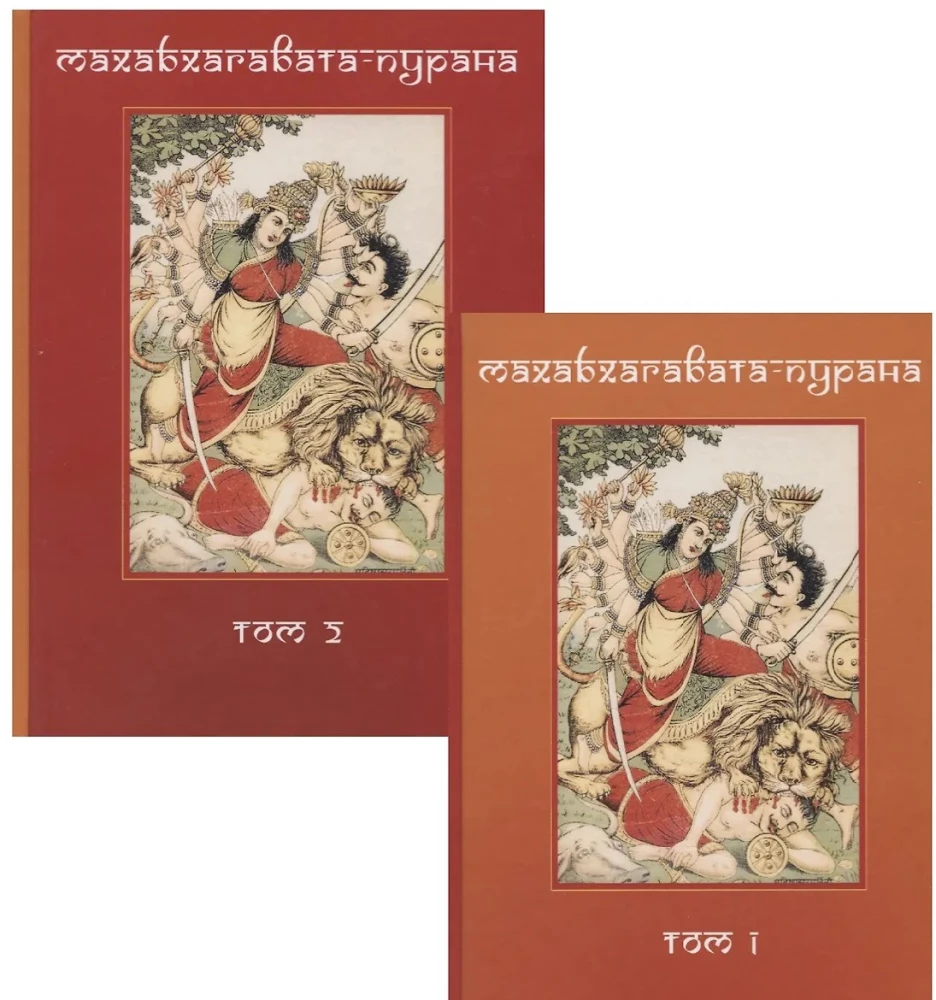
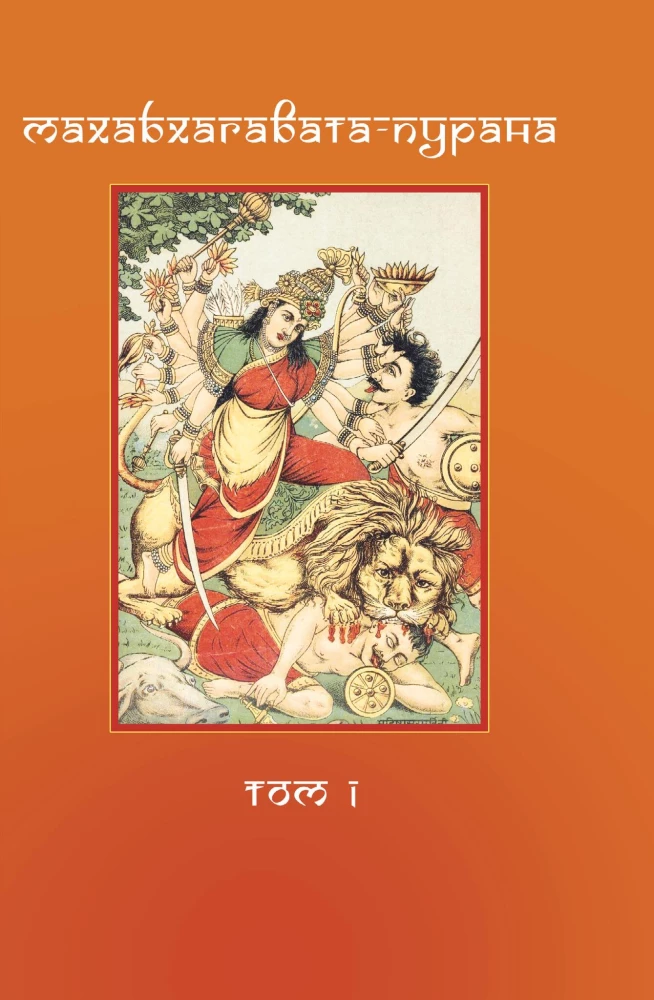
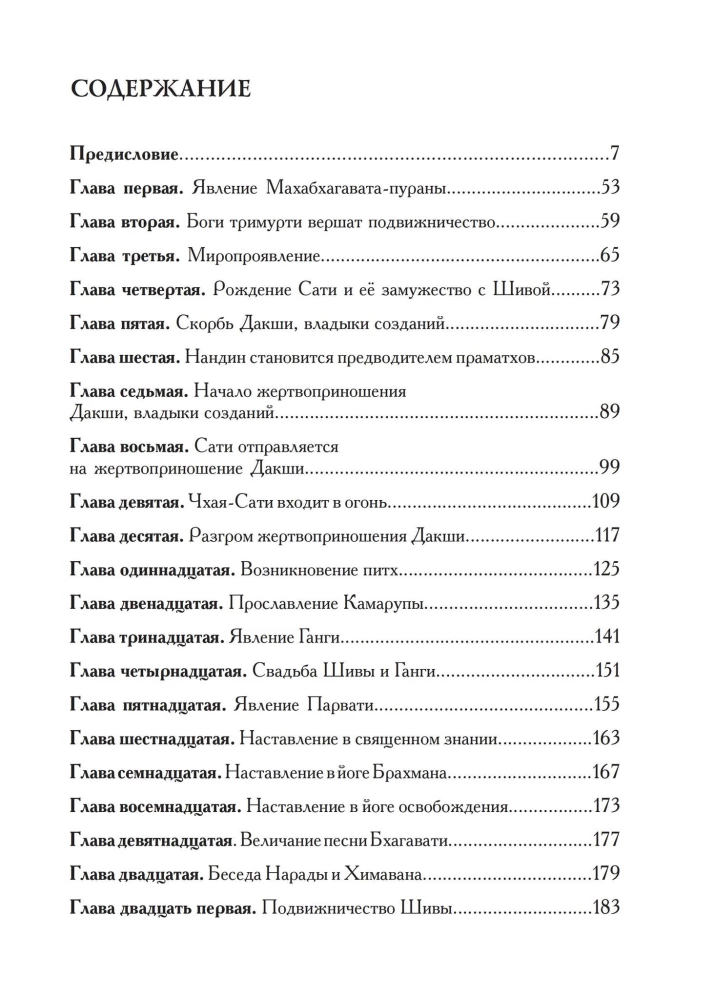
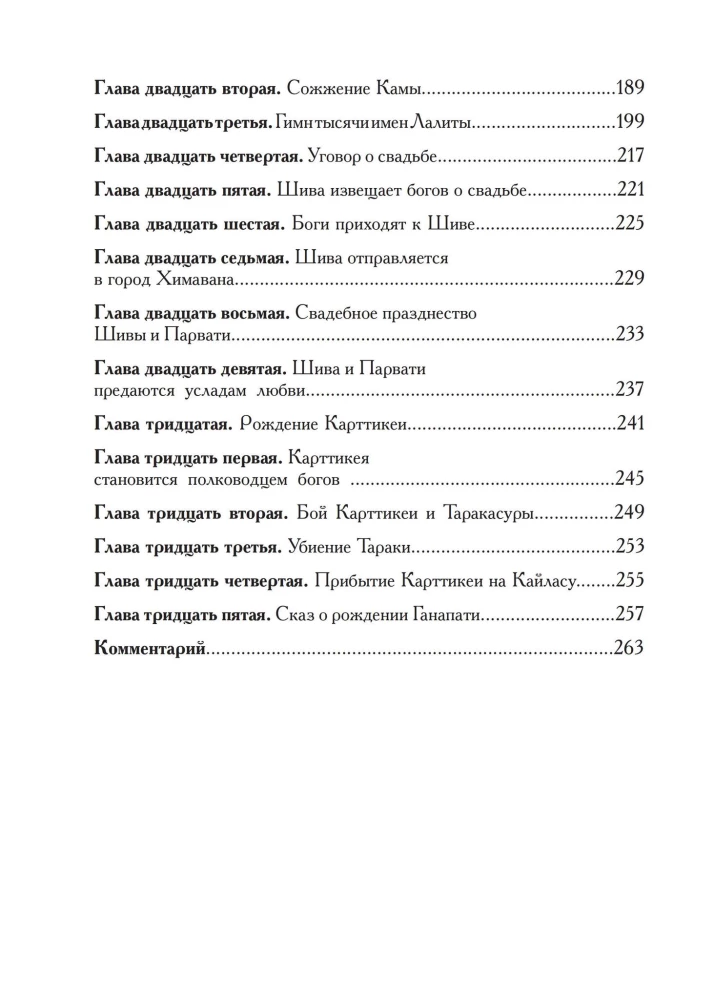
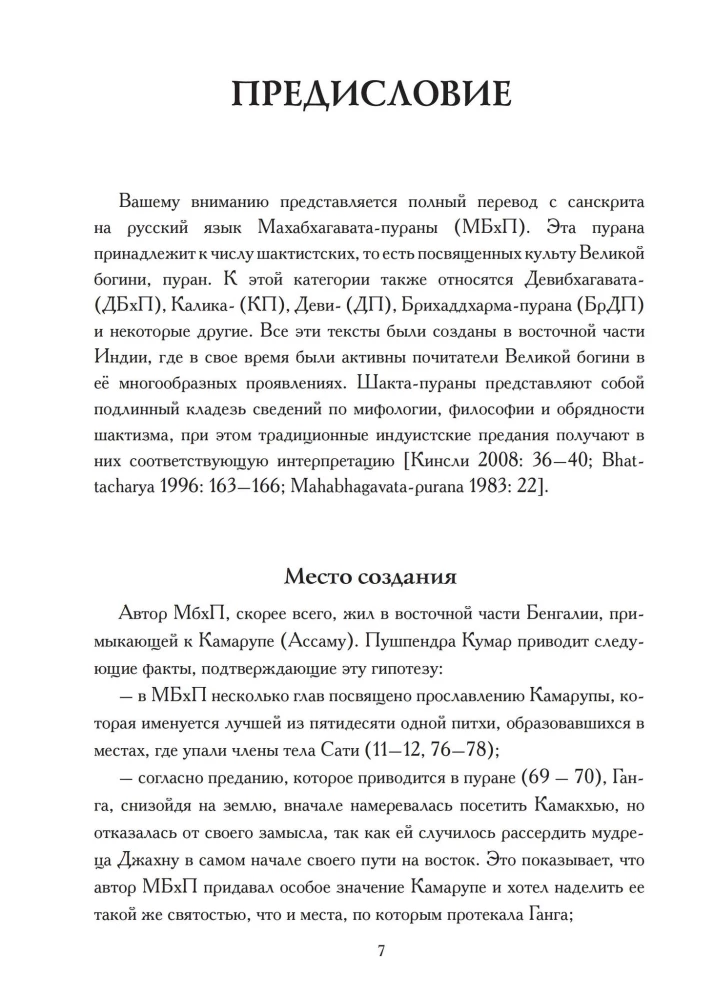
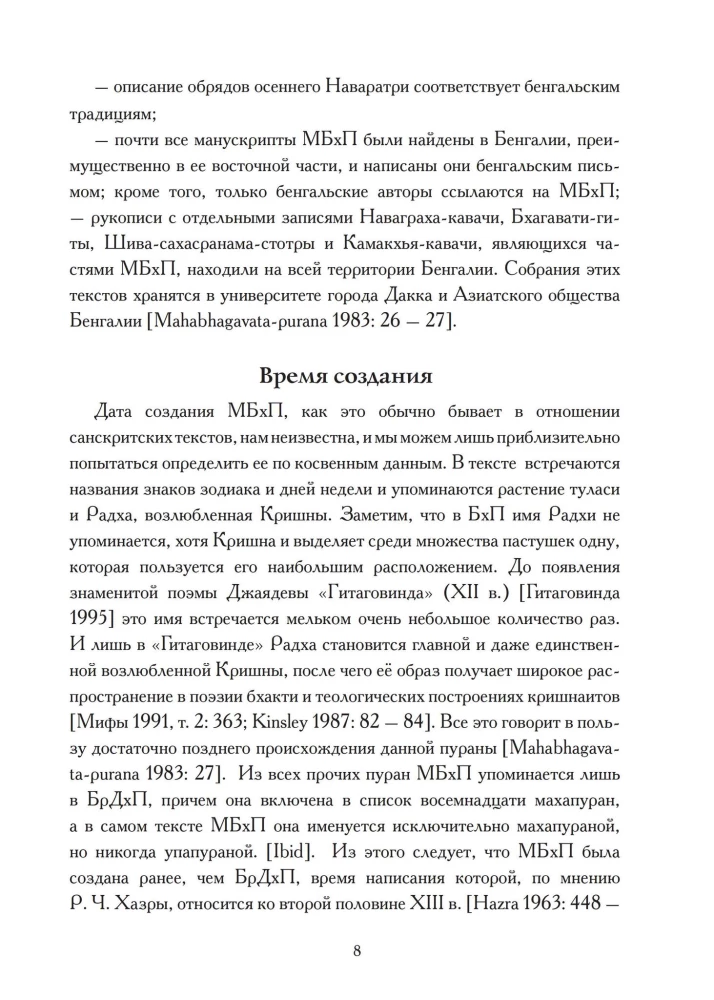
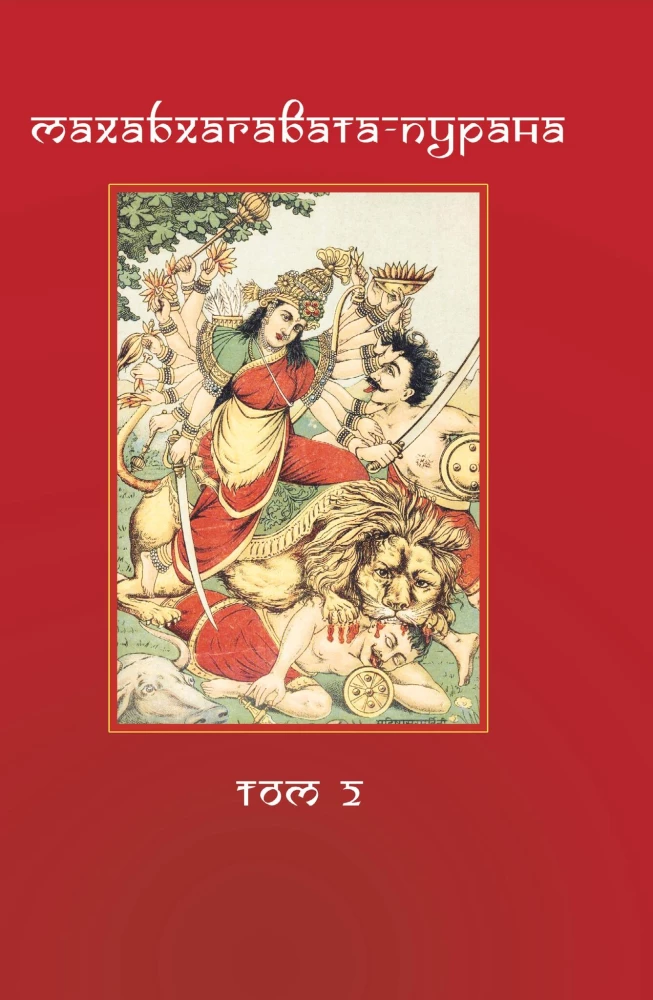
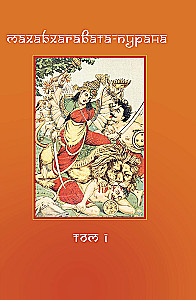

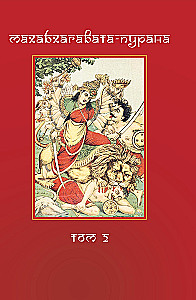
Mahabhagavata Purana. Volume 1. Volume 2 (set of 2 books)
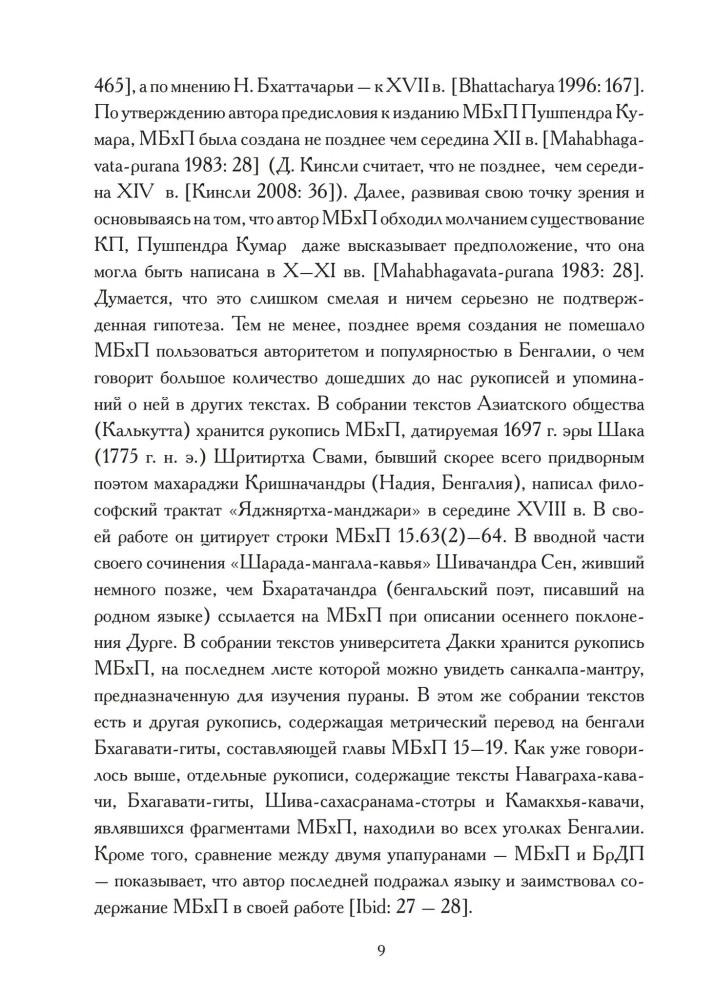
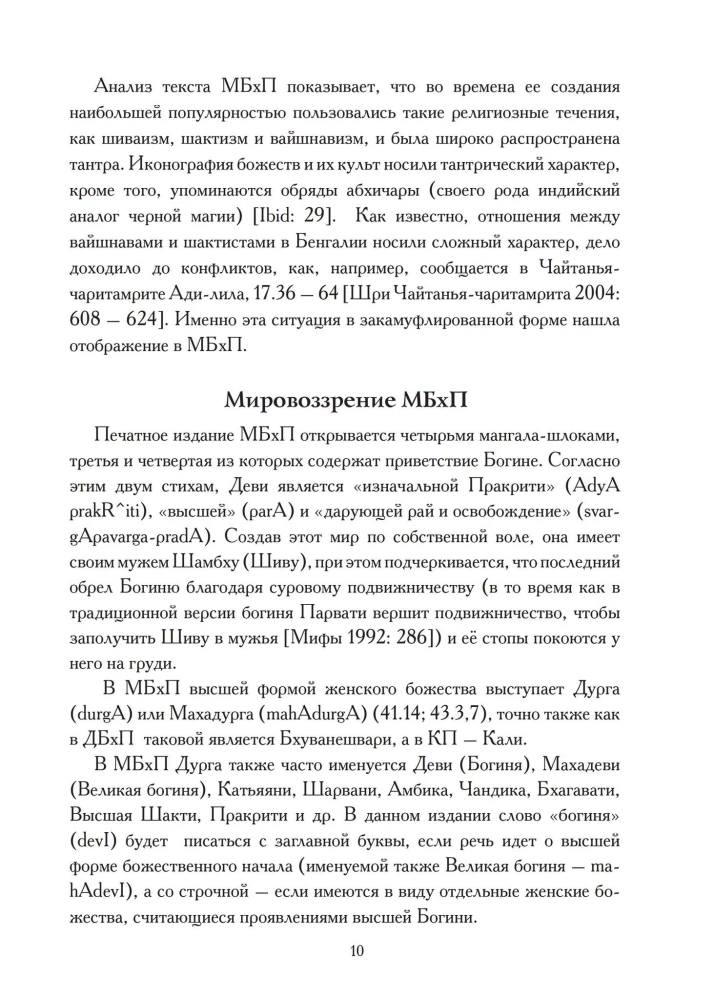
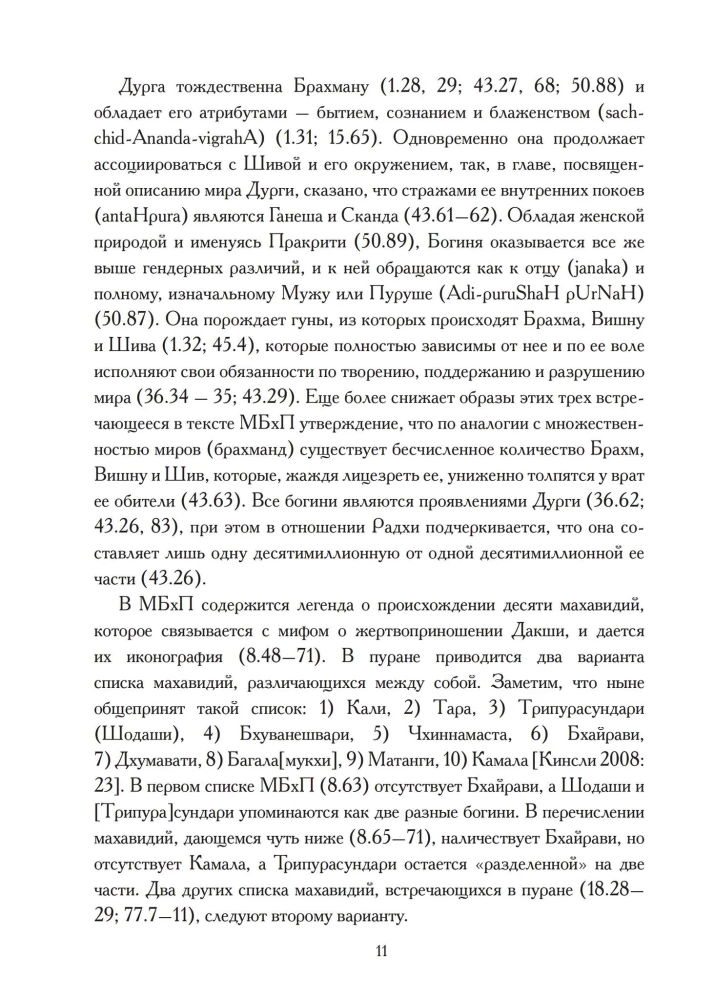
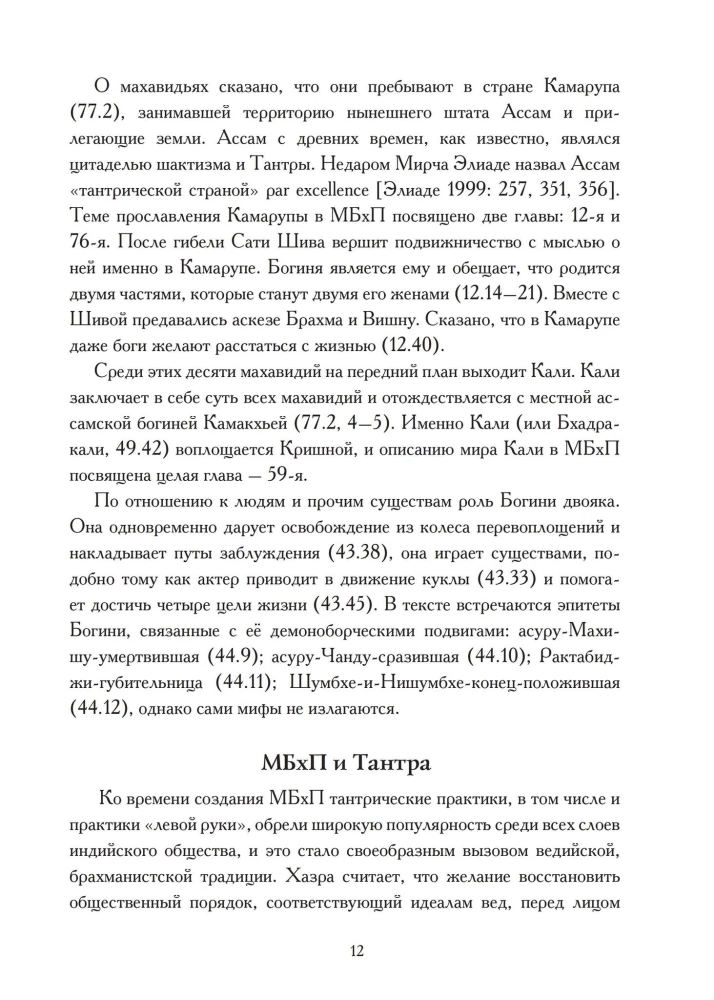
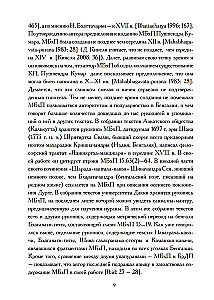
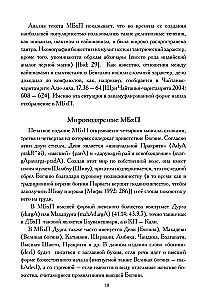
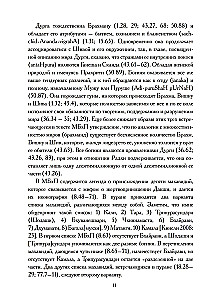
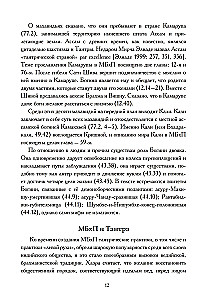
Mahabhagavata Purana is one of the well-known Shaktist Puranas, created in Bengal during the Middle Ages. The Purana is marked by significant influence from Tantra and contains many myths and legends, which are very popular among the devotees of the...
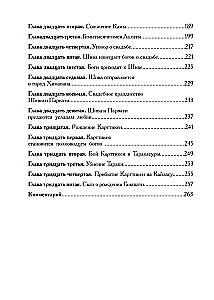
Goddess. In particular, in the Mahabhagavata, we become acquainted with the legend of the origin of the ten Mahavidyas, which is linked to the myth of Daksha's sacrifice, and here we find their iconography. However, even more interesting are the Shaktist versions of the Ramayana, Mahabharata, and tales of Krishna. Some domestic lovers of Indian culture may even be shocked by these versions. Thus, Rama is portrayed as a devotee of Durga, able to defeat Ravana only with the help of the Goddess, while Sita turns out to be Ravana's daughter. By worshipping Durga, Rama establishes the famous Shaktist festival of Navaratri, and the Purana sets out the prescriptions for how to celebrate this festival. Krishna performs his pastimes on Earth because once on Kailasa Shiva, admiring the beauty of Parvati, thought about how good it would be to be born a woman and suggested to his divine consort to 'change roles': so that she would be born on Earth as a man, and he as a woman, and she gladly agreed. Shiva and Parvati agreed that he would embody Radha (and in his eight manifestations become eight wives of Krishna), while she would be Krishna. The Pandavas, in order to gain victory over their sworn enemies the Kauravas, worship the beautiful and sensual goddess Kamakhya in Kamarupa (Assam), at the place where, according to tradition, the yoni of Sati fell. It can be said that in the conditions of coexistence and rivalry in Bengal between devotees of the Goddess and Vaishnavas, the interpretation of epic tales (primarily related to Rama and Krishna as the two main incarnations of Vishnu) in a Shaktist spirit in the Mahabhagavata Purana represents, apparently, an attempt to 'build bridges' between both traditions, emphasizing the supremacy of the feminine principle.
Printhouse: KASTALIIa
Age restrictions: 16+
Year of publication: 2018
ISBN: 9785519658546
Number of pages: 702
Size: 240х170х42 mm
Cover type: hard
Weight: 1359 g
ID: 1744115
In stock
€ 36.99
Will be delivered to United States on 29 September (Tu):
By courier
from € 38.94
Bestsellers
€ 36.99
In stock









€ 17.89
In stock
Happy Pocket, Full of Money: The Formation of Abundance Consciousness
Джиканди Дэвид Кэмерон

€ 5.29
In stock
Love Your Illness. How to Become Healthy by Knowing the Joy of Life
Валерий Синельников