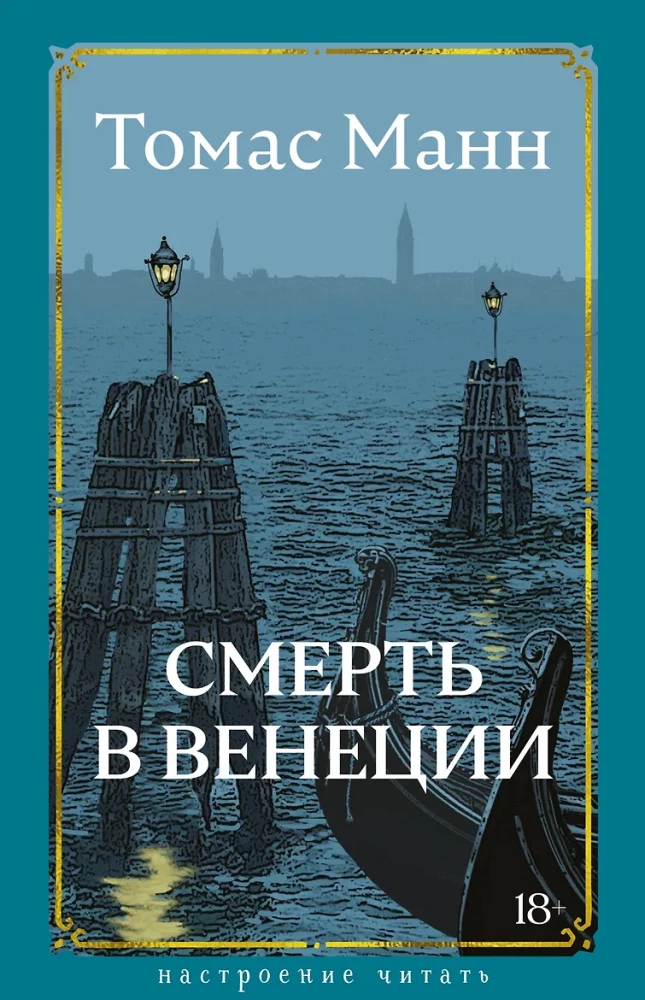
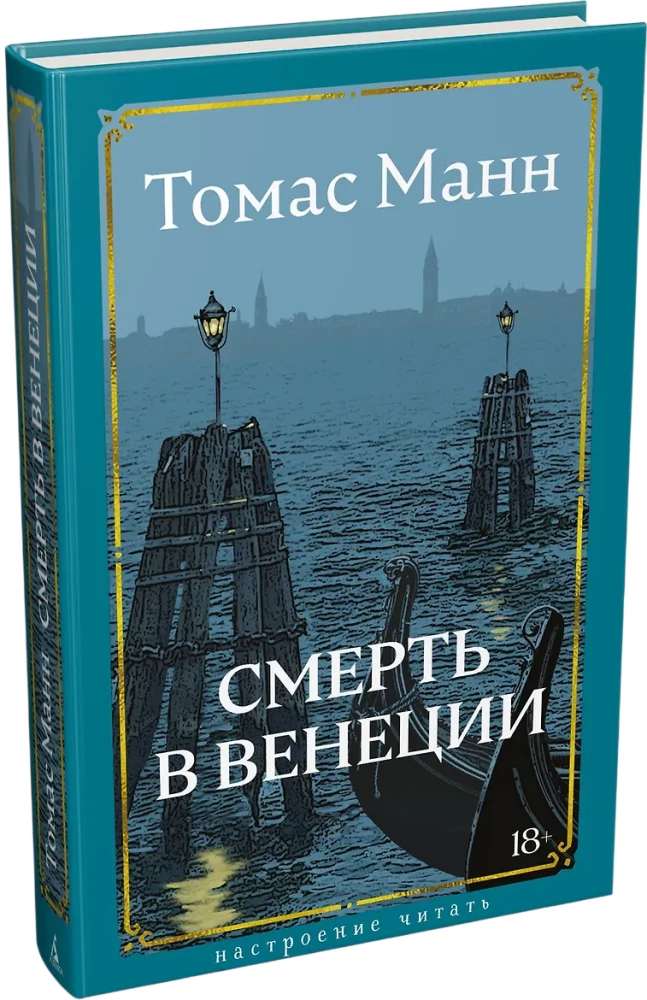
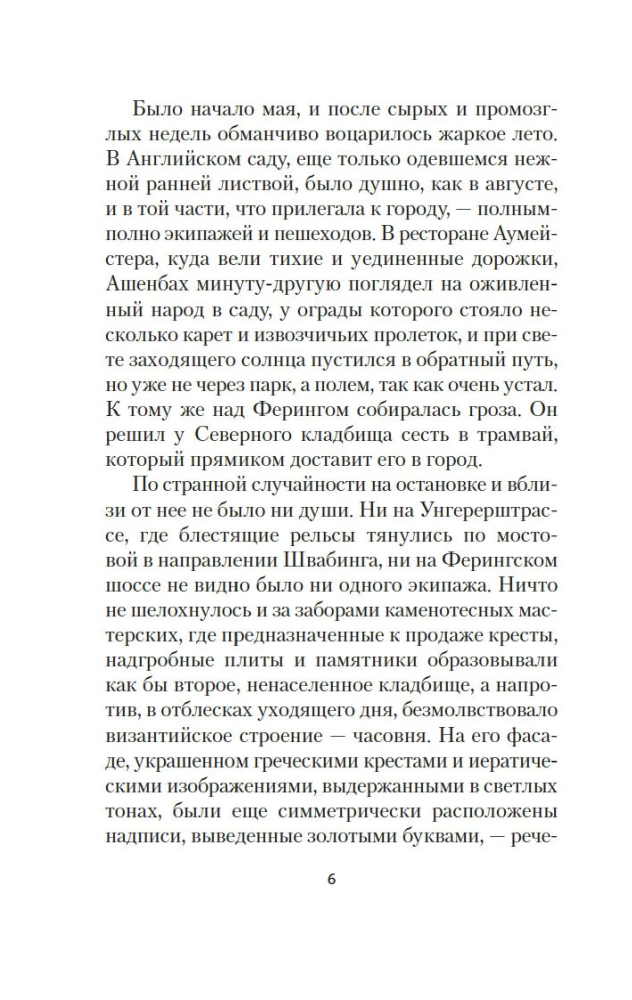
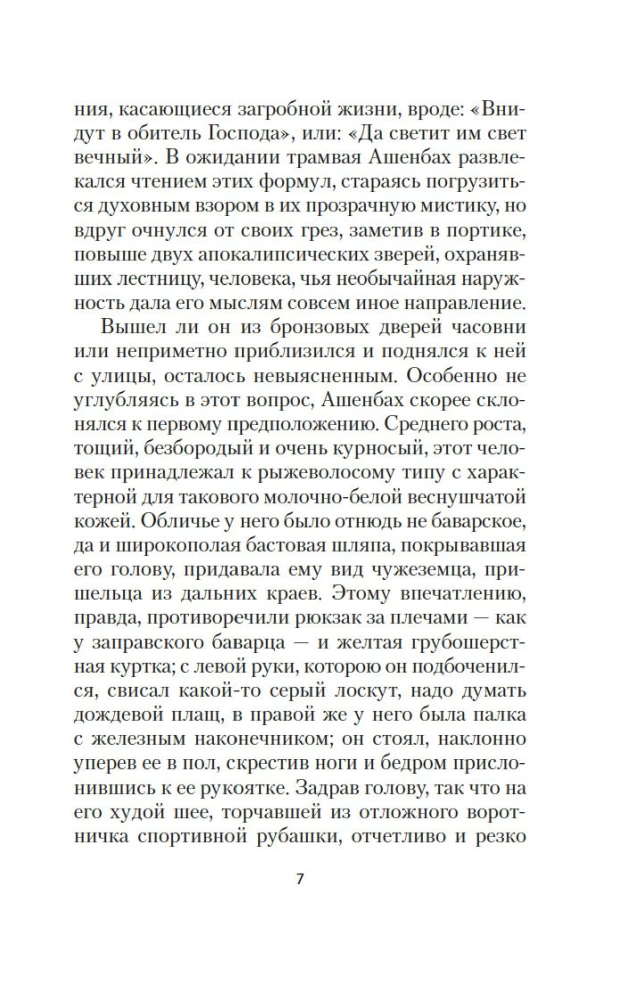
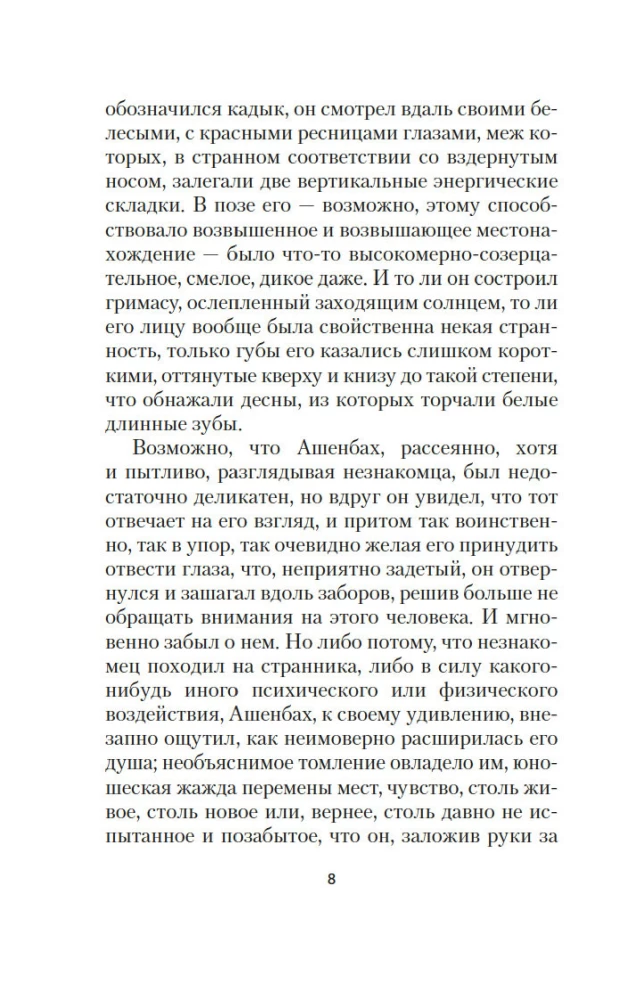
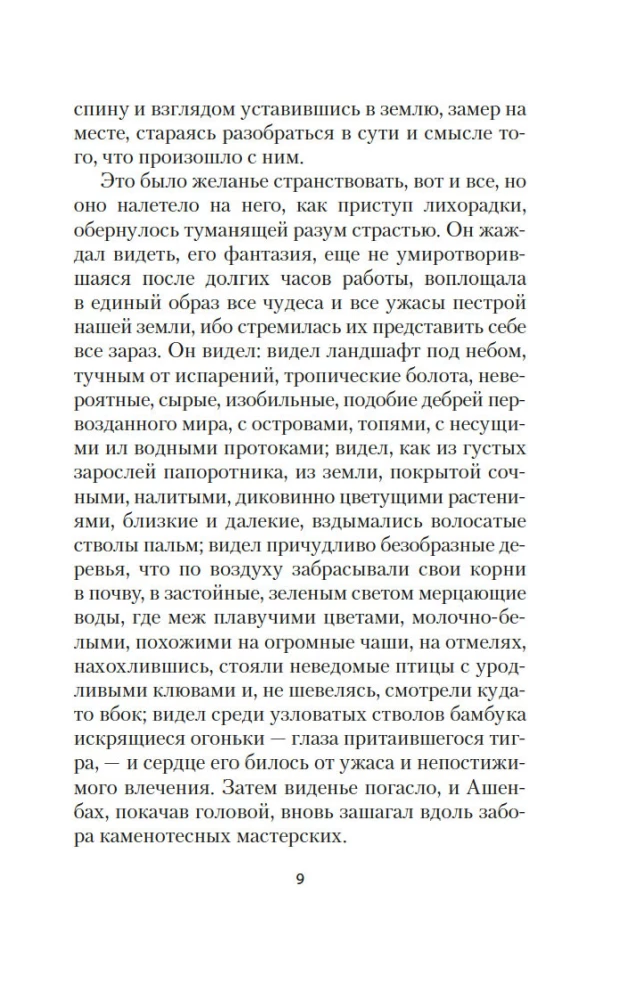
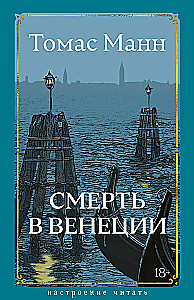
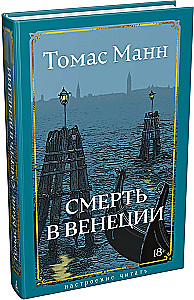
Death in Venice
Thomas Mann is an outstanding German writer, Nobel Prize laureate in literature, author of famous works that are part of the canon of world literature. Among his key works are the novels "Buddenbrooks," "The Magic Mountain," as well as the...
large tetralogy "Joseph and His Brothers."
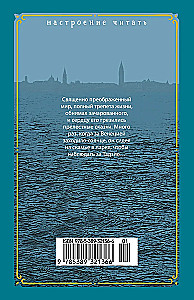
This collection includes well-known novellas by Thomas Mann – small masterpieces, including "Death in Venice," recognized as one of the peaks in the author's work and often mentioned in lists of the "best novellas of world literature."
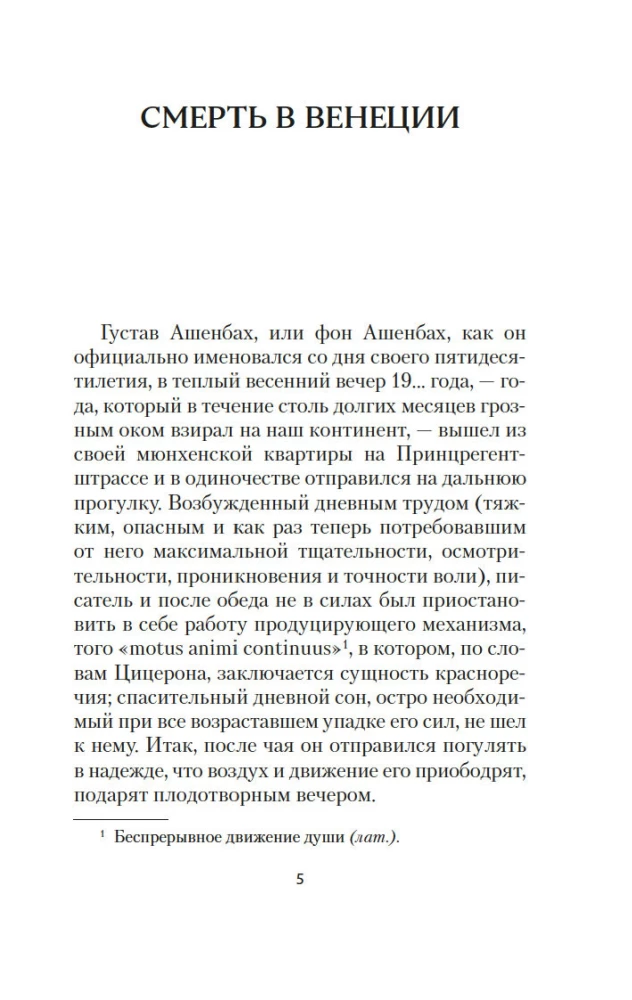
Gustav von Aschenbach, a distinguished German writer, arrives at a seaside resort near Venice in search of rest. His entire life is dedicated to writing, which is for Aschenbach a kind of barracks, where order and self-discipline prevail. At the resort, he meets a Polish boy, Tadzio, endowed with an ancient, almost mythical beauty, sensual and spiritual, reflecting the dark, fatal, and at the same time alluring abysses of the human soul. His encounter with Tadzio, the harbinger of death in cholera-infected Venice, becomes fatal for Aschenbach…
• According to the author, the news of Gustav Mahler's death significantly influenced the conception of this work – Mann transferred the composer's name to his hero.
• "Death in Venice" by Thomas Mann: the analysis of the themes of beauty, art, and death makes the novella the subject of numerous literary studies and school essays.
The works are presented in classical translations by Solomon Apter, Vera Waldman, Tatiana Isaeva, Valentina Kurella, and Natalia Mann.
This collection includes well-known novellas by Thomas Mann – small masterpieces, including "Death in Venice," recognized as one of the peaks in the author's work and often mentioned in lists of the "best novellas of world literature."
Gustav von Aschenbach, a distinguished German writer, arrives at a seaside resort near Venice in search of rest. His entire life is dedicated to writing, which is for Aschenbach a kind of barracks, where order and self-discipline prevail. At the resort, he meets a Polish boy, Tadzio, endowed with an ancient, almost mythical beauty, sensual and spiritual, reflecting the dark, fatal, and at the same time alluring abysses of the human soul. His encounter with Tadzio, the harbinger of death in cholera-infected Venice, becomes fatal for Aschenbach…
• According to the author, the news of Gustav Mahler's death significantly influenced the conception of this work – Mann transferred the composer's name to his hero.
• "Death in Venice" by Thomas Mann: the analysis of the themes of beauty, art, and death makes the novella the subject of numerous literary studies and school essays.
The works are presented in classical translations by Solomon Apter, Vera Waldman, Tatiana Isaeva, Valentina Kurella, and Natalia Mann.
Author: Томас Манн
Printhouse: Azbuka
Series: Mood to Read
Age restrictions: 18+
Year of publication: 2026
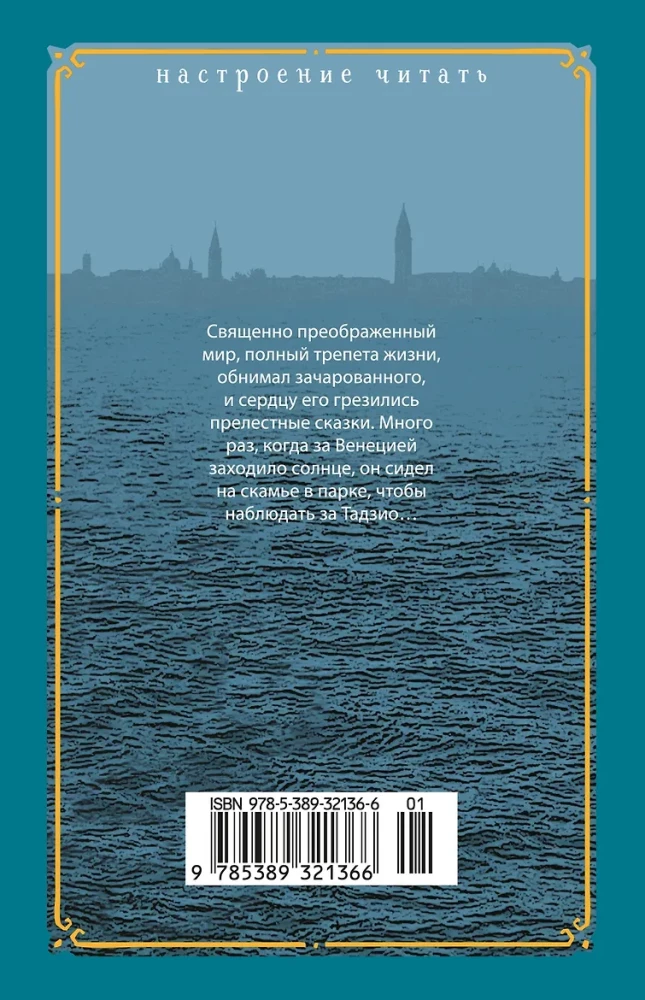
ISBN: 9785389321366
Number of pages: 416
Size: 180х120х25 mm
Cover type: hard
Weight: 391 g
ID: 1743522
Available from suppliers
Expected delivery time – up to 3 weeks
€ 9.39
Available from suppliers
Expected delivery time – up to 3 weeks
€ 9.39
Bestsellers









Bestseller
€ 12.19
In stock
Kanashibari. Until the Last Lantern Goes Out. Volume 1
Ангелина Шэн, Вероника Шэн