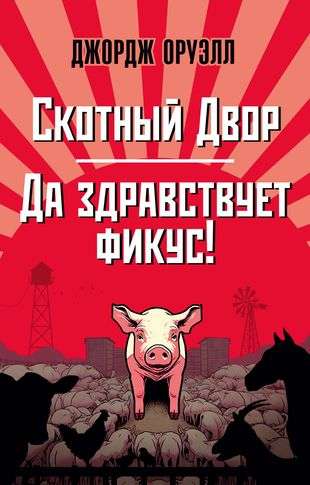
Animal Farm. Long live the ficus!
English writer, critic and publicist George Orwell (real name Eric Arthur Blair) is known to readers primarily as the author of the cult novel «1984», Orwell's last work, which, along with «We» by Zamyatin and «Brave New World» by Huxley,...
became one of the main dystopian books of the 20th century. This edition features the famous fable-parable «Animal Farm» (1945), which reflects the main themes that would later develop in Orwell's main novel. As has been noted more than once, «Animal Farm» is an allegory of the Russian Revolution and the subsequent years of Soviet life, an allegory that has not lost its relevance. In the fable, the animals, having expelled their master from the farm, attempt to create a just society based on the laws of universal equality. But this proves to be no easy task, as in a society of slaves and masters, freedom and equality are impossible. The book also includes the novel «Long live the ficus!» (1936), an ironic and sad narrative about how the unsuccessful poet John Comstock declared war on the Business God, refusing to live for money, a respectable social status, and other bourgeois values (which he saw symbolized by the ficus displayed on the windowsill).
Author: ОРУЭЛЛ ДЖ.
Printhouse: Azbuka
Series: The Big Book
Age restrictions: 16+
Year of publication: 2023
ISBN: 9785389236257
Number of pages: 384
Size: 18x11.5x1.5 mm
Cover type: Мягкая обложка
Weight: 190 g
ID: 1532823
In stock
€ 4.59
Will be delivered to United States on :
Unfortunately, we are currently unable to deliver orders to your region.
In stock
€ 4.59
Will be delivered to United States on :
Unfortunately, we are currently unable to deliver orders to your region.
Bestsellers



Bestseller
€ 12.19
In stock
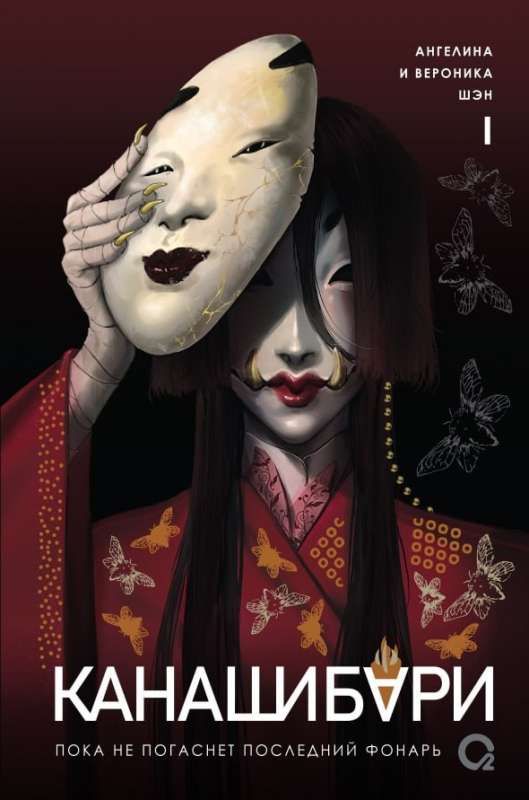
Kanashibari. Until the Last Lantern Goes Out. Volume 1
Ангелина Шэн, Вероника Шэн