


Пионовый фонарь
Autorius: Sanjutej Entjo
Publisher: Azbuka
Serija: Išskirtinė Rytų klasika
Amžiaus ribos: 16+
Išleidimo metai: 2024
ISBN: 9785389258051
Puslapių skaičius: 320
Dydis: 115h180 mm
Viršelio tipas: Hard
Svoris: 330 g
ID: 1676952
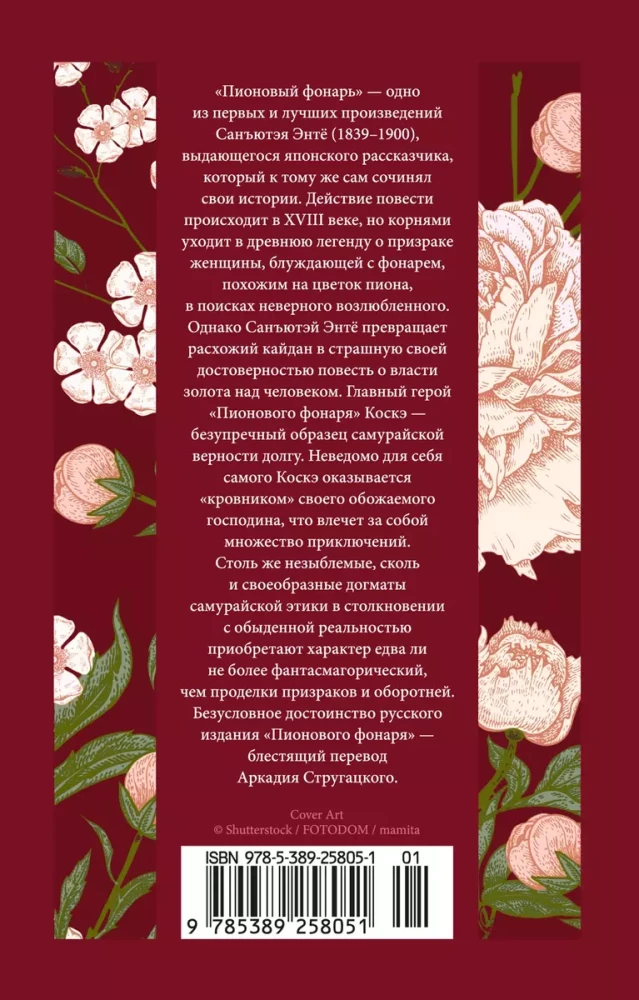
"Peony Lantern" is an early and one of the best works of Sanyutei Enchō (1839–1900). The name "Sanyutei" (the author's real name is Idzubuchi Jirokichi) indicated affiliation with a specific school of "rakugo" — storytellers who gathered audiences in small booths or right on the street and created works at the intersection of literature and theater with minimal props, or sometimes even without any. Sanyutei Enchō was an outstanding rakugoka who also composed his own stories. The action of "Peony Lantern" takes place in the 18th century, but its roots go back to the ancient legend of a ghostly woman wandering with a lantern resembling a peony flower in search of her unfaithful lover. However, Sanyutei Enchō transforms this common horror story into a tale terrifying in its authenticity about the power of gold over man. The main character of the tale, Kosuke, is a perfect example of samurai loyalty to duty and lord, yet unbeknownst to himself, he becomes the "blood brother" of his adored lord. The equally immutable yet peculiar dogmas of samurai ethics, when directly applied to reality, acquire a character barely more phantasmagorical than the antics of ghosts and shapeshifters.