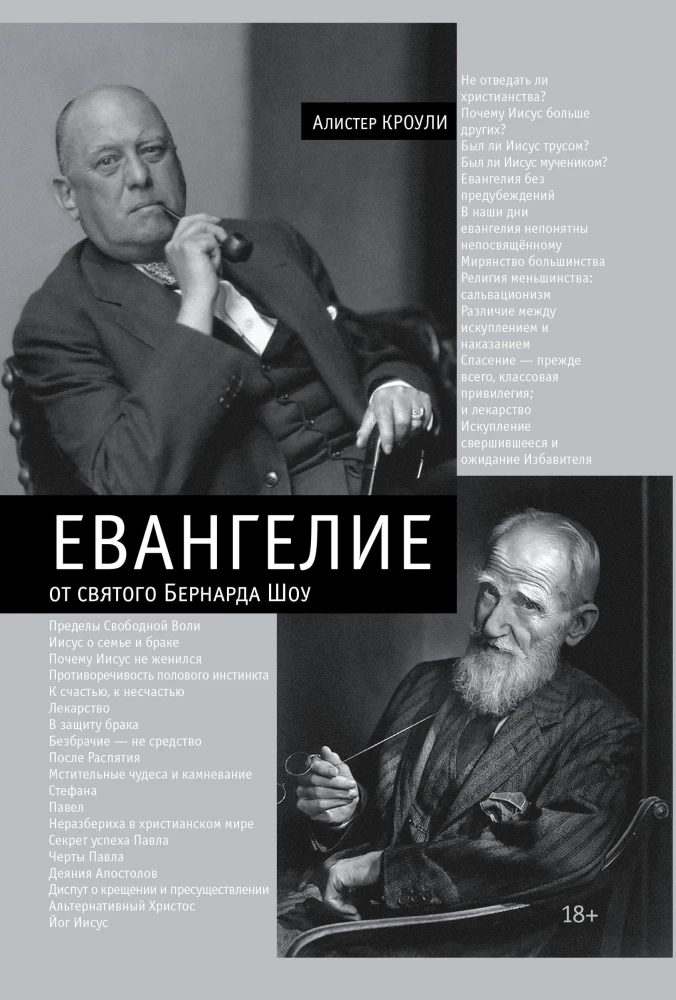




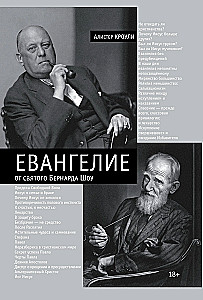
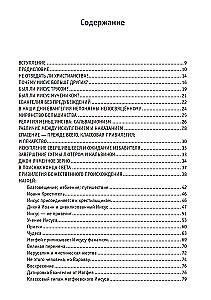
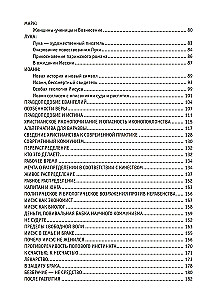
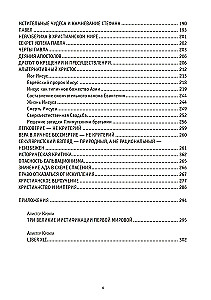

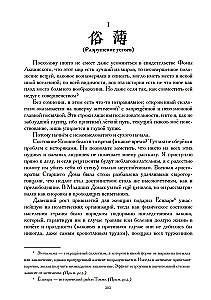
The Gospel According to Saint Bernard Shaw
This world is imperfect. Even the greatest minds of humanity have their limitations.
The perceptive reader has likely guessed from the above that the subject of these notes is George Bernard Shaw. Undoubtedly, today's England is hardly able to boast of... even
a dozen people capable of such lofty flights of thought (which are the breath of life) as Mr. Shaw. He is practically impervious to the most devastating criticism.
However, there appears to be a certain defect in the emerald of his mind; some rusty detail in his toolbox. He exhibits almost comprehensive helplessness, being unable to entirely separate himself from the observed phenomenon. He distorts texts to make it easier to weave his ropes from them.
A fine example of such an error can be observed in his book on Wagner. Wagner was a socialist, just like Shaw himself; and Mr. Shaw felt obligated to find socialism in his operas. Just as a monarchist could easily notice that Wagner was the royal favorite, and his operas were nothing but panegyrics to royal power. The position is perfect to the extent that it is easy to defend. As a result, Shaw managed to stumble over the same rake, for the fourth drama of the "Ring" refused to fit into his schemes. He had to demand that we believe that Wagner supposedly, out of the blue, abandoned his great and profound purpose, threw away the entire course of his thoughts, and returned to simple operas, completely devoid of coherence. He seriously forces us to believe that Wagner went mad, like the tale about the architect who spent forty years of his life building a cathedral, only to toss the blueprints and finish it with minarets. But let's get back to our sheep—or rather, to our lions!
The criticism of Christianity undertaken by the outstanding mind of Shaw marked an era in the history of religion. His preface to "Androcles and the Lion" has the same value as the ninety-five theses affixed by Martin Luther to the doors of the Wittenberg church. Mr. Shaw, as one would expect from such an original thinker, chose the most beautiful point of view. He invites us to cleanse our minds of everything we have ever heard about Christianity and to take the position of a wild Indian, whose uneducated mind draws its first lessons from missionary gospels. Here he makes one caveat, assuring the reader that human imagination is applicable to religion to a certain extent. This, of course, is more akin to breaching a hole in the bottom of a boat before launching it into the water. But we will consider Mr. Shaw as he is.
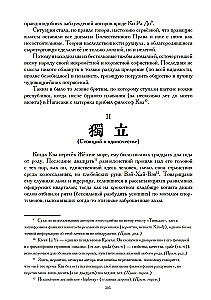
The perceptive reader has likely guessed from the above that the subject of these notes is George Bernard Shaw. Undoubtedly, today's England is hardly able to boast of... even
a dozen people capable of such lofty flights of thought (which are the breath of life) as Mr. Shaw. He is practically impervious to the most devastating criticism.
However, there appears to be a certain defect in the emerald of his mind; some rusty detail in his toolbox. He exhibits almost comprehensive helplessness, being unable to entirely separate himself from the observed phenomenon. He distorts texts to make it easier to weave his ropes from them.
A fine example of such an error can be observed in his book on Wagner. Wagner was a socialist, just like Shaw himself; and Mr. Shaw felt obligated to find socialism in his operas. Just as a monarchist could easily notice that Wagner was the royal favorite, and his operas were nothing but panegyrics to royal power. The position is perfect to the extent that it is easy to defend. As a result, Shaw managed to stumble over the same rake, for the fourth drama of the "Ring" refused to fit into his schemes. He had to demand that we believe that Wagner supposedly, out of the blue, abandoned his great and profound purpose, threw away the entire course of his thoughts, and returned to simple operas, completely devoid of coherence. He seriously forces us to believe that Wagner went mad, like the tale about the architect who spent forty years of his life building a cathedral, only to toss the blueprints and finish it with minarets. But let's get back to our sheep—or rather, to our lions!
The criticism of Christianity undertaken by the outstanding mind of Shaw marked an era in the history of religion. His preface to "Androcles and the Lion" has the same value as the ninety-five theses affixed by Martin Luther to the doors of the Wittenberg church. Mr. Shaw, as one would expect from such an original thinker, chose the most beautiful point of view. He invites us to cleanse our minds of everything we have ever heard about Christianity and to take the position of a wild Indian, whose uneducated mind draws its first lessons from missionary gospels. Here he makes one caveat, assuring the reader that human imagination is applicable to religion to a certain extent. This, of course, is more akin to breaching a hole in the bottom of a boat before launching it into the water. But we will consider Mr. Shaw as he is.
Author: Алистер Кроули
Printhouse: KASTALIIa
Age restrictions: 16+
Year of publication: 2016
ISBN: 9785519606783
Number of pages: 326
Size: 217х151х20 mm
Cover type: hard
Weight: 519 g
ID: 1744100
In stock
€ 22.69
Will be delivered to United States on 29 September (Tu):
By courier
from € 38.94
Bestsellers

€ 36.99
In stock









€ 17.89
In stock
Happy Pocket, Full of Money: The Formation of Abundance Consciousness
Джиканди Дэвид Кэмерон

€ 5.29
In stock
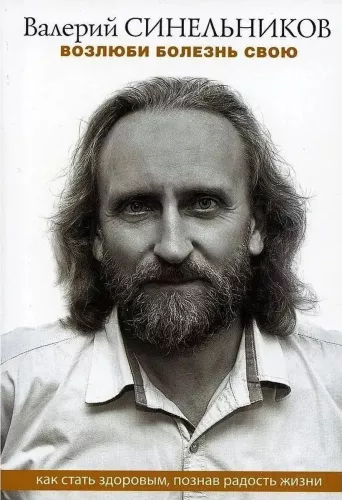
Love Your Illness. How to Become Healthy by Knowing the Joy of Life
Валерий Синельников