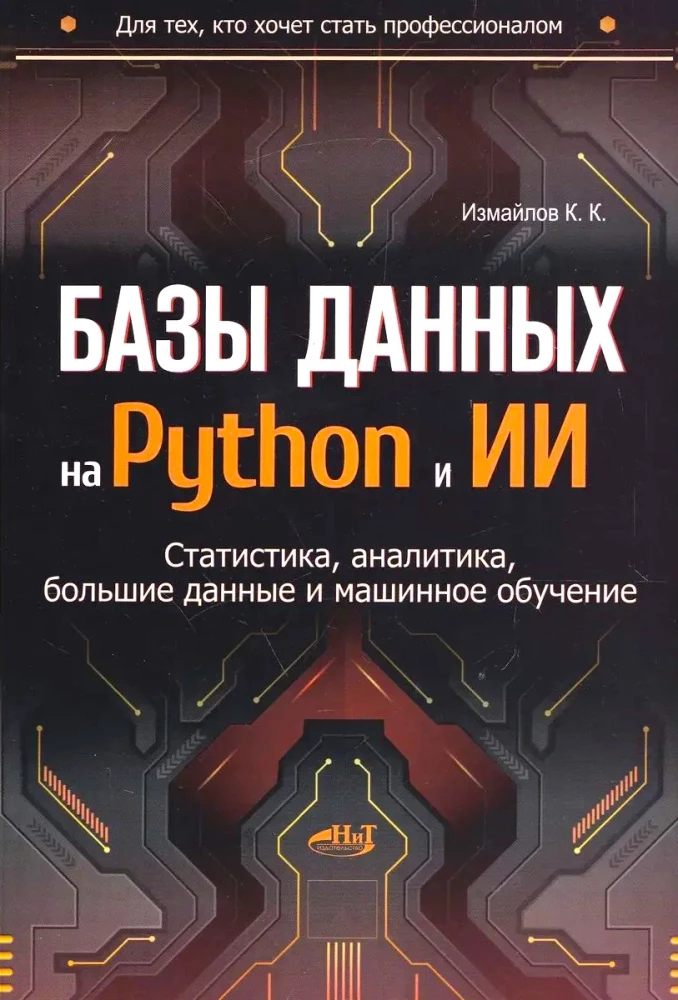
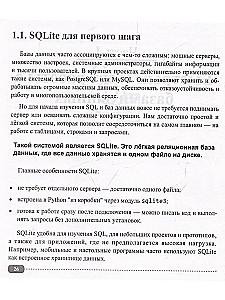
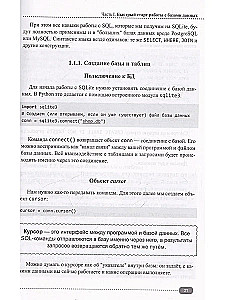
Databases on Python and AI: Statistics, Analytics, Big Data and Machine Learning
This book is a practical guide to working with data in Python, written for those who want not just to "know the theory", but to really work with data in everyday tasks. Step by step we will go through the...
entire data lifecycle: from storage in databases and writing queries to analysis, optimization, and meaningful interpretation of results.
The main focus is on practice, there is no overloaded theory and abstract reasoning - only what is really needed in reality. Almost all examples can be copied, run, and see the result right away, making learning visual and as practical as possible from the very first chapters, while practical projects and real-life case studies will show how individual tools come together into full-fledged analytical pipelines and how to make engineering decisions in the context of large tables, limited resources, and business tasks.
Special attention is paid to working with big data, AI, and machine learning: we will learn to create effective analytical AI models, optimize large volumes of data, review techniques that are rarely found in introductory courses (batch data processing, streaming samples, reducing memory consumption, speeding up pandas code, using efficient storage formats, etc.).
At the same time, the book does not require deep knowledge or prior experience (all topics are introduced gradually, in simple language, with an emphasis on practice) and will be useful for a wide audience:
— beginners who want to understand how data analytics works;
— developers who need a better understanding of SQL and data storage;
— analysts wishing to strengthen their foundation;
— students studying databases, Python, statistics;
— everyone who wants to think not only in "code" but also in data.
The main focus is on practice, there is no overloaded theory and abstract reasoning - only what is really needed in reality. Almost all examples can be copied, run, and see the result right away, making learning visual and as practical as possible from the very first chapters, while practical projects and real-life case studies will show how individual tools come together into full-fledged analytical pipelines and how to make engineering decisions in the context of large tables, limited resources, and business tasks.
Special attention is paid to working with big data, AI, and machine learning: we will learn to create effective analytical AI models, optimize large volumes of data, review techniques that are rarely found in introductory courses (batch data processing, streaming samples, reducing memory consumption, speeding up pandas code, using efficient storage formats, etc.).
At the same time, the book does not require deep knowledge or prior experience (all topics are introduced gradually, in simple language, with an emphasis on practice) and will be useful for a wide audience:
— beginners who want to understand how data analytics works;
— developers who need a better understanding of SQL and data storage;
— analysts wishing to strengthen their foundation;
— students studying databases, Python, statistics;
— everyone who wants to think not only in "code" but also in data.
Author: Константин Измайлов
Printhouse: Nauka i tekhnika
Age restrictions: 12+
Year of publication: 2026
ISBN: 9785604965887
Number of pages: 400
Size: 230х163х17 mm
Cover type: soft
Weight: 506 g
ID: 1740419
Sold out
€ 21.79
Sold out
€ 21.79
Bestsellers




€ 13.29
In stock
12 Weeks in a Year. How to Achieve More in 12 Weeks Than Others Do in 12 Months
Майкл Леннингтон, Брайан Моран

€ 7.89
In stock
Choice. On the Freedom and Inner Strength of a Person
Эдит Ева Эгер, Эсме Швалль-Вейганд





€ 6.99
In stock