



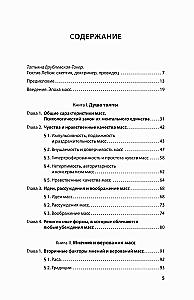
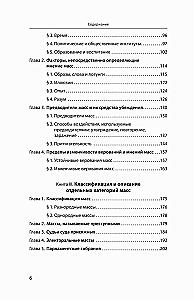
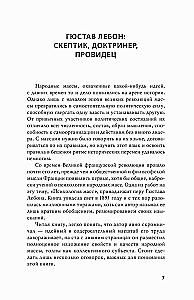
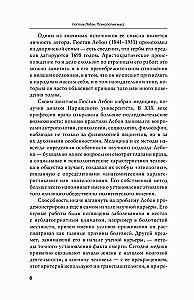
The masses, gripped by some idea, have repeatedly appeared on the stage of history since ancient times. However, it was only with the beginning of the era of great revolutions that the masses transformed into an independent political force capable...
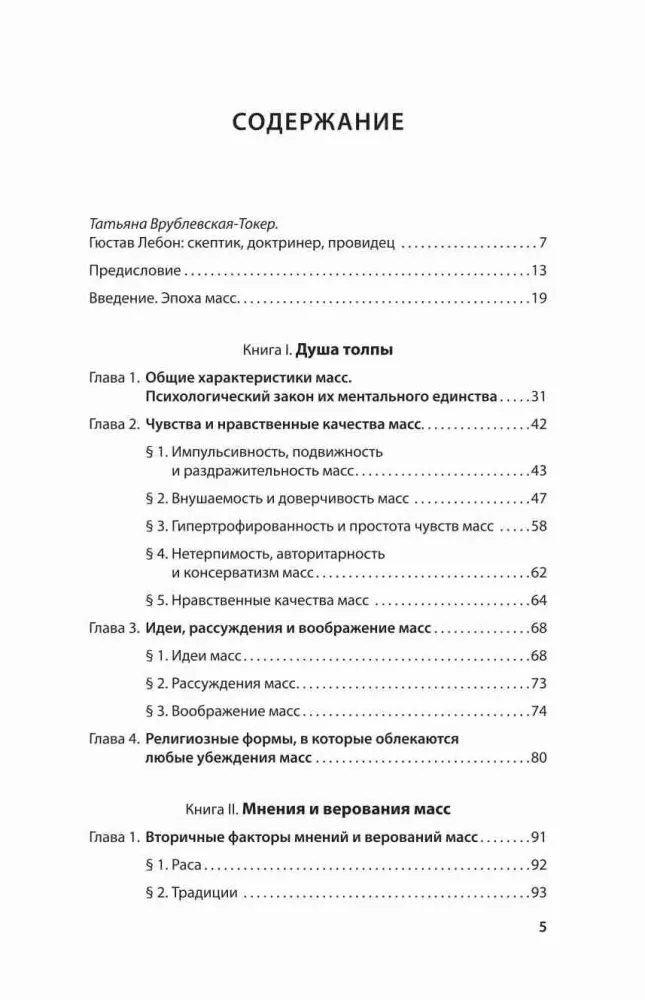
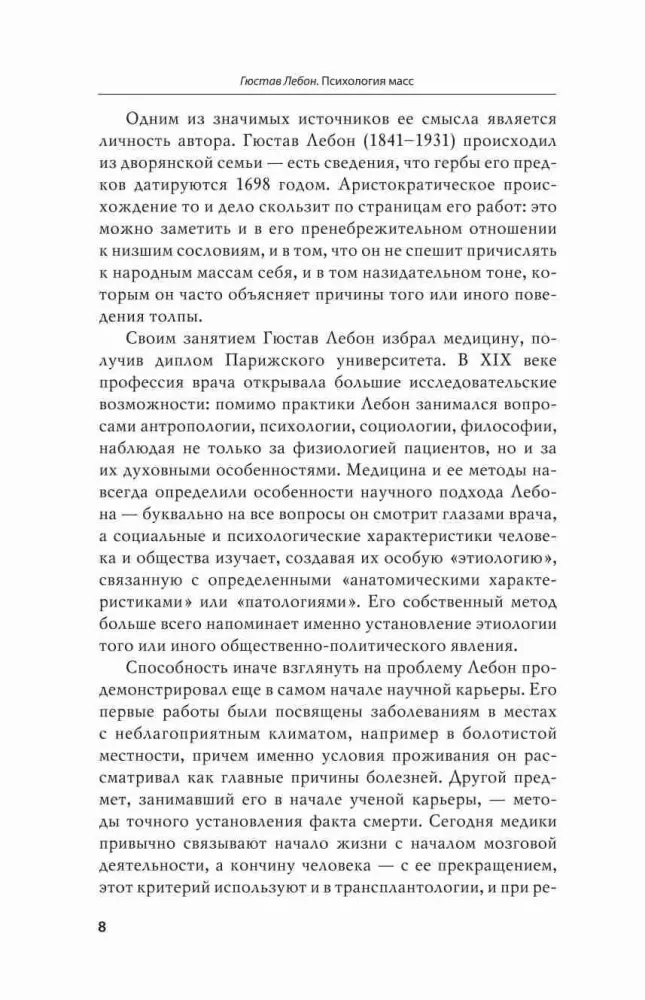
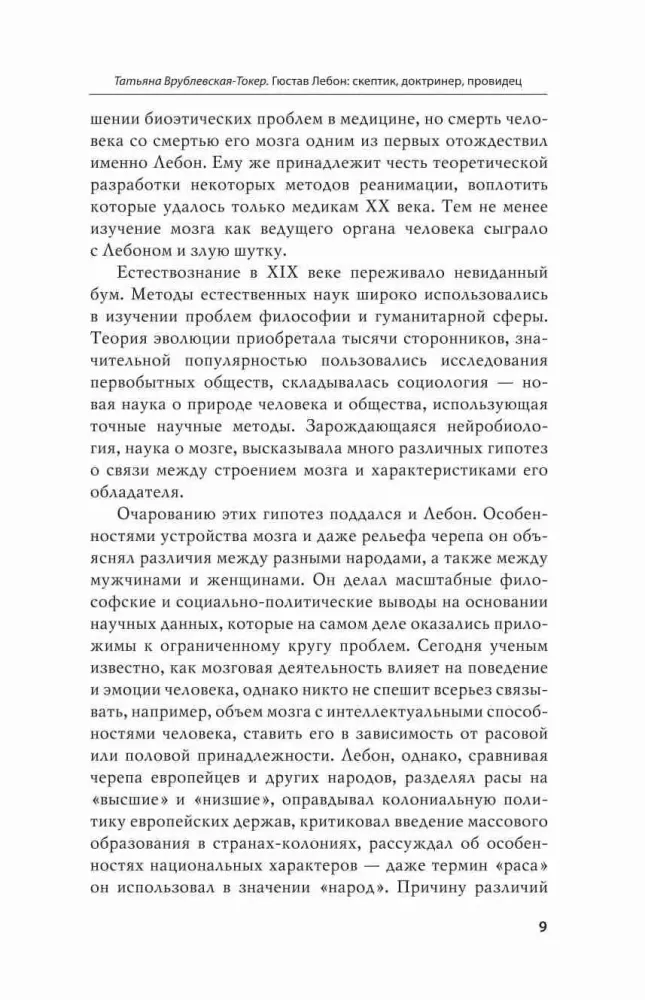
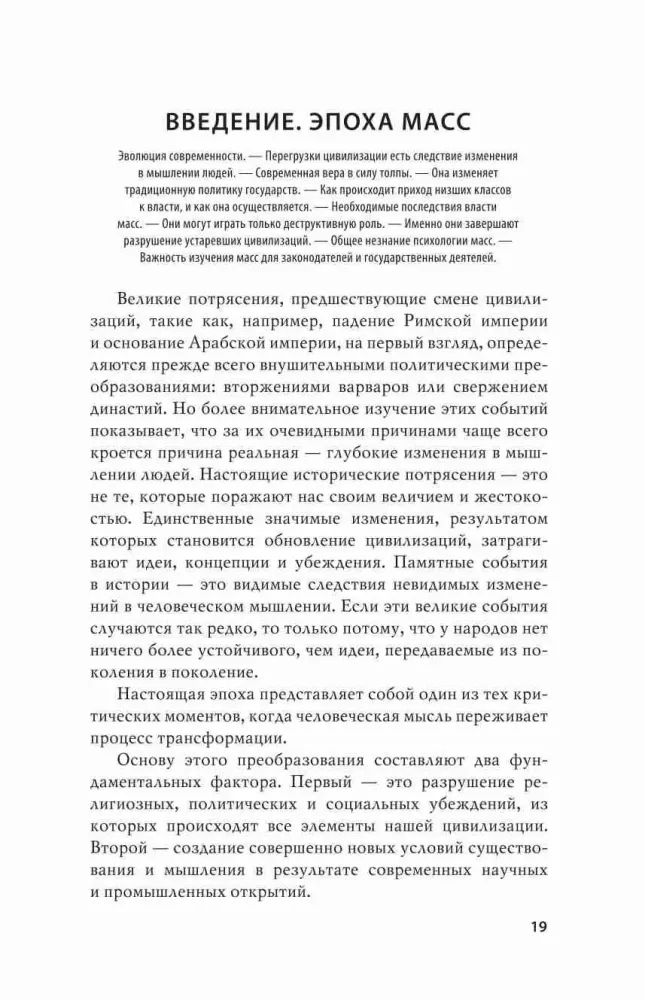
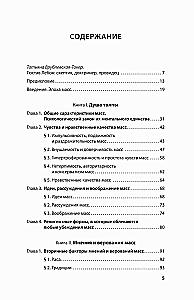
of overthrowing one authority and establishing another. They differed from the usual participants in political competitions in every aspect: numbers, composition, way of thinking, ability for self-organization and actions without a clear leader. It was necessary to speak to the masses in their own language, to negotiate according to their rules, but few managed to study this language and master the rules at the frantic pace of historical change. It took almost a hundred years since the Great French Revolution for the first, at least general, outlines of theories on the psychology of the masses to appear in the social and philosophical thought of France. One of the works on this topic, "The Psychology of Crowds," is by Gustave Le Bon. The book was published in 1895 and has since sold millions of copies, although the author himself called it merely a brief summary of his research. Reading the book, one can easily understand that the author was clearly being modest - the ideological and substantive scale of his work is mesmerizing. In just over a hundred pages, he presents a complete exposition of the properties and qualities of the mass, the crowd as a collective subject.
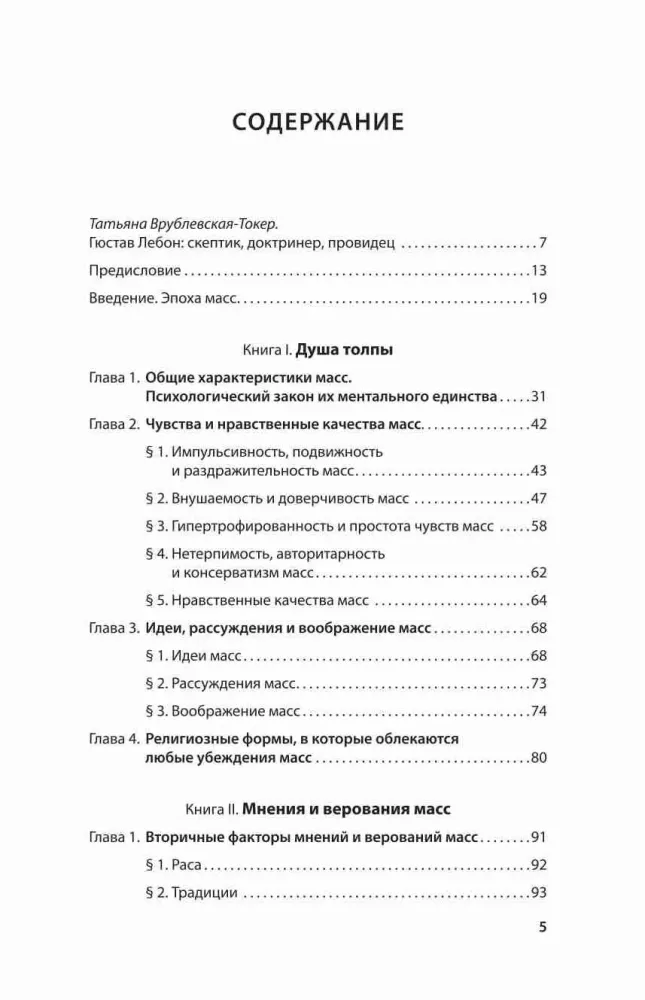
The masses, gripped by some idea, have repeatedly appeared on the stage of history since ancient times. However, it was only with the beginning of the era of great revolutions that the masses transformed into an independent political force capable of overthrowing one authority and establishing another. They differed from the usual participants in political competitions in every aspect: numbers, composition, way of thinking, ability for self-organization and actions without a clear leader. It was necessary to speak to the masses in their own language, to negotiate according to their rules, but few managed to study this language and master the rules at the frantic pace of historical change. It took almost a hundred years since the Great French Revolution for the first, at least general, outlines of theories on the psychology of the masses to appear in the social and philosophical thought of France. One of the works on this topic, "The Psychology of Crowds," is by Gustave Le Bon. The book was published in 1895 and has since sold millions of copies, although the author himself called it merely a brief summary of his research. Reading the book, one can easily understand that the author was clearly being modest - the ideological and substantive scale of his work is mesmerizing. In just over a hundred pages, he presents a complete exposition of the properties and qualities of the mass, the crowd as a collective subject.
Be the first to know about our current discounts, offers and new products!
Check icon
You have added to your basket
Check icon
You have added to favourites
Sold out
The item is currently out of stock.
In stock
Available in warehouse. You will receive the exact delivery date from the operator after the order confirmation.
To order
The product is delivered directly from the publisher. The order processing time is up to 14 days, you will receive the exact delivery date from the operator after the order confirmation.
No circulation
Unfortunately, the print run of the book has ended, it is currently unavailable for order.