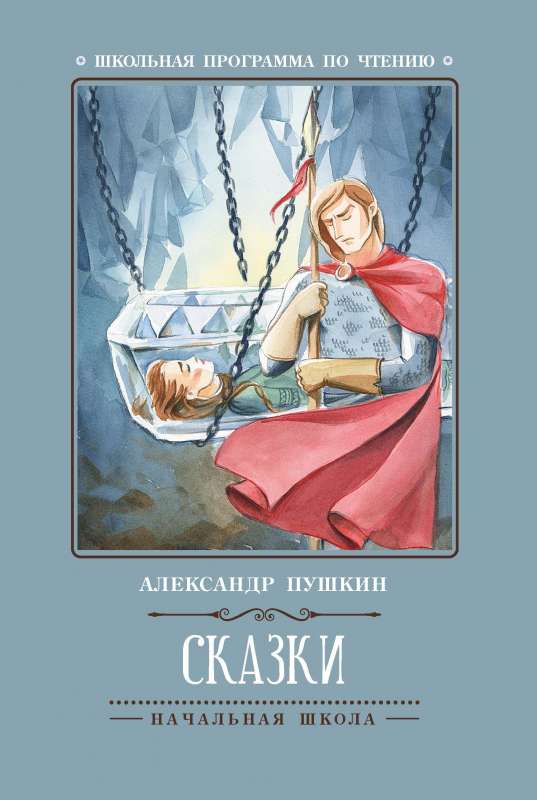
Alexander Sergeyevich Pushkin 1799–1837 - a great Russian writer, founder of the modern Russian literary language, author of world-renowned works in poetry and prose such as Eugene Onegin, Dubrovski, Ruslan and Lyudmila, The Prisoner of the Caucasus, The Queen of...
Spades, as well as fairy tales for children. A.S. Pushkin was born in Moscow into a family of non-titled nobility. On his mother's side, his great-grandfather was the African Abram Petrovich Hannibal - a protégé and servant of Tsar Peter I. He was not very close to his parents; his nanny, Arina Rodionovna, was his caregiver and true friend. In 1811, A.S. Pushkin was admitted to the Tsarskoye Selo Lyceum in St. Petersburg. By 1814, his poems appeared in the magazine Vestnik Evropy, and he was also accepted into the literary society Arzamas. Pushkin's later political lyrics Liberty, To Chaadaev, The Village angered Emperor Alexander I, and it was only thanks to the efforts of Karamzin, Zhukovsky, and Krylov that he managed to avoid exile to Siberia. Fairy tales occupy an important place in the poet's oeuvre. The literary fairy tales of A.S. Pushkin are based on the plots of Russian folk tales that he heard as a child from his nanny, Arina Rodionovna. An important genre characteristic of a fairy tale is its educational function. A.S. Pushkin's fairy tales are no exception: in an engaging form, the author shows readers that good always triumphs over evil, and any lie will be revealed and punished.
Alexander Sergeyevich Pushkin 1799–1837 - a great Russian writer, founder of the modern Russian literary language, author of world-renowned works in poetry and prose such as Eugene Onegin, Dubrovski, Ruslan and Lyudmila, The Prisoner of the Caucasus, The Queen of Spades, as well as fairy tales for children. A.S. Pushkin was born in Moscow into a family of non-titled nobility. On his mother's side, his great-grandfather was the African Abram Petrovich Hannibal - a protégé and servant of Tsar Peter I. He was not very close to his parents; his nanny, Arina Rodionovna, was his caregiver and true friend. In 1811, A.S. Pushkin was admitted to the Tsarskoye Selo Lyceum in St. Petersburg. By 1814, his poems appeared in the magazine Vestnik Evropy, and he was also accepted into the literary society Arzamas. Pushkin's later political lyrics Liberty, To Chaadaev, The Village angered Emperor Alexander I, and it was only thanks to the efforts of Karamzin, Zhukovsky, and Krylov that he managed to avoid exile to Siberia. Fairy tales occupy an important place in the poet's oeuvre. The literary fairy tales of A.S. Pushkin are based on the plots of Russian folk tales that he heard as a child from his nanny, Arina Rodionovna. An important genre characteristic of a fairy tale is its educational function. A.S. Pushkin's fairy tales are no exception: in an engaging form, the author shows readers that good always triumphs over evil, and any lie will be revealed and punished.
Be the first to know about our current discounts, offers and new products!
Check icon
You have added to your basket
Check icon
You have added to favourites
Sold out
The item is currently out of stock.
In stock
Available in warehouse. You will receive the exact delivery date from the operator after the order confirmation.
To order
The product is delivered directly from the publisher. The order processing time is up to 14 days, you will receive the exact delivery date from the operator after the order confirmation.