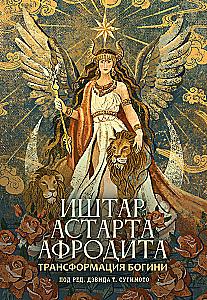
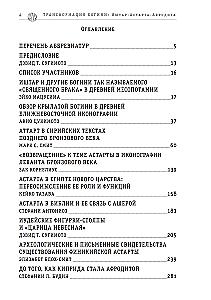
Трансформация Богини: Иштар-Астарта-Афродита
Izdevniecība: KASTALIIa
Vecuma ierobežojumi: 16+
Izdošanas gads: 2025
ISBN: 9785908110327
Lappušu skaits: 310
Izmērs: 242h172h22 mm
Vāka tips: ciets vāks
Svars: 604 g
ID: 1744305
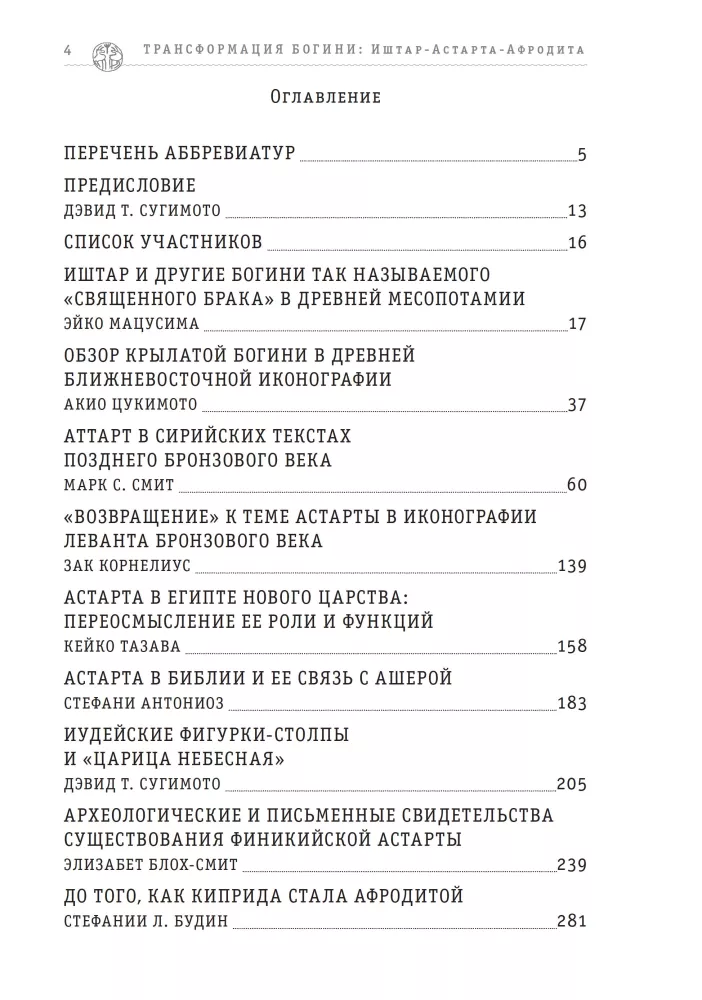
The book showcases the changeable nature of the goddess Ishtar/Astarte/Aphrodite, widely venerated in ancient Western Asia and the Mediterranean.
She was known by different names, but despite the apparent similarities and close interconnections of these names, the origins of this connection have yet to be sufficiently studied. Specialists from various regions and historical periods discuss the topic from different perspectives, allowing for a new and broader understanding of the nature of this goddess (goddesses). The areas of research covered extend from Mesopotamia to the Levant, Egypt, and the Mediterranean, starting from the third millennium BCE and continuing through the Hellenistic era.
This collection is the result of the work of an international conference held in Tokyo in 2011. After discussions, each article was revised and rewritten. Among the authors are: Stephanie L. Budin, Stephanie Antonious, Elizabeth Bloch-Smith, Isaac Cornelius, Eiko Matsushima, Mark M. Smith, David T. Sugimoto, Keiko Tazawa, and Akio Tsukimoto.
David T. Sugimoto (born 1958), PhD from the University of Sheffield (UK), professor in the Department of Archaeology and Ethnology at Keio University in Tokyo, is the author of publications on the research of religious artifacts found in the Southern Levant, including female figurines with disks from the Southern Levant and the emergence of monotheism (Tokyo: Keio University Press, 2008). He has also conducted excavations at several archaeological sites in Israel, including Tel En Gev and Tel Rekhesh, and is currently one of the directors of excavations at Beitin in Palestine.
Populārakas