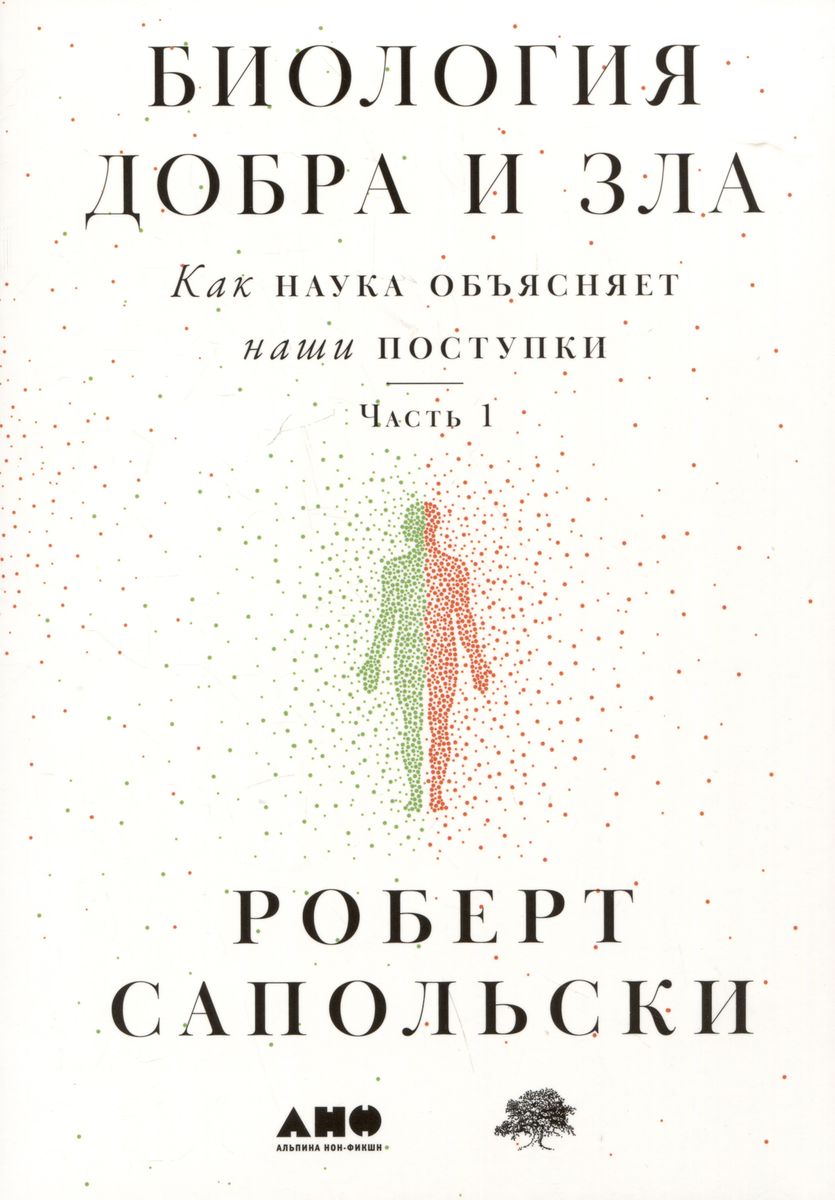
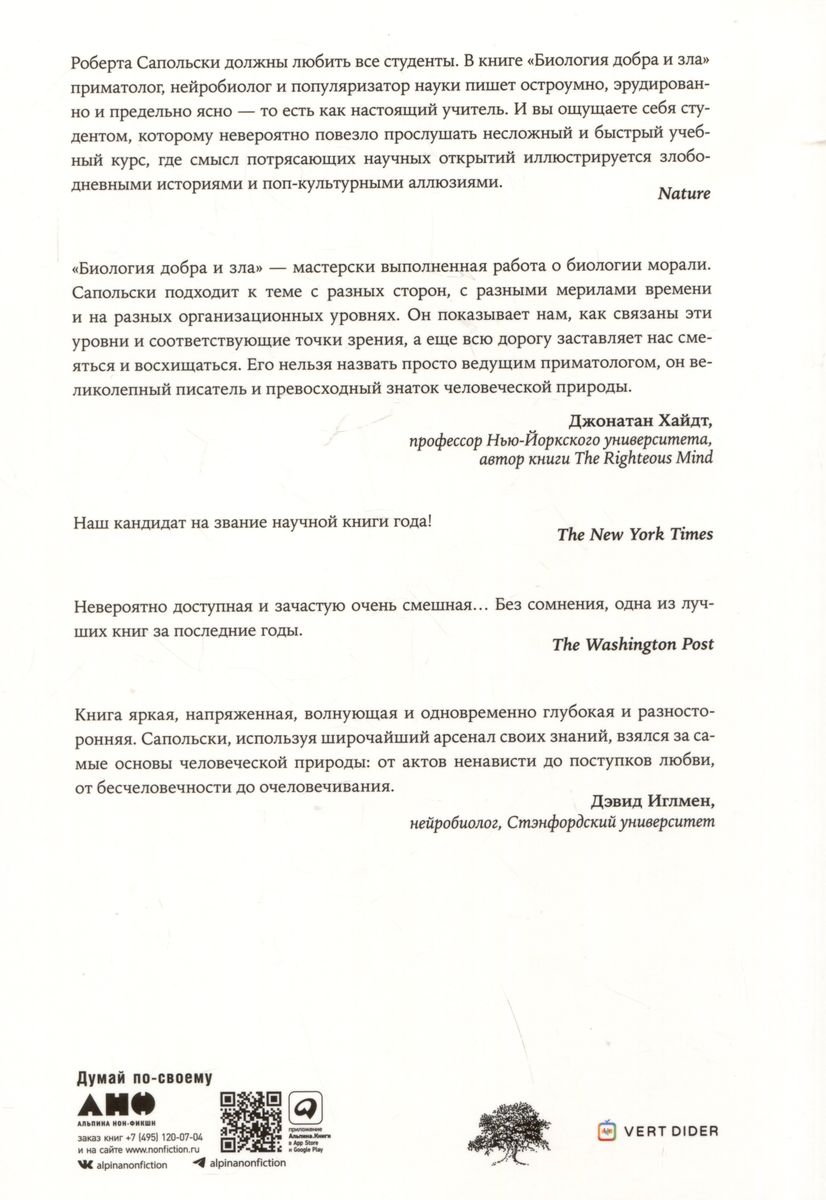
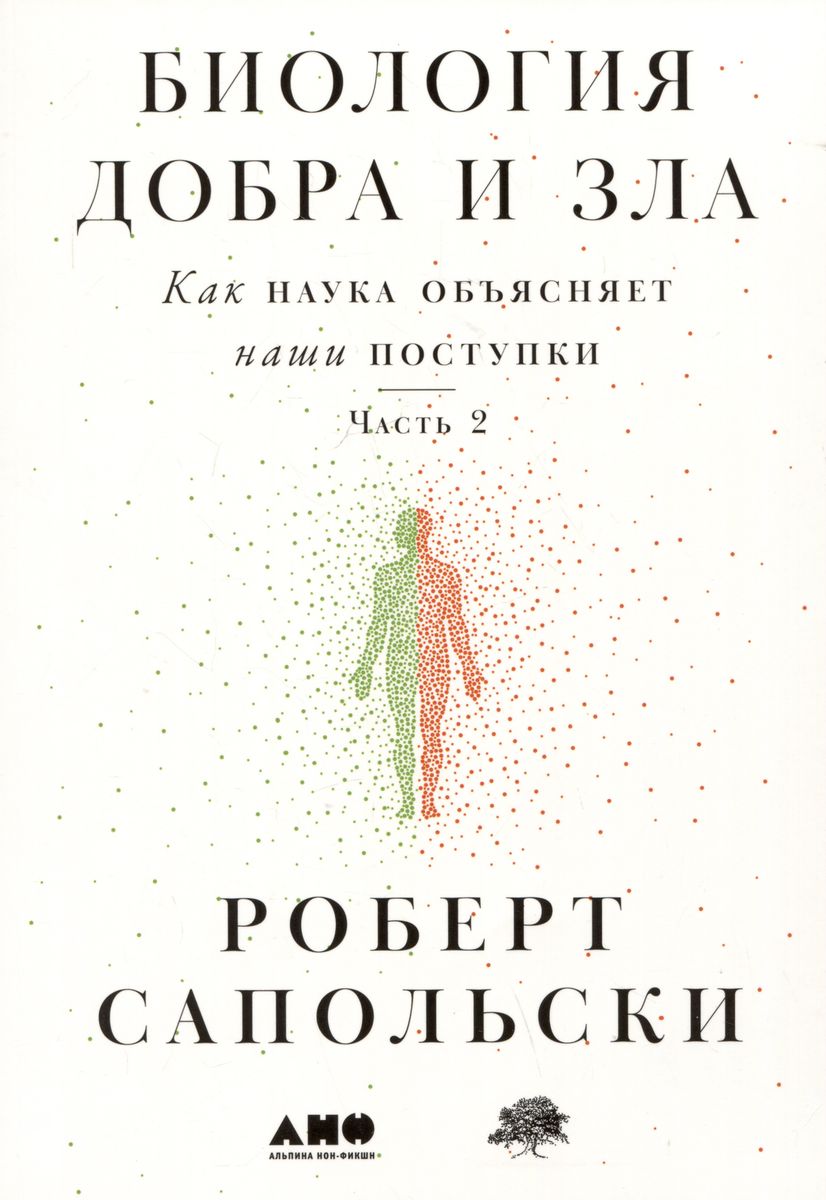
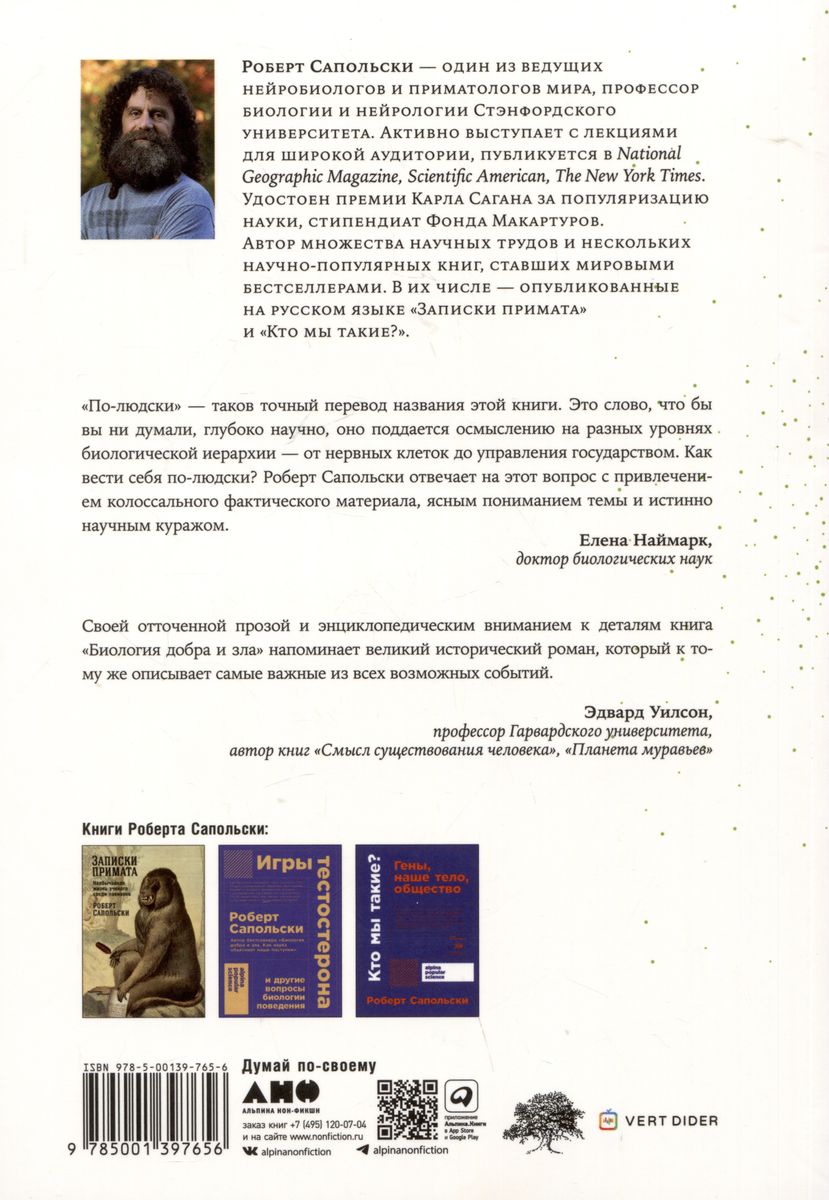
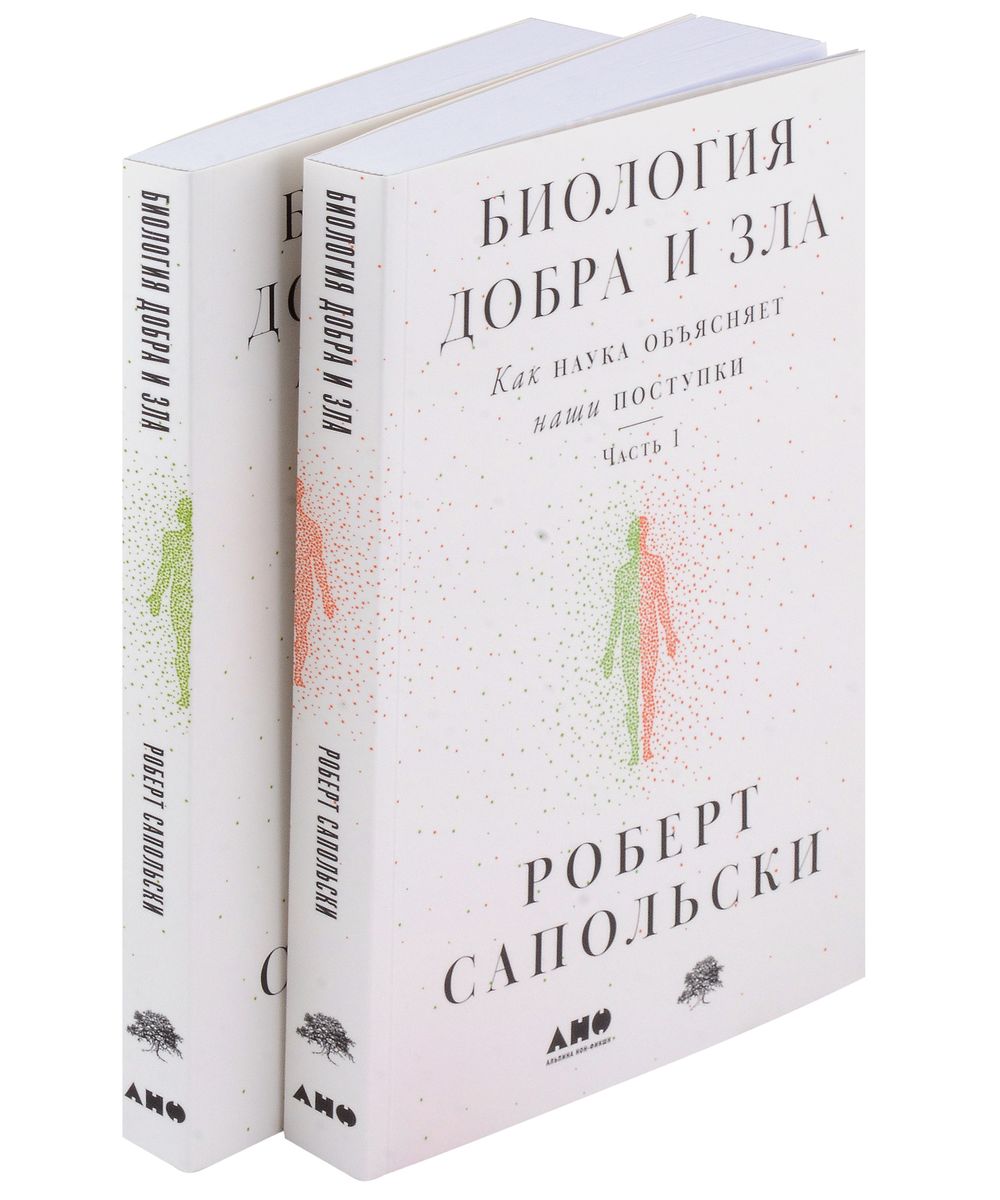
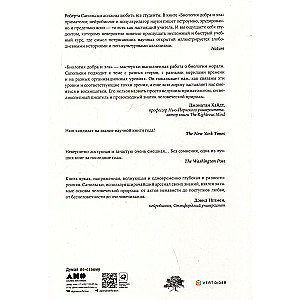
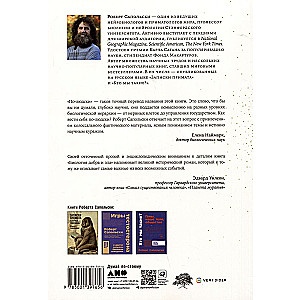
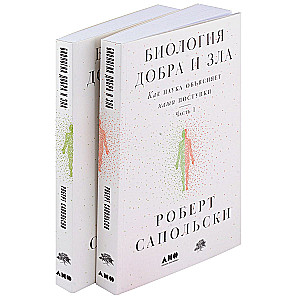
Биология добра и зла. Как наука объясняет наши поступки. Часть 1,2 (комплект из 2 книг)
As the famous primatologist and neurobiologist Robert Sapolsky says, if you want to understand human behavior and the nature of good or bad actions, you will need to literally unravel everything - from what happened a second before it to...
what happened millions of years ago. In the book, the author gradually - you could say, in chronological order - and very thoroughly examines a huge number of factors influencing our behavior.
How does our brain work? What does the amygdala respond to, and what should we thank the frontal cortex for? What does the island 'hate'? Why do London taxi drivers have an increased hippocampus? How are the lengths of the index and ring fingers connected to the amount of intrauterine testosterone? How do adolescents differ from children and adults from the perspective of neurobiology? Are there 'pure' altruists? What is the difference between forgiveness and reconciliation? Is there free will? How do complex social connections affect our behavior and decision-making? And this is just a small part of the questions addressed in the extensive work of the renowned scientist.
How does our brain work? What does the amygdala respond to, and what should we thank the frontal cortex for? What does the island 'hate'? Why do London taxi drivers have an increased hippocampus? How are the lengths of the index and ring fingers connected to the amount of intrauterine testosterone? How do adolescents differ from children and adults from the perspective of neurobiology? Are there 'pure' altruists? What is the difference between forgiveness and reconciliation? Is there free will? How do complex social connections affect our behavior and decision-making? And this is just a small part of the questions addressed in the extensive work of the renowned scientist.
Autor: Роберт Сапольски
Väljaandja: Al'pina Pablisher
Vanusepiirangud: 16+
avaldamise aasta: 2024
ISBN: 9785001397656
lehekülgede arv: 786
Suurus: 235x162x35 mm
Kaanetüüp: Soft
Kaal: 1010 g
ID: 1664775
Laos
€ 19.89
Riiki Ameerika Ühendriigid kättetame 10 juuli (R):
Kurierega
alates € 38.94
Bestsellers





Bestseller
€ 13.19
Laos
Enesele õrnalt. Raamat sellest, kuidas end väärtustada ja hoida
Ольга Примаченко


€ 5.19
Laos





Väljaandja „Al'pina Pablisher“ soovitab






Bestseller
€ 9.49
Laos
Счастливый союз. Семь навыков высокоэффективных пар
КОВИ СТИВЕН Р., КОВИ ДЖОН