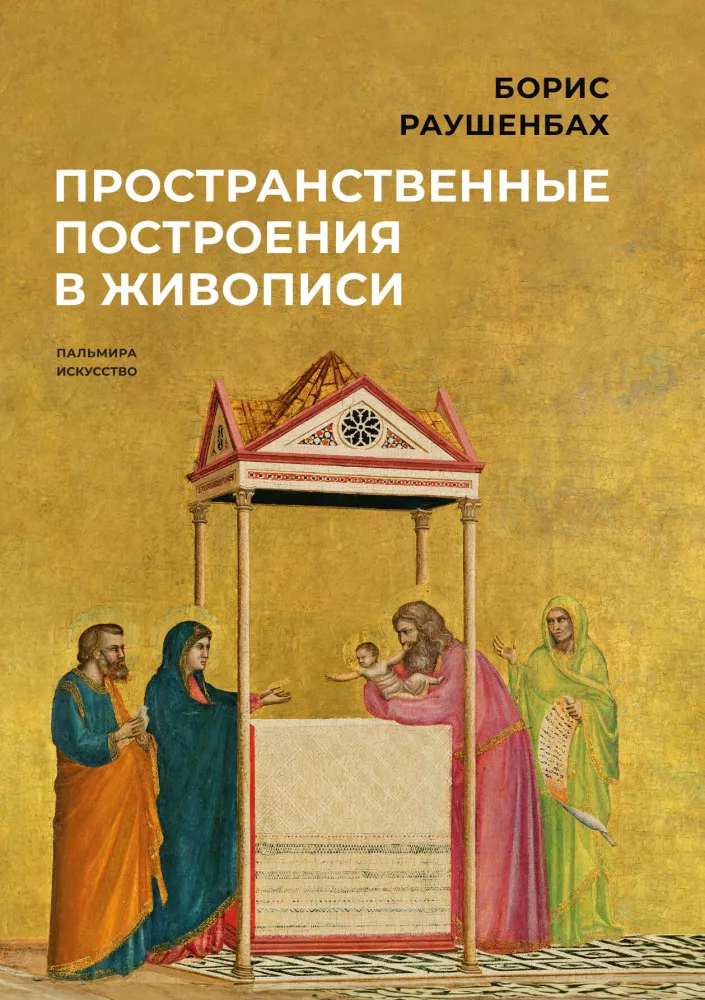
Spatial Structures in Painting
Author: Борис Раушенбах
Printhouse: Ripol-klassik
Series: Palmyra - Art
Age restrictions: 12+
Year of publication: 2026
ISBN: 9785517087195
Number of pages: 408
Size: 217х153х27 mm
Cover type: hard
Weight: 630 g
ID: 1751131
Boris Viktorovich Raushenbakh (1915–2001) - academician, physicist-mechanic, one of the founders of Soviet cosmonautics, Doctor of Technical Sciences, professor, philosopher, thinker. Author of works dedicated to theological questions, studies on the theory of combustion, control of spacecraft orientation, mathematical theory of perspective, but his most well-known works are dedicated to art. Turning to art history and the history of icon painting, B. V. Raushenbakh brought into his research the methodology of the exact sciences, opening new possibilities for interpreting material that had already been studied multiple times.
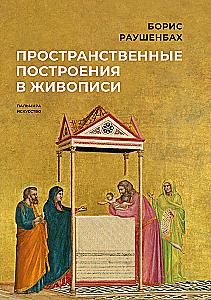
Translating the three-dimensional world onto the plane of the painting, the artist faces the task of depicting the volumetric-plastic qualities of objects and constructing the space of the painting. In the book "Spatial Structures in Painting" (1980), Boris Raushenbakh analyzes the principles of conveying perspective, relying on mathematical tools and the psychology of visual perception. The author examines these theoretical questions using the art of Ancient Egypt, the Middle Ages (Byzantium, Ancient Rus, India, Iran), and the works of Cézanne. Compared to the commonly used concept of "perspective," the term "spatial structures" allows for a broader coverage of the subject of research aimed at clarifying the geometric features of conveying space on the plane of the image.
Bestsellers