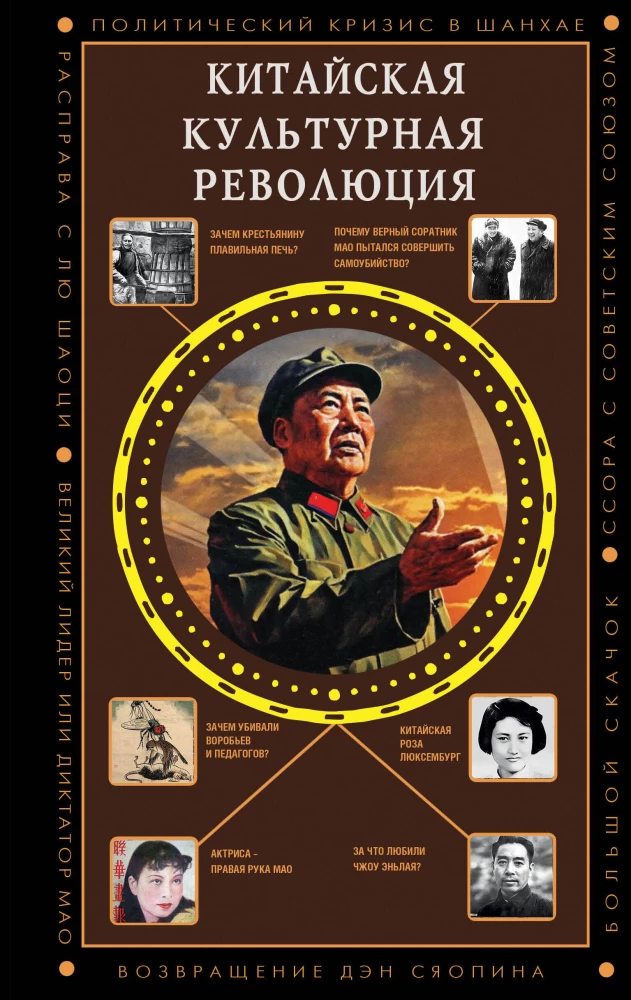
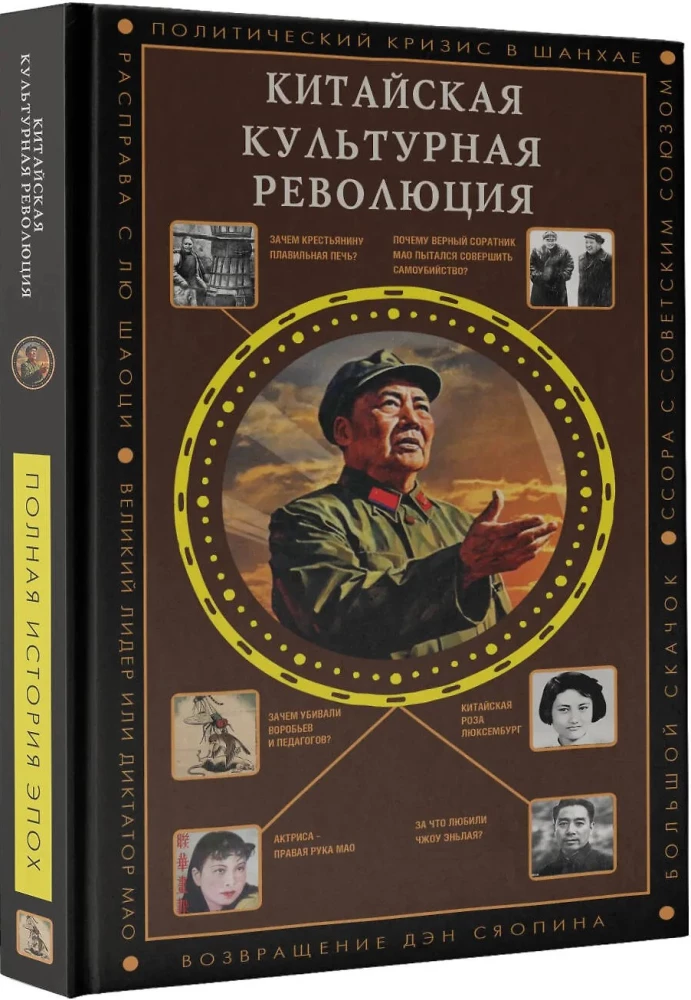
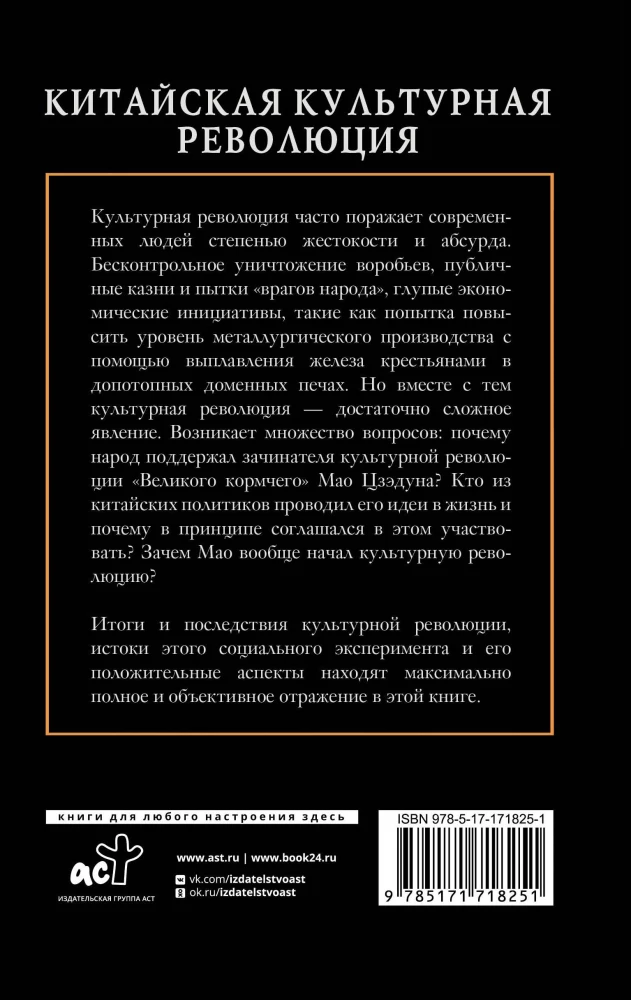
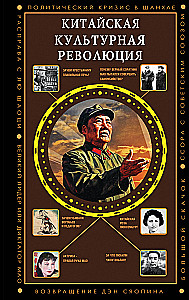
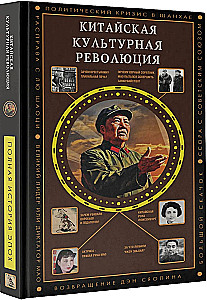
The Cultural Revolution often astonishes modern people with the degree of cruelty and absurdity. The uncontrolled extermination of sparrows, public executions and torture of "enemies of the people," foolish economic initiatives such as attempts to increase metallurgical production by having peasants smelt iron in prehistoric furnaces. But at the same time, the Cultural Revolution is a rather complex phenomenon. Many questions arise: why did the people support the initiator of the Cultural Revolution, the "Great Helmsman" Mao Zedong? Which Chinese politicians implemented his ideas and why did they agree to participate in this? Why did Mao even start the Cultural Revolution?
The results and consequences of the Cultural Revolution, the origins of this social experiment, and its positive aspects are most fully and objectively reflected in this book.
Bestsellers