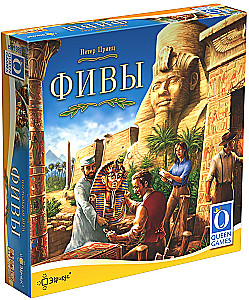
Настольная игра - Фивы
The beginning of the 20th century is a time of significant discoveries in archaeology and the study of the past. You will take on the role of archaeologists searching for priceless artifacts. In your quest for knowledge about five ancient...
civilizations, you will travel to the main European capitals and then embark on excavations in Egypt, Greece, Palestine, Mesopotamia, or Crete. Search for artifacts, organize exhibitions, and participate in congresses to gain fame in the scientific community.
However, remember that everything takes time. And time is the most important resource in this game, as it is what you will pay for all your actions. Only those who can effectively manage their time will become the most renowned archaeologist.
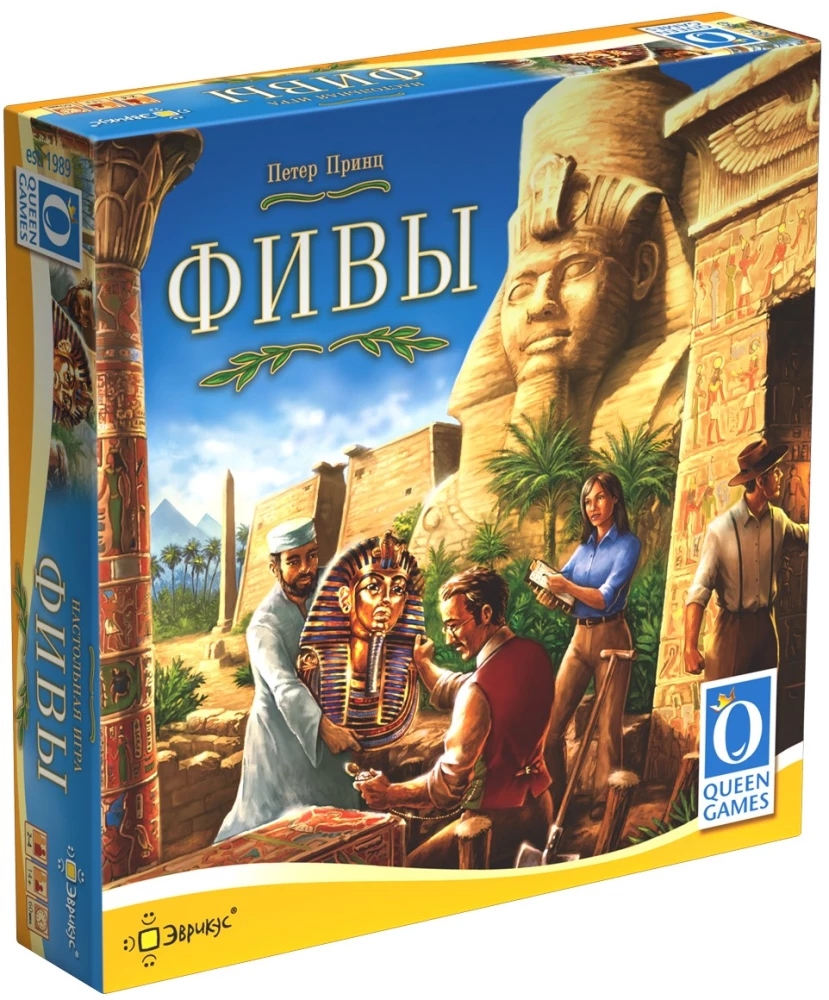
«Thebes» — a family game in which you will take on the role of archaeologists and participate in excavations in search of historically significant artifacts of the past. In this tabletop game, the theme and mechanics are very closely intertwined, making it truly unique. First, you need to acquire knowledge, and only then can you set off for excavations. You will also need a license because you are scholars, not tomb raiders. And, of course, time - you will have to pay for everything with this resource, which is always in short supply.
«Thebes» — a game that has already become a classic and won numerous prestigious awards in the tabletop world.
Game Features
- Unique atmosphere
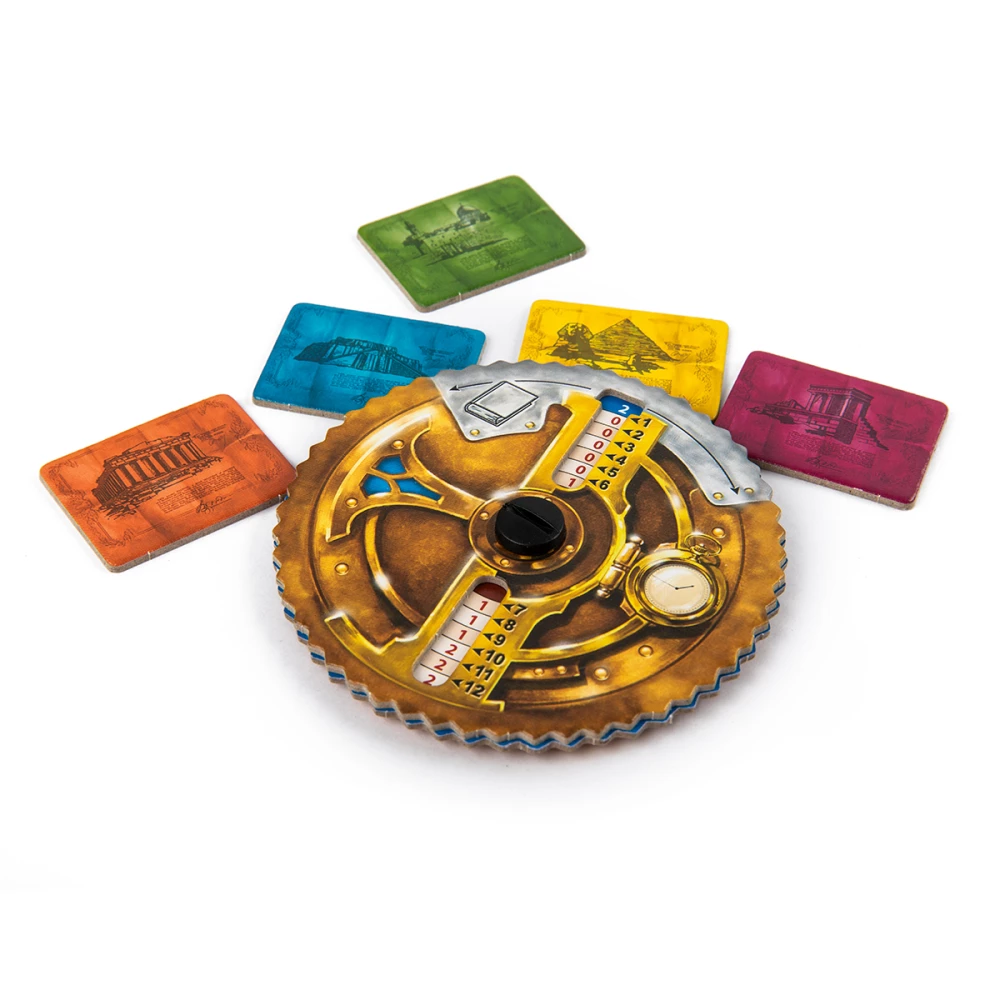
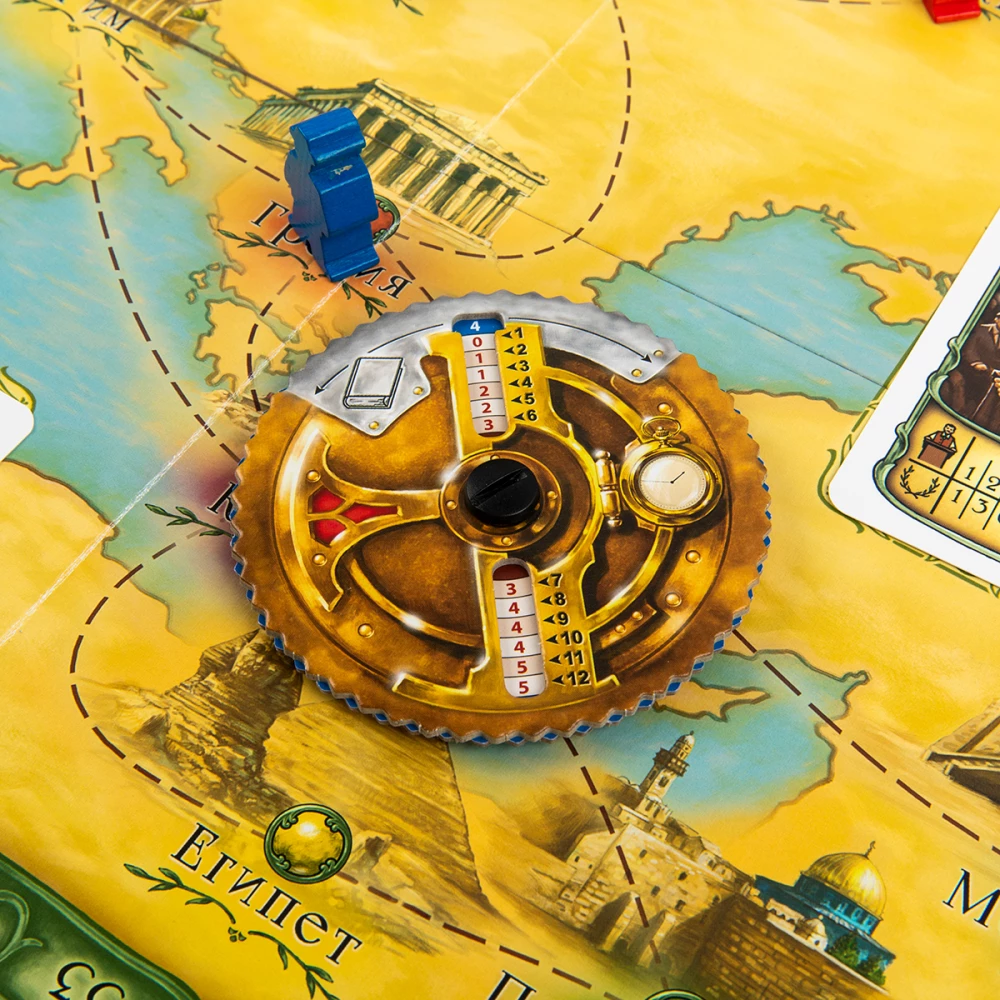
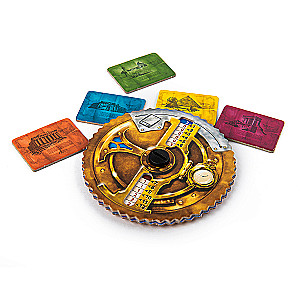
- Interesting mechanics of time management and special chronometer
- Presence of a strategic element
- Some luck factor
- Simple rules
Who is this game suitable for?
- For family evenings and games with friends
- For those interested in archaeology and history
- Fans of tabletop classics
- Players of any experience level: from experienced to beginners
How to play?
Depending on the number of players, a game lasts a different amount of time.
2 players - 3 years
3 players - approximately 2.5 years
4 players - 2 years
The active player will be the one whose time token is last on the timeline. Thus, it is possible for one player to take several turns in a row while their token is last on the timeline.
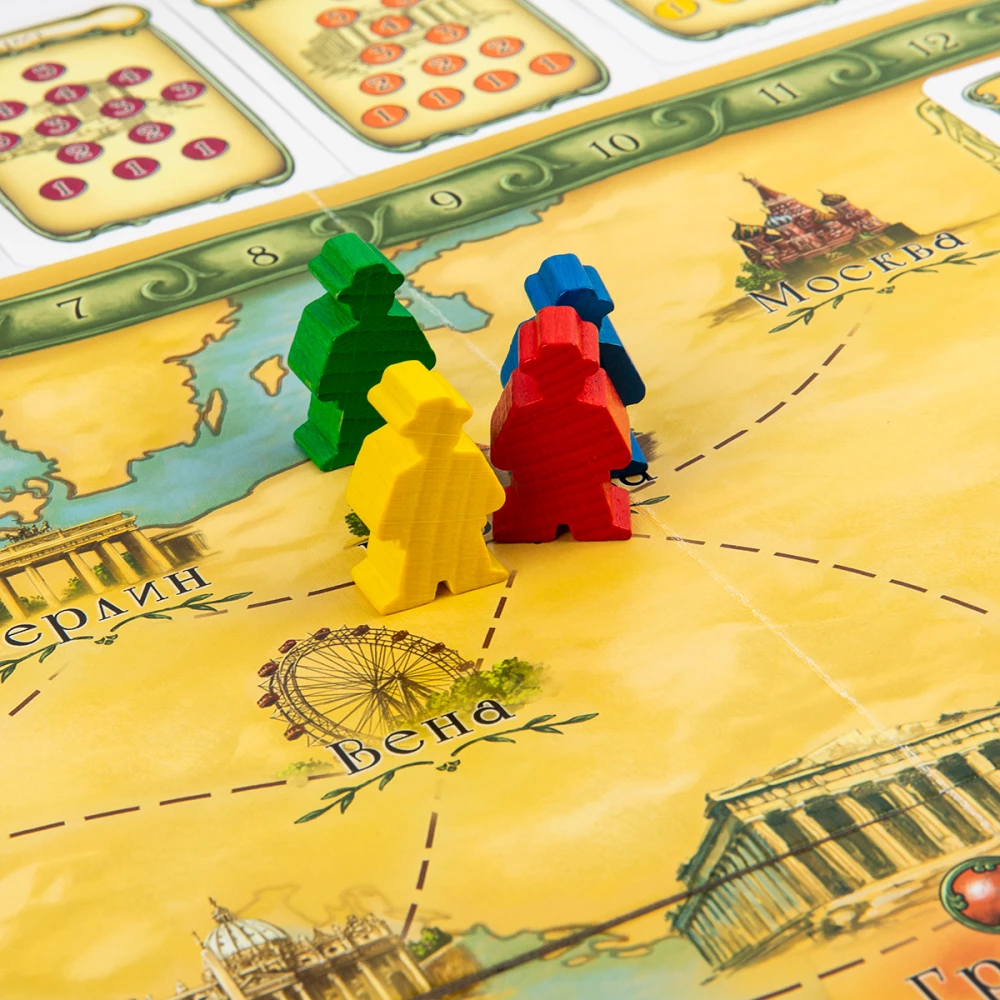
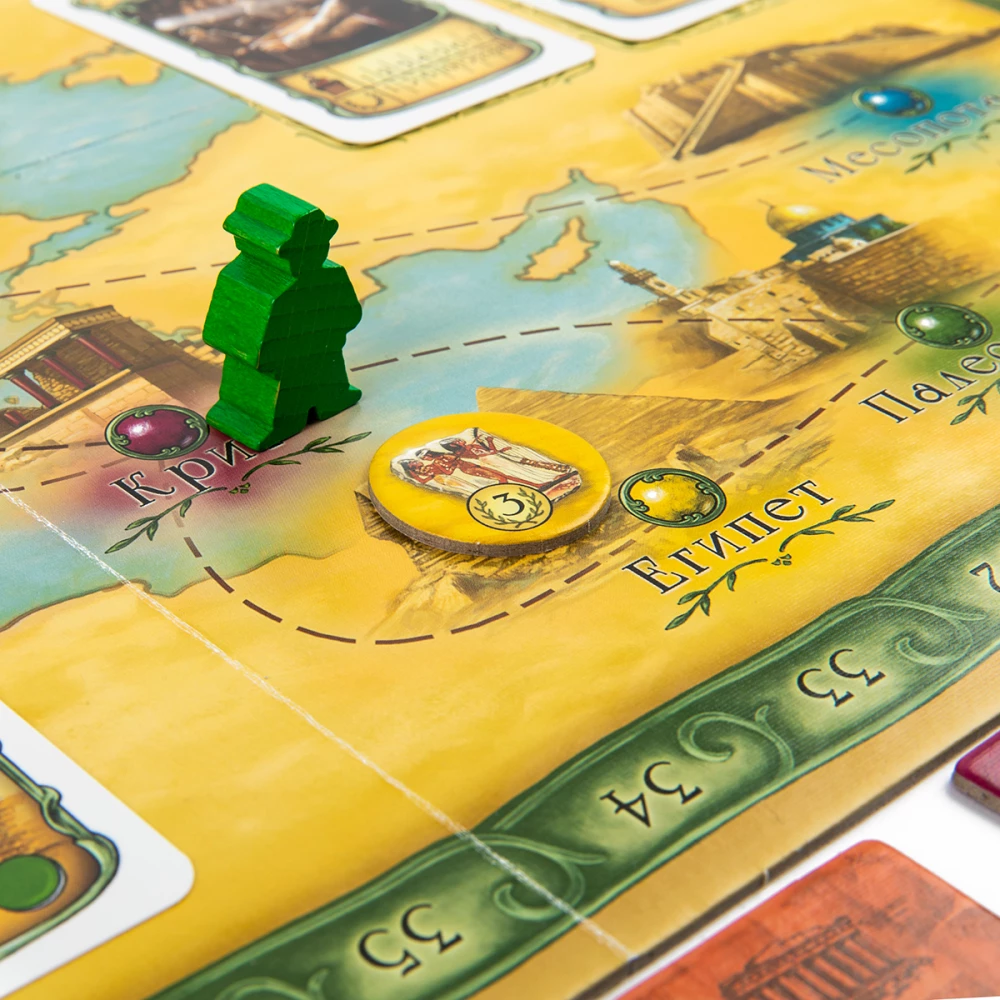
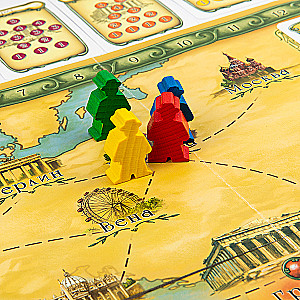
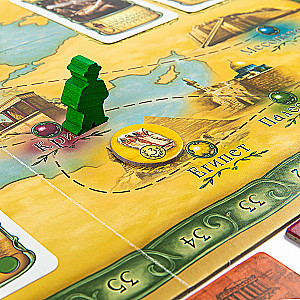
A player's turn consists of an optional movement of their archaeologist token from one area to another along dotted lines and a mandatory execution of 1 of the possible actions.
The player can choose from 4 available actions.
1) Drawing a research card
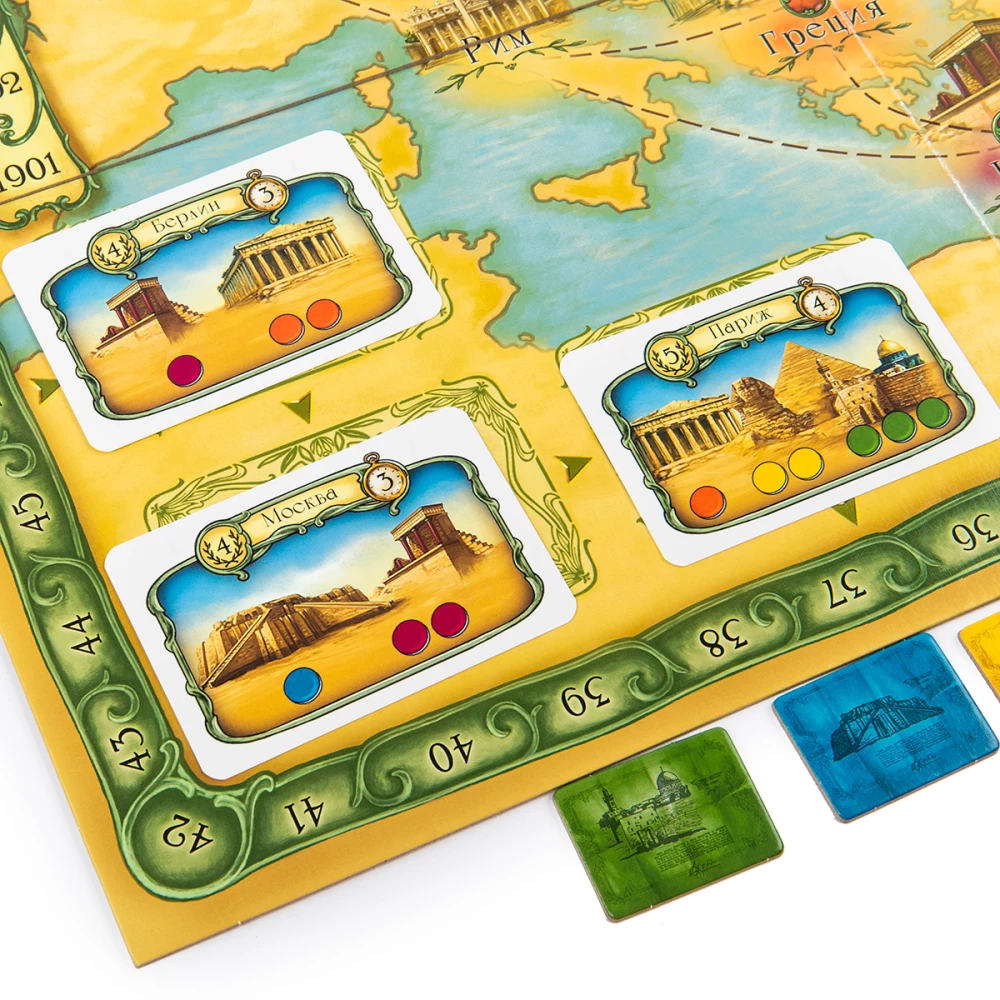
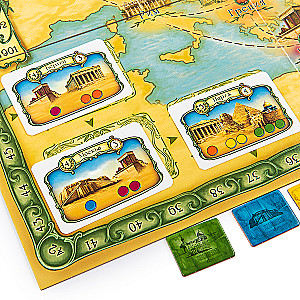
The player takes 1 of the 4 research cards face up on the game board and moves their archaeologist token to the city indicated on the chosen card. Then the player pays the cost of the card and the cost of moving the archaeologist in weeks.
2) Replacing 4 research cards
If the player does not like any of the 4 open research cards, they move their archaeologist token to Warsaw, discard all 4 research cards to the discard pile, and draw new cards. The player pays 1 week for the action itself and the necessary number of weeks for moving the archaeologist to Warsaw.
3) Conducting excavations
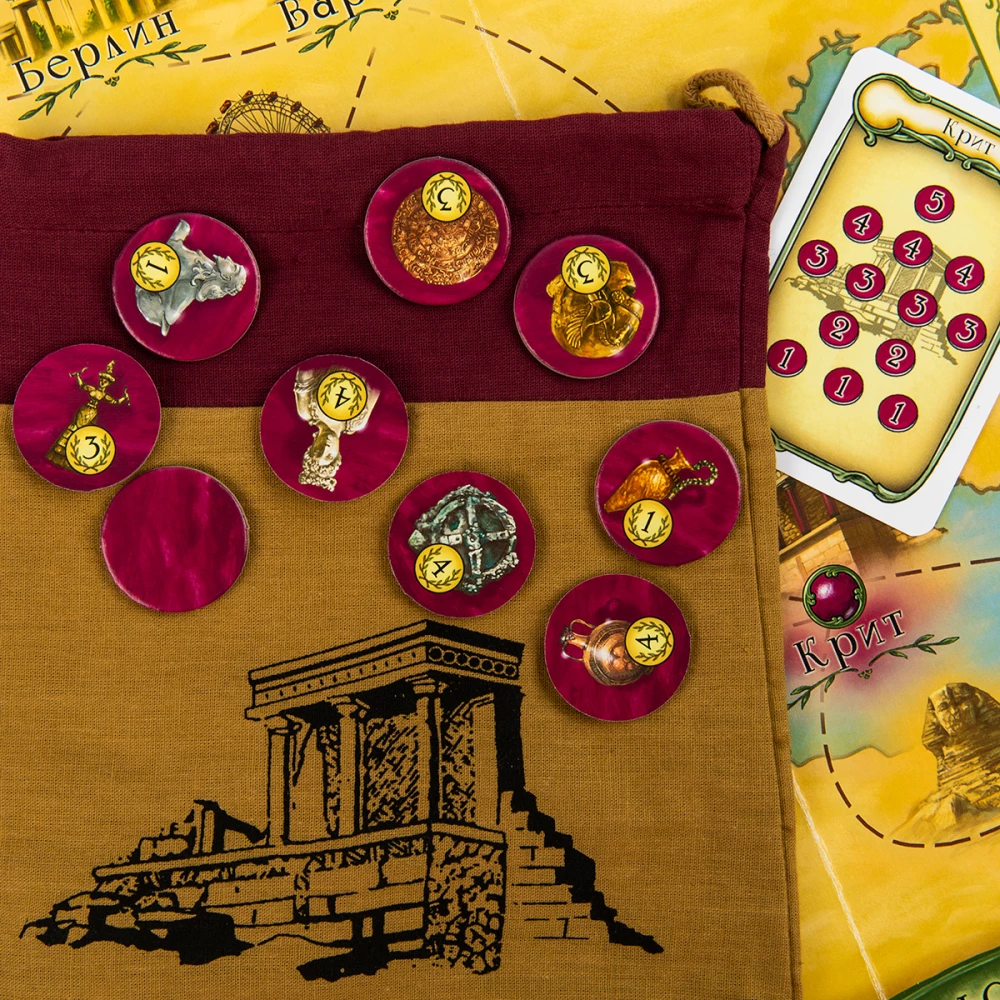
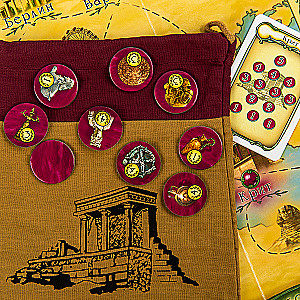
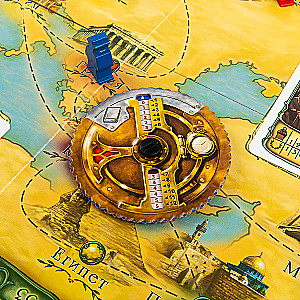
If the player has a valid excavation license for that location and at least 1 scientific book about the place where they want to excavate, the player can attempt to find valuable artifacts. The player moves the archaeologist token to the desired excavation site, spending the required number of weeks, and conducts the excavation. For this, they draw finding tokens from the bag corresponding to the excavation site. The number of tokens the player can draw is calculated with the chronometer and depends on how much time the player wants to spend on the excavation and how many knowledge points about the site they have.
4) Organizing an exhibition
To organize an exhibition and earn points, the player must have certain artifacts. The player shows their opponents that they have the required artifacts, moves their archaeologist token to the city indicated on the exhibition card (if necessary), and then takes the exhibition card and places it face up in their play area.
At the end of the game, each player totals their points:
o for found artifacts (the value of the artifact is indicated on the token),
o for organized exhibitions (points are indicated on the exhibition cards),
o for participation in congresses (the number of points depends on the number of congress cards in the player's play area)
o 5 points for having the most scientific books about each excavation site.
The player with the most points wins.
Errata
Clarification of excavation rules
To conduct excavations, the player must have 1 point of special knowledge about the location where they wish to excavate. This point of special knowledge can be obtained through scientific books about the excavation site, local legends cards, “Assistant” cards, or finding tokens.
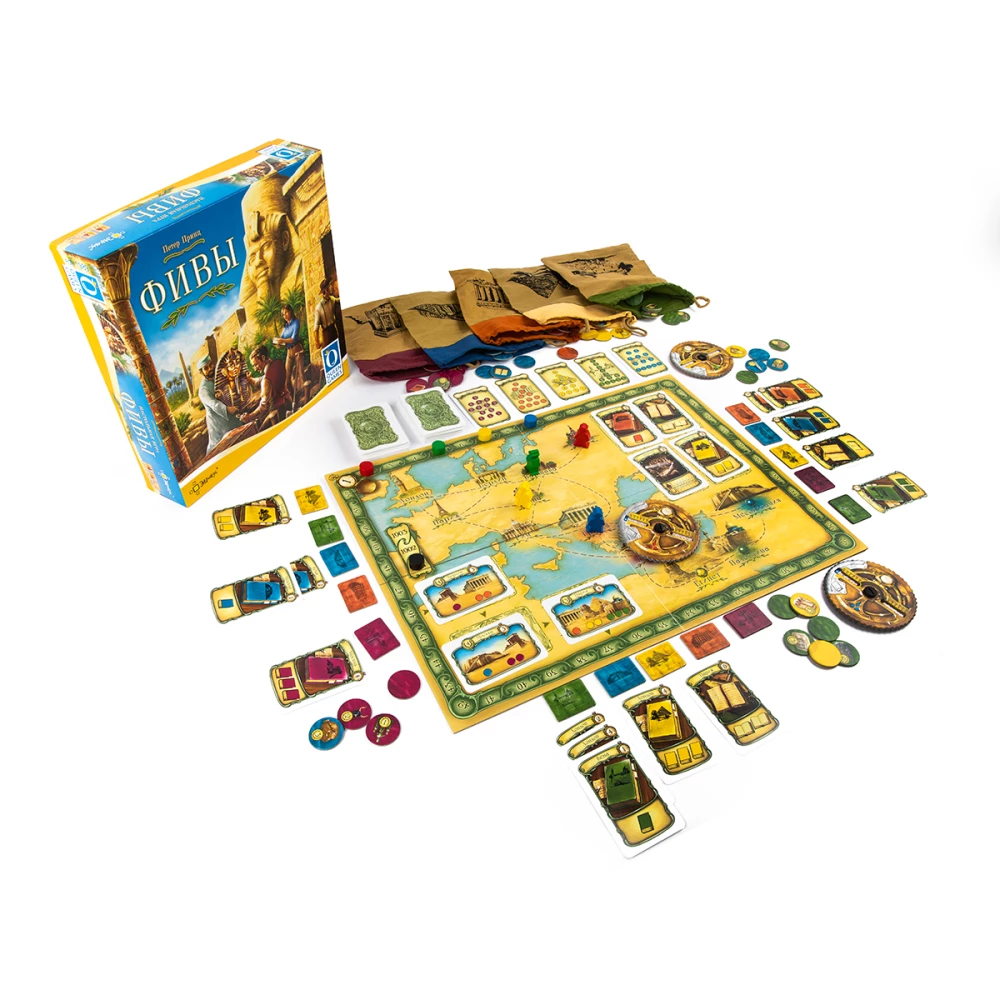
Game components
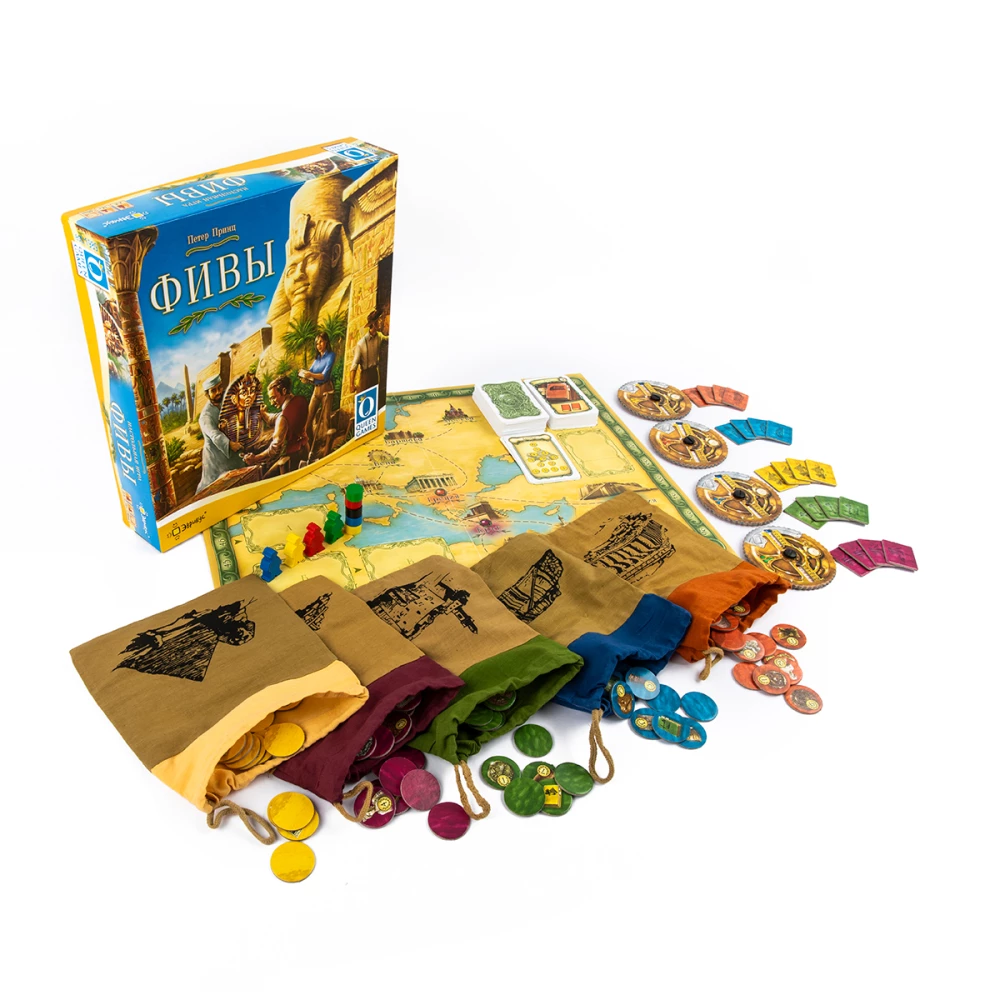
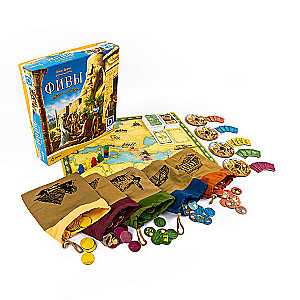
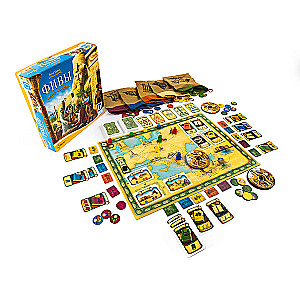
- 155 finding tokens
- 85 research cards
- 20 excavation license tokens
- 10 exhibition cards
- 5 canvas bags
- 5 reminder cards
- 4 archaeologist tokens
- 4 time tokens
- 4 chronometers
- Game board
- Year token
- Reminder sheet
- Game rules
Card size: 88x58 mm
Number of players: 2 - 4
Game time: from 60 minutes
However, remember that everything takes time. And time is the most important resource in this game, as it is what you will pay for all your actions. Only those who can effectively manage their time will become the most renowned archaeologist.
«Thebes» — a family game in which you will take on the role of archaeologists and participate in excavations in search of historically significant artifacts of the past. In this tabletop game, the theme and mechanics are very closely intertwined, making it truly unique. First, you need to acquire knowledge, and only then can you set off for excavations. You will also need a license because you are scholars, not tomb raiders. And, of course, time - you will have to pay for everything with this resource, which is always in short supply.
«Thebes» — a game that has already become a classic and won numerous prestigious awards in the tabletop world.
Game Features
- Unique atmosphere
- Interesting mechanics of time management and special chronometer
- Presence of a strategic element
- Some luck factor
- Simple rules
Who is this game suitable for?
- For family evenings and games with friends
- For those interested in archaeology and history
- Fans of tabletop classics
- Players of any experience level: from experienced to beginners
How to play?
Depending on the number of players, a game lasts a different amount of time.
2 players - 3 years
3 players - approximately 2.5 years
4 players - 2 years
The active player will be the one whose time token is last on the timeline. Thus, it is possible for one player to take several turns in a row while their token is last on the timeline.
A player's turn consists of an optional movement of their archaeologist token from one area to another along dotted lines and a mandatory execution of 1 of the possible actions.
The player can choose from 4 available actions.
1) Drawing a research card
The player takes 1 of the 4 research cards face up on the game board and moves their archaeologist token to the city indicated on the chosen card. Then the player pays the cost of the card and the cost of moving the archaeologist in weeks.
2) Replacing 4 research cards
If the player does not like any of the 4 open research cards, they move their archaeologist token to Warsaw, discard all 4 research cards to the discard pile, and draw new cards. The player pays 1 week for the action itself and the necessary number of weeks for moving the archaeologist to Warsaw.
3) Conducting excavations
If the player has a valid excavation license for that location and at least 1 scientific book about the place where they want to excavate, the player can attempt to find valuable artifacts. The player moves the archaeologist token to the desired excavation site, spending the required number of weeks, and conducts the excavation. For this, they draw finding tokens from the bag corresponding to the excavation site. The number of tokens the player can draw is calculated with the chronometer and depends on how much time the player wants to spend on the excavation and how many knowledge points about the site they have.
4) Organizing an exhibition
To organize an exhibition and earn points, the player must have certain artifacts. The player shows their opponents that they have the required artifacts, moves their archaeologist token to the city indicated on the exhibition card (if necessary), and then takes the exhibition card and places it face up in their play area.
At the end of the game, each player totals their points:
o for found artifacts (the value of the artifact is indicated on the token),
o for organized exhibitions (points are indicated on the exhibition cards),
o for participation in congresses (the number of points depends on the number of congress cards in the player's play area)
o 5 points for having the most scientific books about each excavation site.
The player with the most points wins.
Errata
Clarification of excavation rules
To conduct excavations, the player must have 1 point of special knowledge about the location where they wish to excavate. This point of special knowledge can be obtained through scientific books about the excavation site, local legends cards, “Assistant” cards, or finding tokens.
Game components
- 155 finding tokens
- 85 research cards
- 20 excavation license tokens
- 10 exhibition cards
- 5 canvas bags
- 5 reminder cards
- 4 archaeologist tokens
- 4 time tokens
- 4 chronometers
- Game board
- Year token
- Reminder sheet
- Game rules
Card size: 88x58 mm
Number of players: 2 - 4
Game time: from 60 minutes
Prekės ženklas: Evrikus
Amžiaus ribos: 14+
Išleidimo metai: 2025
EAN: 4630082634839
Dydis: 295h295h60 mm
Svoris: 1500 g
ID: 1729870
Yra sandėlyje
€ 22.39
Pristatysime į Jungtines Amerikos Valstijas :
Deja, šiuo metu negalime pristatyti užsakymo į jūsų regioną.
Yra sandėlyje
€ 22.39
Pristatysime į Jungtines Amerikos Valstijas :
Deja, šiuo metu negalime pristatyti užsakymo į jūsų regioną.