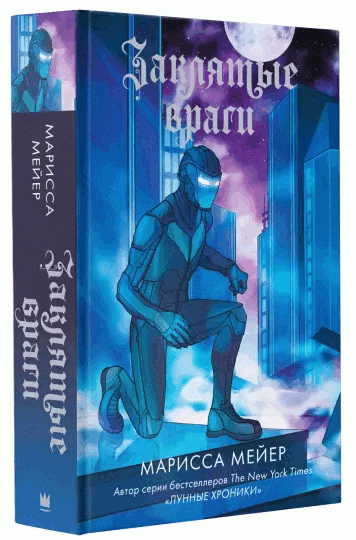

Трагедия господина Морна
Autor: НАБОКОВ В.В.
Väljaandja: AST
Seeria: Nabokovi korpus
Vanusepiirangud: 12+
avaldamise aasta: 2024
ISBN: 9785171623661
lehekülgede arv: 288
Suurus: 208x134x26 mm
Kaanetüüp: твердая
Kaal: 337 g
ID: 1663680
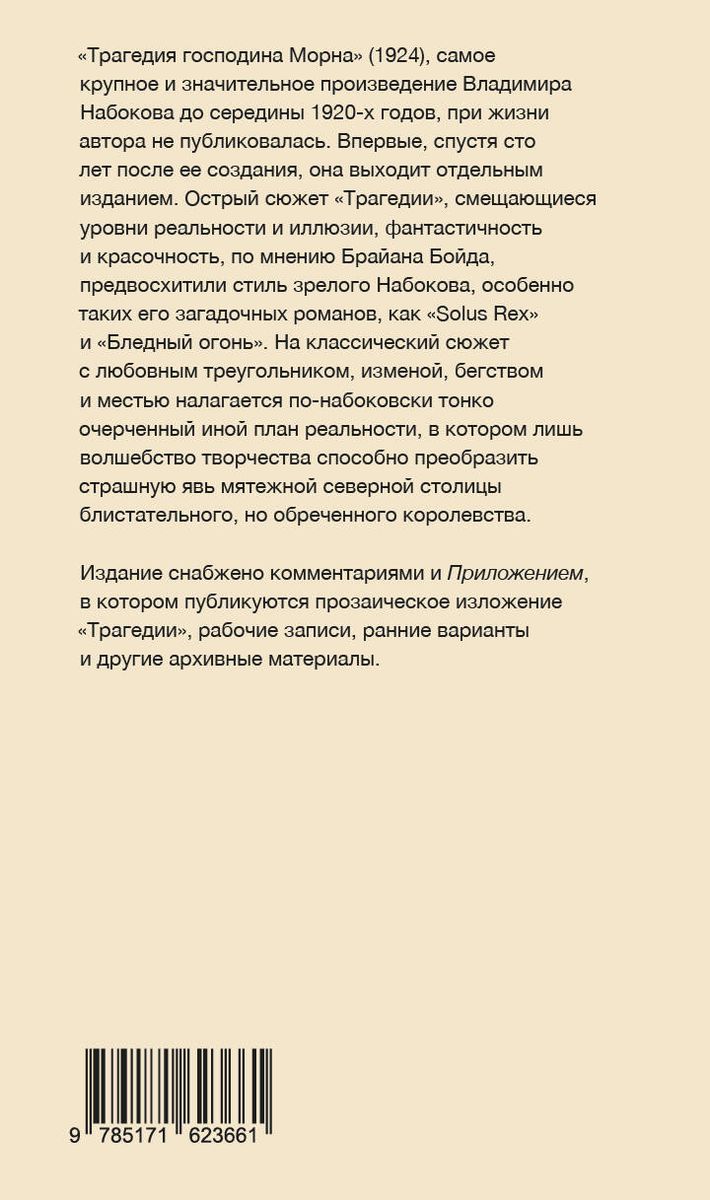
“The Tragedy of Mr. Morn” (1924), the largest and most significant work of Vladimir Nabokov up to the mid-1920s, was not published during the author's lifetime. For the first time, a century after its creation, it is being released as a separate edition. The sharp plot of “The Tragedy,” the shifting levels of reality and illusion, the fantastical and colorful elements, according to B. Boyd, presaged the style of mature Nabokov, especially in such enigmatic novels as “Solus Rex” and “Pale Fire.” A classic plot with a love triangle, betrayal, flight, and revenge is layered with a Nabokovian delicately outlined alternative reality, in which only the magic of creativity can transform the grim reality of the rebellious northern capital of the brilliant yet doomed kingdom. The edition is accompanied by comments and an Appendix, which includes a prose retelling of “The Tragedy,” working notes, early drafts, and new archival materials.