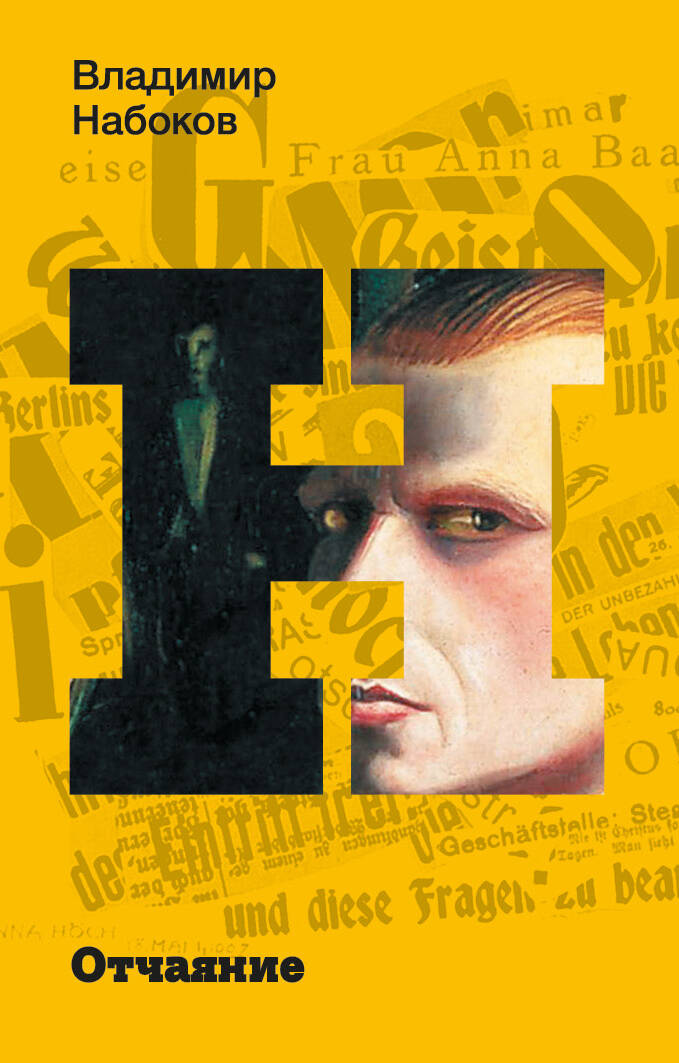
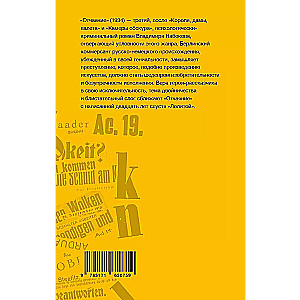
Отчаяние
Autor: НАБОКОВ В.В.
Väljaandja: AST
Seeria: Nabokovi kogumik (pehme kaas)
Vanusepiirangud: 12+
avaldamise aasta: 2024
ISBN: 9785171650759
lehekülgede arv: 192
Suurus: 185x120x17 mm
Kaanetüüp: мягкая
Kaal: 138 g
ID: 1668693
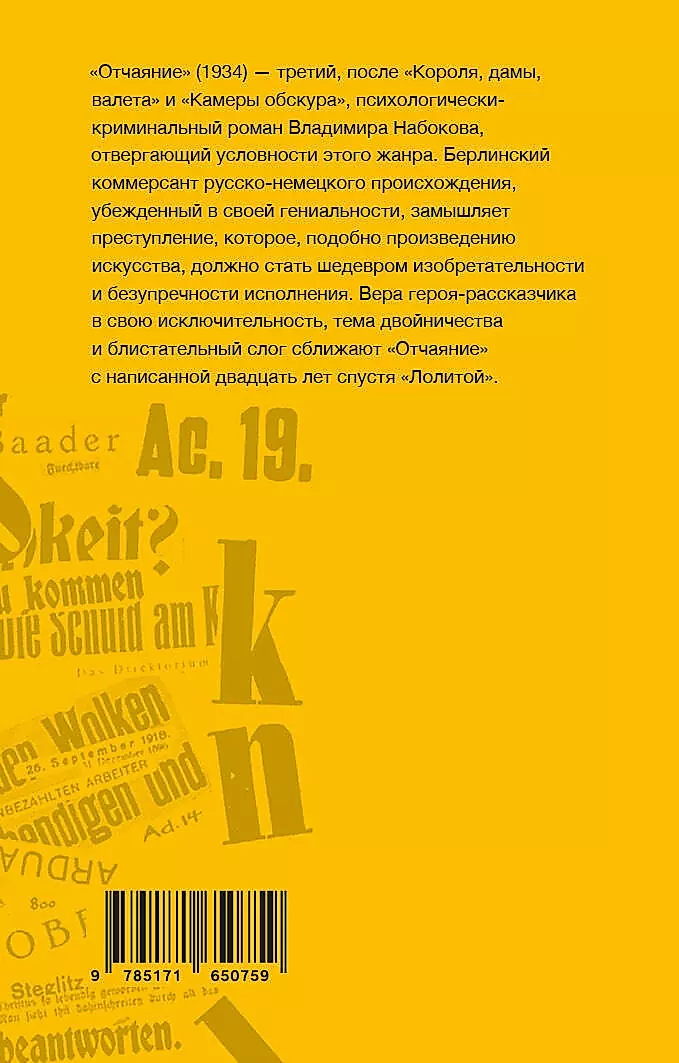
"Despair" (1934) is the sixth novel by Vladimir Nabokov, written in Berlin, and his third psychological-criminal novel, after "King, Queen, Knave" and "The Camera Obscura," that rejects the conventions of this genre. Hermann, a Berlin merchant of Russian-German descent, convinced of his genius, plans a crime that, like a work of art, should become a masterpiece of ingenuity and impeccable execution. Life, however, proves to be much wittier and more artistic than the flawed scheme, the crooked mirror of which only distorts reality. The first-person narrative form, the protagonist-narrator's belief in his own uniqueness, and the brilliant style bring "Despair" closer to "Lolita," written twenty years later.
Saadaval tarnijatelt
Eeldatav tarneaeg – kuni 2 nädalat
€ 5.29
Saadaval tarnijatelt
Eeldatav tarneaeg – kuni 2 nädalat
€ 5.29
Bestsellers














Väljaandja „AST“ soovitab






Bestseller
€ 10.39
Laos
Prantsuse keel. Iseseisev õpik algajatele (+ audiosalvestis)
Валентина Горина