
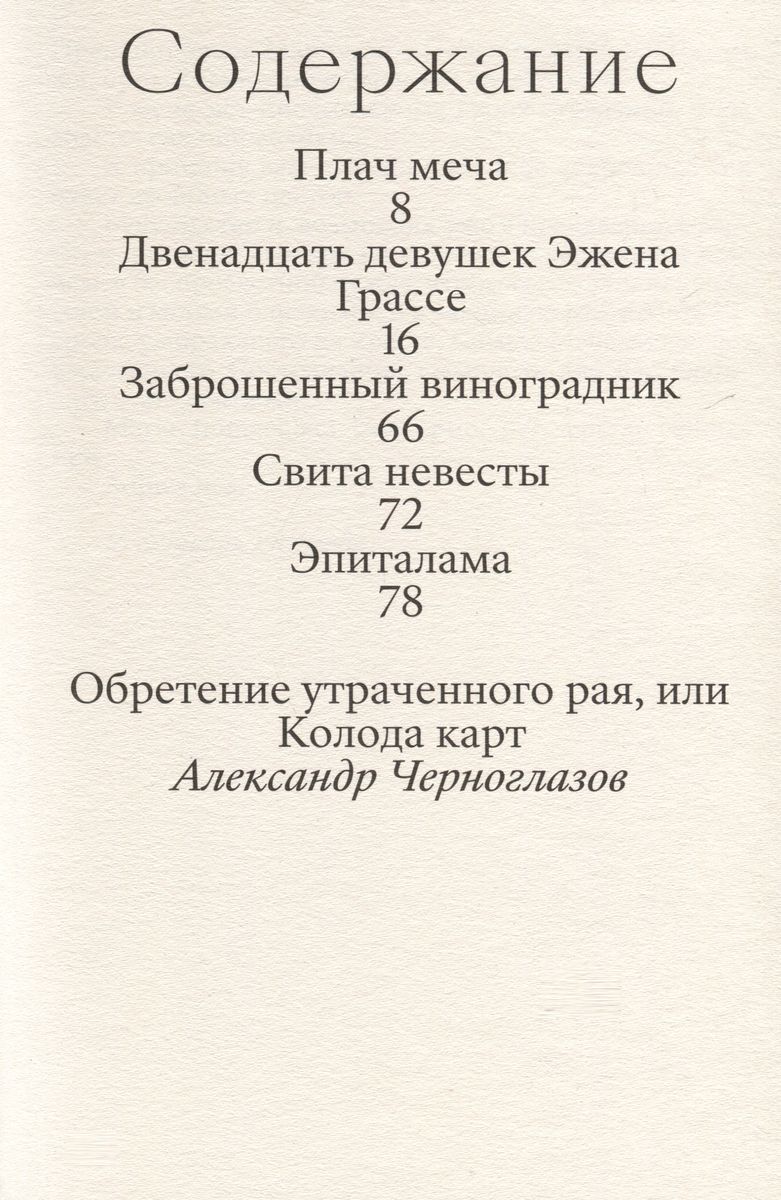


Блуа Поэмы в прозе
Leon Blois (1846–1917) – a French writer and publicist of the "end of the beautiful era", at the turn of the 19th and 20th centuries, – left a vast literary heritage consisting of novels, stories, polemical articles in the press,...
several volumes of diaries, as well as miniatures. All his texts combine a rare stylistic sophistication, whimsical proto-surrealist imagery, and a fervent Catholic piety worthy of a medieval mystic. At the center of a small collection of prose poems, virtuously translated into Russian by Alexander Chernoglozov, is a unique calendar of the month, twelve vision-poems composed by Blois inspired by a calendar designed in the Art Nouveau style by his contemporary, engraver and designer Eugène Grasset (1845–1917).
Autor: ЛЕОН БЛУА
Väljaandja: Ad Marginem
avaldamise aasta: 2024
ISBN: 9785911037345
lehekülgede arv: 96
Suurus: 24x16.5x0.8 см mm
Kaanetüüp: Мягкий переплёт
Kaal: 142 g
ID: 1640387
Välja müüdud
€ 10.39
Välja müüdud
€ 10.39





-medium.webp)