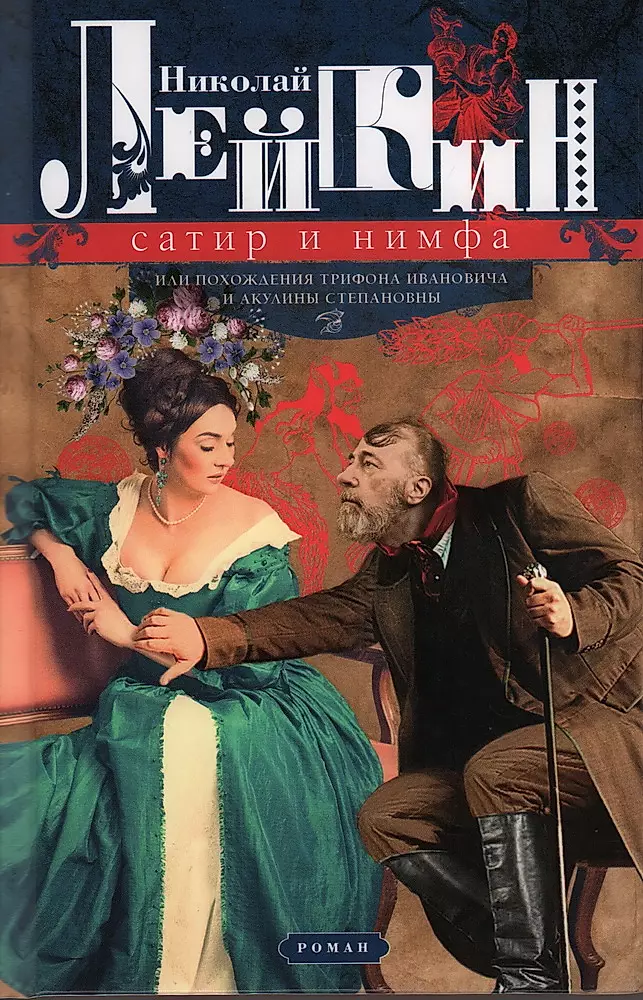
Сатир и нимфа, или Похождения Трифона Ивановича и Акулины Степановны
Autor: ЛЕЙКИН Н.А.
Väljaandja: Tsentrpoligraf
Seeria: MEIE
Vanusepiirangud: 16+
avaldamise aasta: 2023
ISBN: 9785227103970
lehekülgede arv: 479
Suurus: 207x137x35 мм mm
Kaanetüüp: Мягкая обложка
Kaal: 360 g
ID: 1672230
The chronicler of Russia at the end of the 19th - beginning of the 20th century, satirist Nikolai Aleksandrovich Leykin, as always, precisely captures the images of his compatriots from various social classes and characters that he has observed in life. In this somewhat funny and somewhat sad novel, a variety of character types are cleverly played with.
The lonely elderly merchant Trifon Ivanovich Zakolov develops warm feelings for his cook Akulina. The modest and quiet woman truly transforms under the influence of her new status in the house, and the dynamics between the "satyr" and the "nymph" radically changes. The maid friend gives Akulina useful advice from her point of view, and a relative from the village is asking for a bread-winning position, and it is not immediately clear where the chain of events, which began with a simple affection, will lead.