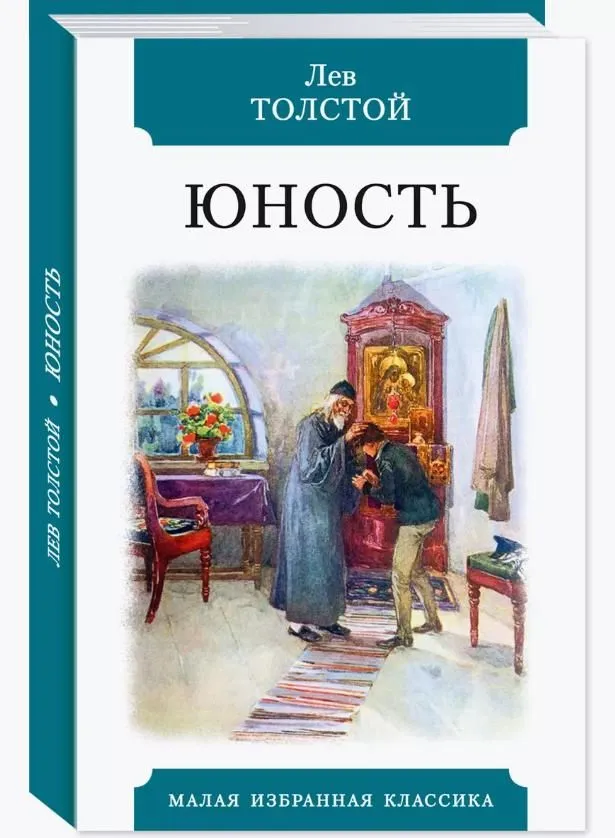
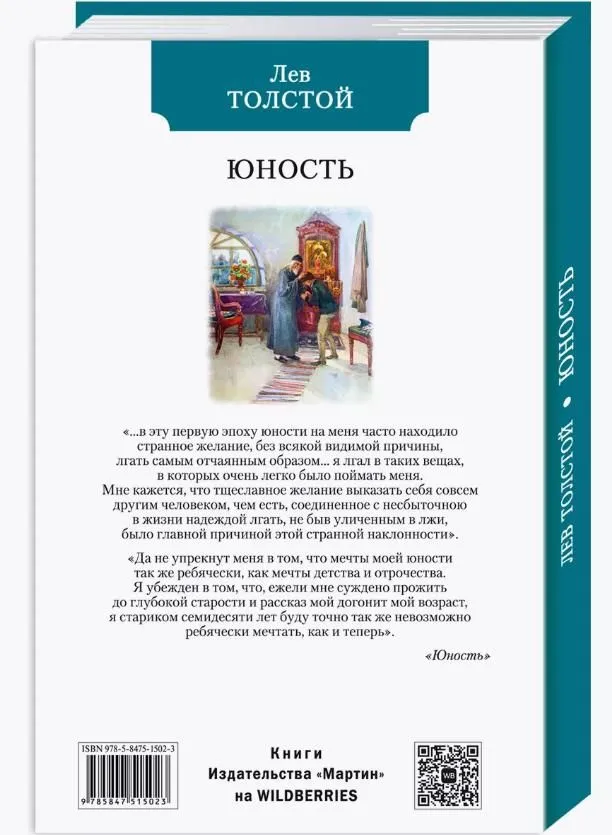
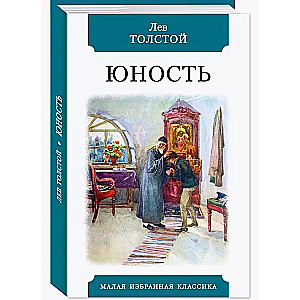
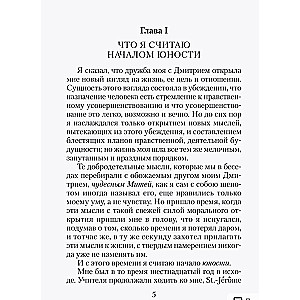
Юность
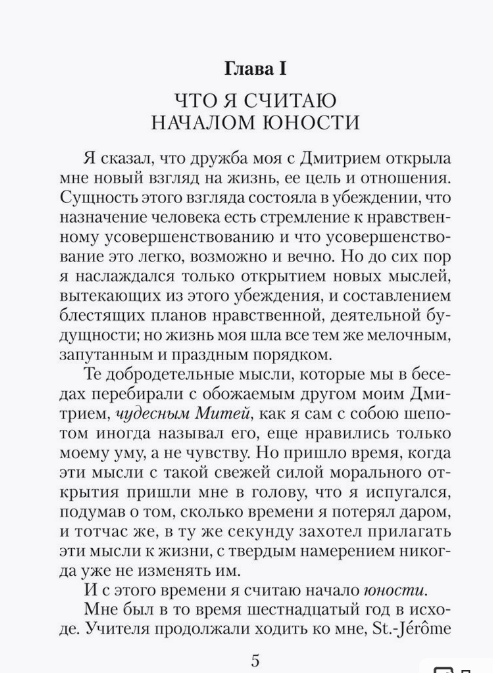
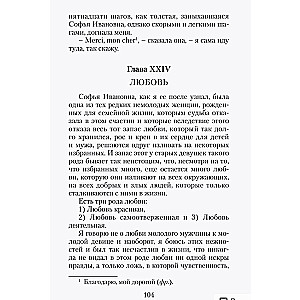
The story "Youth," continuing "Childhood" and "Boyhood," is the concluding part of L.N. Tolstoy's "autobiographical" trilogy. But it is not an autobiography or memoirs - the writer creates one of the most significant works of Russian literature on the theme...
of growing up based on the facts of his own life: no one before Tolstoy made such detailed observations of the development of a young person's soul, emphasizing the universal spiritual laws of this process. In "Youth," the main character realizes life goals, forms ideals of love and friendship, and begins spiritual development.
Autor: ТОЛСТОЙ Л.
Väljaandja: Martin
Seeria: Väike valitud klassika
Vanusepiirangud: 12+
avaldamise aasta: 2023
ISBN: 9785847515023
lehekülgede arv: 224
Suurus: 70х90/32 mm
Kaanetüüp: Твердый переплет
Kaal: 300 g
ID: 1571616
Välja müüdud
€ 3.99
Välja müüdud
€ 3.99